

2 days ago
EPF wage ceiling rises, changing take-home pay and retirement savings

The government is raising the monthly pay limit used to decide who must join EPF.
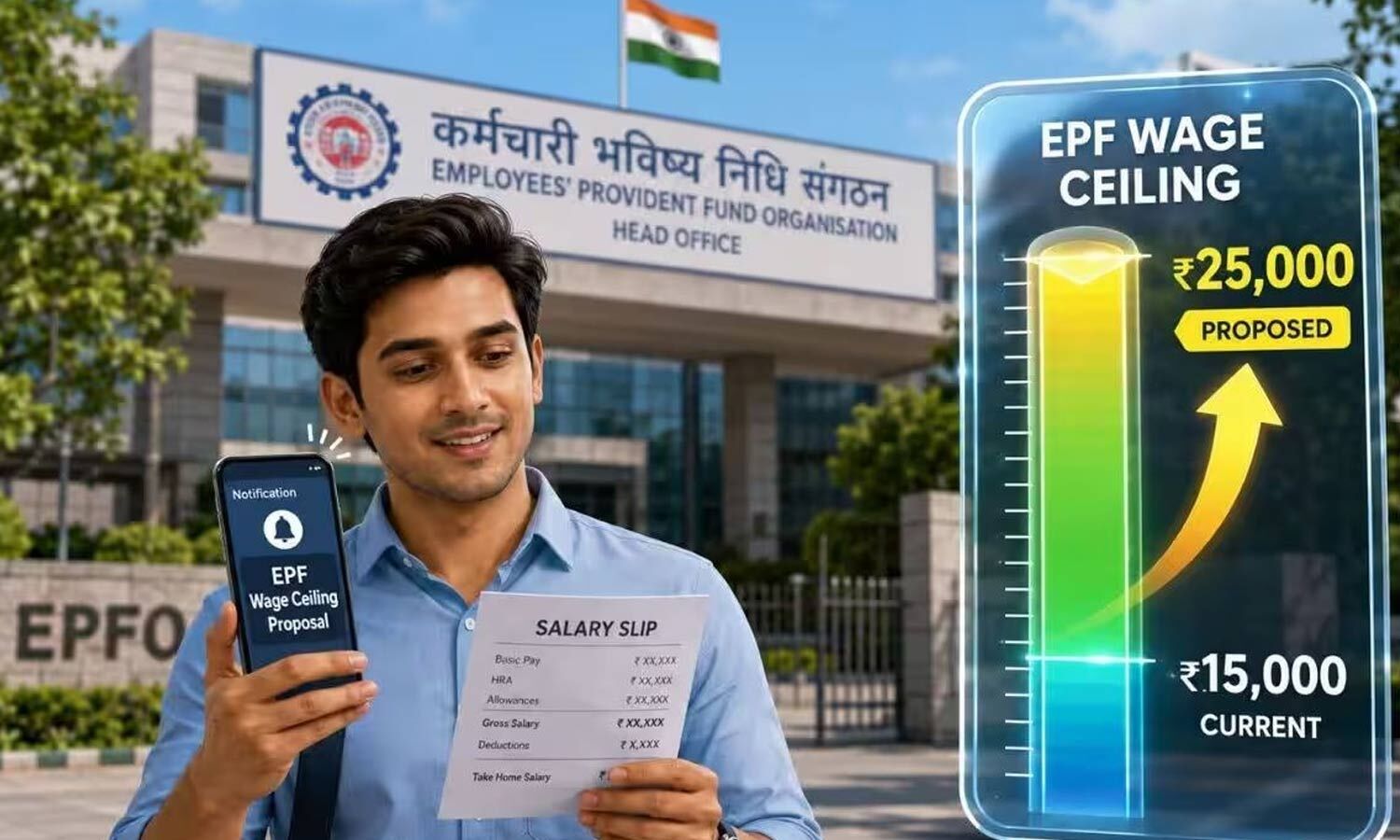
The limit will rise from ₹15,000 to ₹25,000 on September 17, 2026.
This does not mean PF will automatically be calculated on every worker’s full salary.
Some workers will have more money taken from each paycheck for retirement savings.
For example, a worker previously contributing ₹1,800 might contribute ₹3,000 instead.
A worker earning ₹20,000 who was not covered before could have ₹2,400 deducted from basic pay.
The extra savings can help younger workers build a larger retirement fund over time.
Employers may also have to pay more.
Some workers, especially those nearing retirement, may receive limited benefits from the change.

The Union Cabinet approved raising the EPF wage ceiling from ₹15,000 to ₹25,000 per month, effective September 17, 2026.
Workers previously capped at ₹15,000 could see monthly employee contributions rise from ₹1,800 to ₹3,000.
Employees earning between ₹15,000 and ₹25,000 who were not previously covered could newly face a 12% basic-pay deduction.
The change could bring about 51 lakh additional workers under EPFO coverage, while increasing employer costs by about ₹600 per employee monthly on average.
Higher EPS allocations may increase pension contributions, but EPS money does not earn interest and pensions are fixed without inflation increases.
- Who
- The Union Cabinet, employees, employers and the Employees’ Provident Fund system are affected; experts Harendra Zatakia and Manish P. Hingar provided assessments.
- What
- The EPF wage ceiling for mandatory coverage will increase from ₹15,000 to ₹25,000 per month.
- Where
- The policy applies to workers covered by India’s EPF system.
- When
- The change is effective September 17, 2026, after the previous ceiling had remained unchanged since September 2014.
- Why
- The higher ceiling is intended to expand mandatory EPF coverage and bring more workers into retirement savings and pension schemes.
Potential benefits
Potential costs and limitations
Retirement coverage
Potential benefits
Workers earning ₹15,001–₹25,000 who were previously outside mandatory coverage could gain EPF access, and younger employees could have more years to build retirement savings.
Potential costs and limitations
Workers nearing retirement may receive limited benefits because only a small part of their remaining service would fall under the revised ceiling.
Monthly take-home pay
Potential benefits
Higher EPF contributions can increase retirement savings and pensionable service.
Potential costs and limitations
Employees may receive less take-home pay; a worker previously capped at ₹15,000 could see the monthly deduction rise by ₹1,200.
Employer impact
Potential benefits
The policy expands employee participation in formal retirement and pension schemes.
Potential costs and limitations
Employers may face higher costs, estimated at around ₹600 per employee per month on average, and may restructure salaries or hire fewer people.
Pension value
Potential benefits
Because 8.33% of the employer contribution goes to the Employees’ Pension Scheme, the change increases pension-scheme allocations.
Potential costs and limitations
EPS money does not earn interest for employees, and its fixed pension does not increase with inflation, so the higher allocation may not proportionately increase retirement savings.
Key facts
- New wage ceiling
- ₹25,000 per month
- Previous wage ceiling
- ₹15,000 per month
- Effective date
- September 17, 2026
- Potential additional coverage
- Around 51 lakh workers
- Possible employee contribution increase
- From ₹1,800 to ₹3,000 monthly for workers previously capped at ₹15,000
- New deduction example
- A worker with ₹20,000 basic pay could contribute ₹2,400 monthly
- Estimated employer cost increase
- About ₹600 per employee per month on average
Quotes
Harendra Zatakia
Founder of Wealth Aligned Financial Advisory
“Officials estimate employer costs will rise by around ₹600 per employee per month on average. Some companies may respond by restructuring salaries or hiring fewer people.”
 livemint.com
“Younger employees stand to benefit more over the long term because they have more years to build their retirement corpus and pensionable service.”
livemint.com
Sources
Related news

EPF Wage Ceiling Hike May Cut Take-Home Pay

Higher PF Wage Ceiling Expands Mandatory EPF Coverage
EPFO Wage Ceiling Raised to Rs 25,000 After Twelve Years
Cabinet Raises EPFO Wage Ceiling, Expanding Social Security Coverage
Government Raises PF Wage Ceiling to Rs 25,000

EPFO Wage Ceiling Set to Rs 25,000 After Years

EPFO Explains Online Nomination Rules for Provident Fund Accounts

EPFO Details to Check Before Filing a PF Withdrawal Claim
EPFO Raises Wage Ceiling to Expand Worker Social Security
