1 month ago
Tamil Nadu excavation reveals ancient settlement's evolution
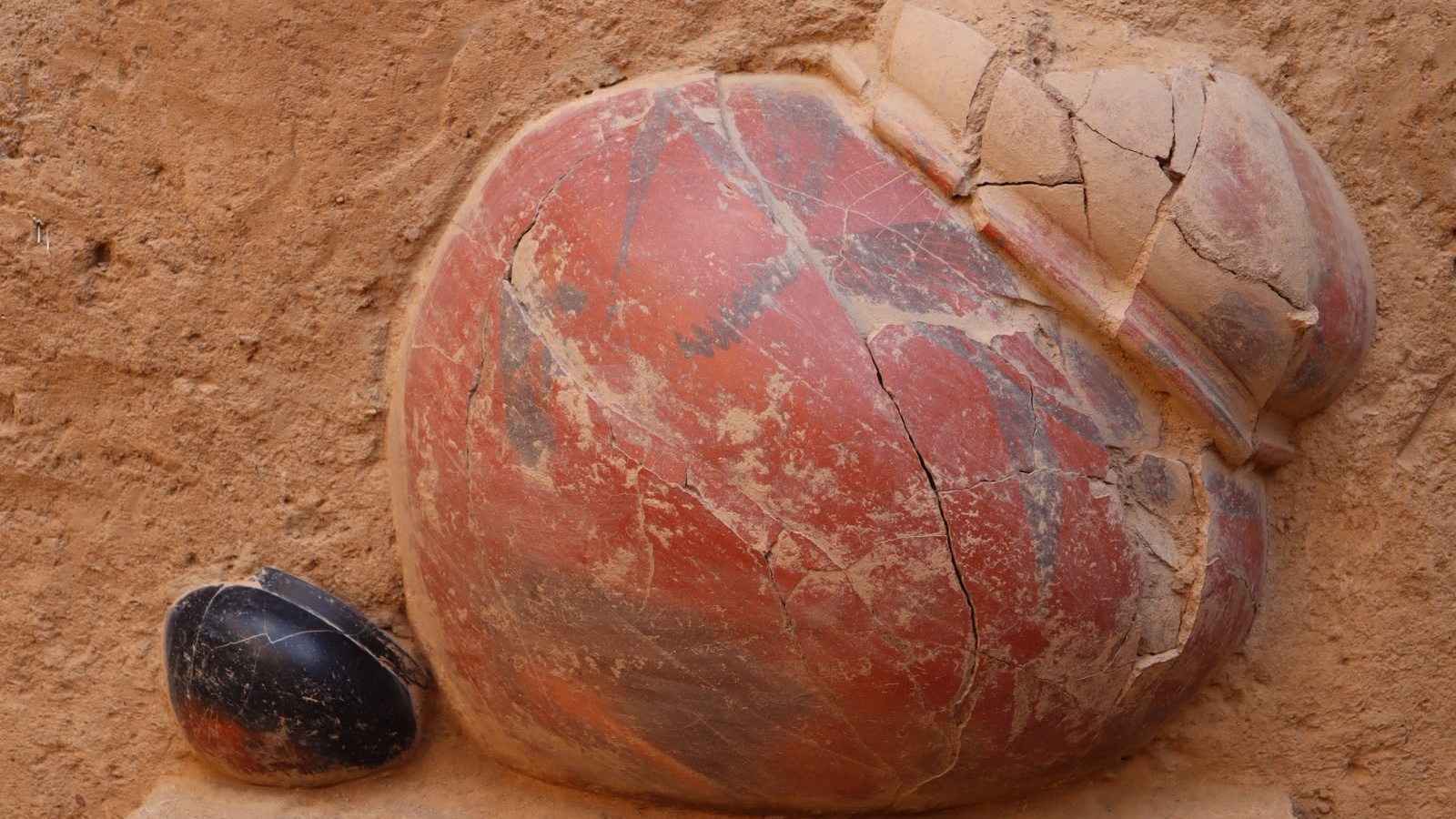
Archaeologists in Tamil Nadu are digging up a very old settlement near the Vaippar river.
They have found tools from the Stone Age and big brick buildings from the Sangam era, which was a long time ago.
The site seems to have been lived in for thousands of years without big changes in how people lived.
They found lots of things like beads, pottery, and even a big brick structure that might have been used to store grain or collect rainwater.
The site also shows that people there made iron tools, beads, and bangles, and maybe even traded with other places.
This helps us understand how people lived and worked in ancient times.

Archaeologists are excavating a settlement in Tamil Nadu that shows continuous occupation from the Microlithic period to the Sangam era.
Key finds include microlithic stone tools, Sangam-era brick structures, iron-working evidence, and craft-production debris.
A large brick structure, possibly an underground granary or rainwater harvesting tank, was discovered.
Over 100 artifacts have been recovered, including microlithic stone tools, shell bangles, terracotta spindle whorls, and copper coins.
The site appears to have been a manufacturing and trade center, with evidence of iron tool-making, bead manufacturing, and shell bangle production.
- Who
- Archaeologists from the Tamil Nadu State Department of Archaeology (TNSDA)
- What
- Excavation of an ancient settlement revealing continuous occupation from the Microlithic period to the Sangam era
- Where
- Malayadipatti near Karivalamvanthanallur, Tenkasi district, Tamil Nadu
- When
- Excavations have been underway since April 2024
- Why
- To uncover the history and cultural significance of the settlement, which appears to have been a manufacturing and trade center
Continuous Occupation Theory
Traditional Transition Theory
Cultural Sequence
Continuous Occupation Theory
The site shows continuous occupation from the Microlithic period through the Iron Age and into the Early Historic and Historic periods, bypassing the Neolithic or Chalcolithic phases.
Traditional Transition Theory
Northern Tamil Nadu exhibits a clearer transition from the Microlithic to the Neolithic and then the Iron Age, suggesting a different cultural sequence.
Key facts
- Location
- Malayadipatti near Karivalamvanthanallur, Tenkasi district, Tamil Nadu
- Excavation Duration
- Since April 2024
- Key Finds
- Microlithic stone tools, Sangam-era brick structures, iron-working evidence, craft-production debris, hematite, iron implements, glass beads, terracotta figurines, graffiti-marked pottery, hopscotch pieces, black-and-red ware, burial urns
- Significant Structure
- Large brick structure measuring 8.7m by 4.2m, possibly an underground granary or rainwater harvesting tank
- Artifacts Recovered
- Over 100 artifacts including microlithic stone tools, shell bangles, terracotta spindle whorls, terracotta discs, terracotta and coral beads, a gold bead, rectangular gaming pieces, iron artefacts, copper coins, Sangam-era square brick structures, intact pottery, black-painted lidded vessels, perforated bowls
- Excavation Team
- Tamil Nadu State Department of Archaeology (TNSDA)
- Literary Connection
- Red-slipped burial pot decorated with painted peacocks, similar to references in Sangam literature and other archaeological sites
Quotes
A. Rajmohan
School Education and Tamil Development Minister
“The structural evidence suggested that 'iron tool-making, bead manufacturing, shell bangle production and weaving workshops were available in the region during the Sangam period.'”
 indianexpress.com
“The discoveries highlighted the 'technological sophistication, artisanal excellence and economic vitality' of ancient Tamil society.”
indianexpress.com
Sources
Related news

OpenAI's Daybreak Red hacking model found 400 kernel vulnerabilities

Nuclear Weapons Could Deflect Dangerous Asteroids, New Simulations Suggest

Four Killed in Lightning Strikes Across Jharkhand

OpenAI Rolls Out GPT-5.6-Cyber Cybersecurity Model After Astra AI Delay

Tamil Nadu Announces Rs. 254 Crore Drainage Project

Tamil Nadu reservoir storage falls to 37% amid weak monsoon
Tenkasi Excavation Reveals Ancient Tamil Nadu Settlement

Madras High Court Cancels Illegal Temple Land Sale