1 week ago
Global Study Links Air Pollution to Millions of Cancer Cases

Scientists studied cancer and air pollution data from many places around the world.
They looked at tiny particles called PM2.5, as well as ozone and nitrogen dioxide.
PM2.5 was linked to the largest number of cancer cases in the study.
These particles can travel deep into the lungs and may enter the bloodstream.
The study found links with some cancers outside the lungs too.
Women had higher estimated pollution-related risks for most cancers examined.
This does not mean that polluted air causes every cancer case or that every exposed person will get cancer.
It means that pollution may contribute to a large number of cancer cases across whole populations.
The researchers said cleaner air policies could help reduce this burden.

Researchers linked PM2.5 exposure to an estimated 8.82 million cancer cases worldwide from 2000 to 2020.
The study examined 109 million cancer cases across 952 locations and assessed PM2.5, ozone, and nitrogen dioxide.
A 10-microgram-per-cubic-metre increase in long-term PM2.5 exposure was associated with a 16% higher risk of all cancers.
PM2.5 was associated with cancers beyond the lungs, including kidney, bladder, thyroid, breast, and colorectal cancers.
Researchers said the findings support stronger air-quality policies, while cautioning that the study estimates population-level associations rather than individual certainty.
- Who
- Researchers studying global cancer and air-pollution data.
- What
- A study estimated associations between long-term exposure to PM2.5, ozone, and nitrogen dioxide and cancer cases.
- Where
- The study covered 952 locations worldwide, including low-, middle-, and high-income countries.
- When
- The data covered 2000 through 2020.
- Why
- Researchers aimed to measure the global cancer burden associated with air pollution and inform air-quality policies.
Key facts
- PM2.5-associated cases
- Approximately 8.82 million cancer cases from 2000 to 2020.
- Study size
- 109 million cancer cases across 952 locations.
- Other pollutants
- Nitrogen dioxide was associated with approximately 6.67 million cases, and ozone with about 2.59 million.
- PM2.5 risk increase
- Each 10-microgram-per-cubic-metre increase in long-term exposure was associated with a 16% higher risk of all cancers.
- Respiratory cancers
- Researchers estimated that 17.9% of tracheal, bronchial, and lung cancer cases could potentially be prevented if PM2.5 exposure were removed or addressed.
- Specific cancer risks
- The same PM2.5 increase was associated with a 17.9% higher kidney-cancer risk and a 21.1% higher bladder-cancer risk.
- Global exposure
- The researchers noted that 99% of the global population breathes air exceeding World Health Organization air-quality guidelines.
Quotes
Study authors
Authors of the global study on air pollution and cancer incidence
“This study evaluated the effects of long-term exposure to PM2.5, O3 (ozone) and NO2 (nitrous oxide) on cancer incidence and quantified their attributable burdens worldwide, encompassing 109 million cases from 952 locations between 2000 and 2020.”
 easterneye.biz
“PM2.5 emerged as the dominant contributor to the global cancer burden, accounting for approximately 8.82 million attributable cases during the study period.”
easterneye.biz
Sources
Related news
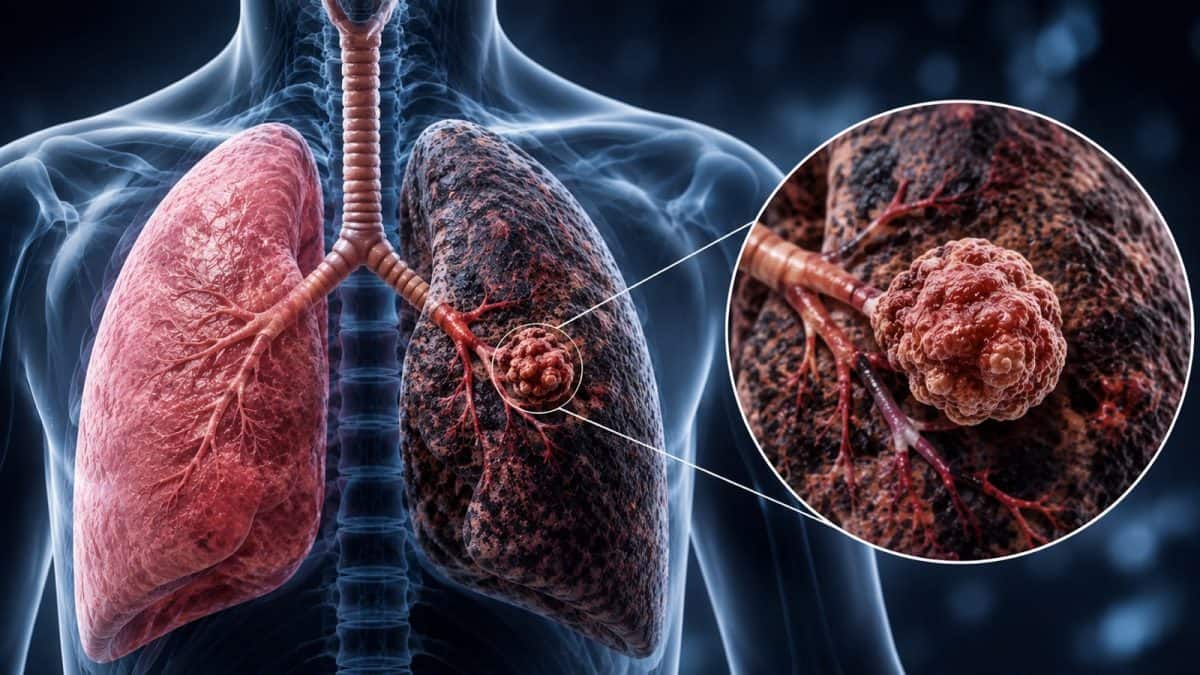
Why more non-smokers in India are developing lung cancer

Lifestyle Changes and Screening Can Help Lower Cancer Risk

Study Finds Aircrews Face Elevated Radiation-Cancer Death Risk

Study Finds Aviation Workers Have High Radiation-Cancer Death Proportions

Lung Cancer Is Rising Among People Who Never Smoked

New Hangout Sitcoms Turn Friendship FOMO Into Streaming Appeal

Chinese Workers Fight Office Ageing With Parasols And Sunscreen

India Sends Fifth Aid Tranche as Nepal Flood Toll Climbs

Dyson Launches $499 CameraJet AI Toothbrush With Jet Flossing

PlatinumRx remotely helps families save on recurring medicines