1 week ago
Orangutan Seizure Highlights India’s Expanding Illegal Primate Trade
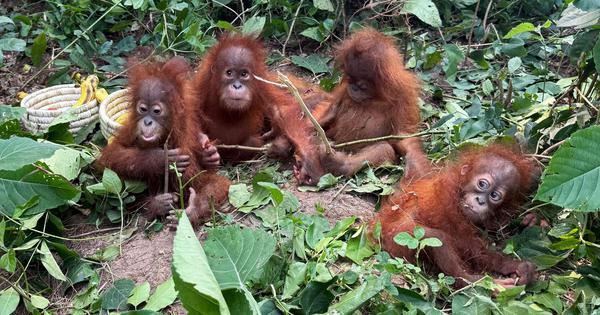
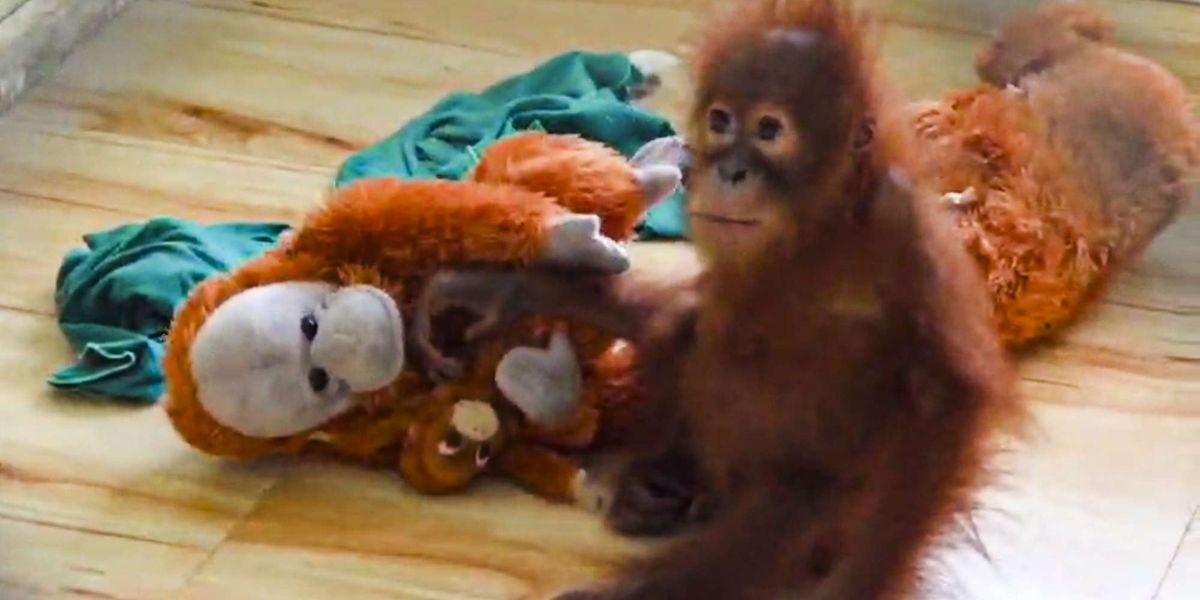
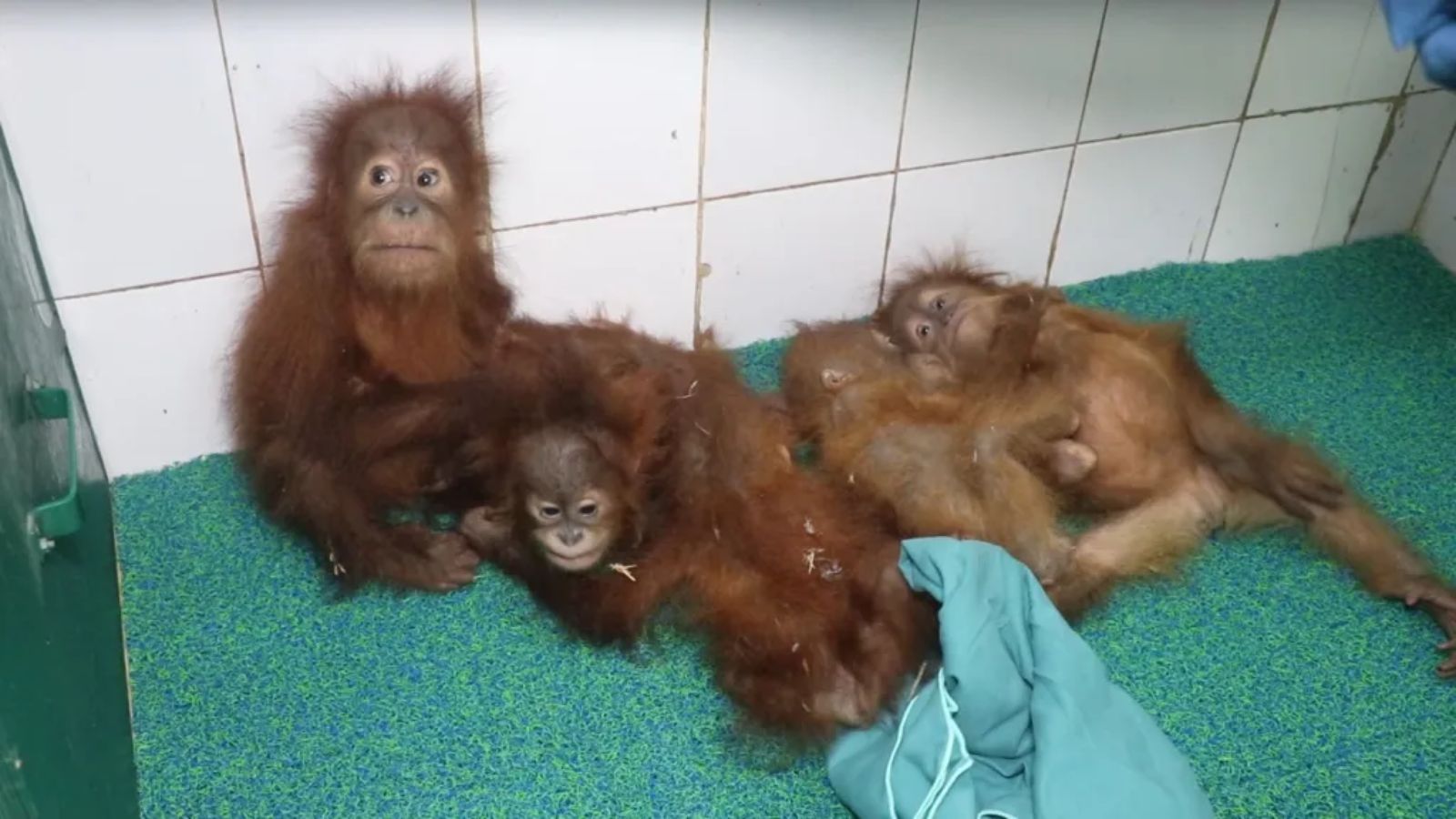
Five baby orangutans were found in a forest in Odisha, India, even though orangutans naturally live in Indonesia.
Officials are trying to discover who brought them there and where they came from.
The animals may have been taken from the wild to be sold as unusual pets.
Young orangutans usually depend heavily on their mothers, so separation can be very frightening and dangerous.
Many illegally transported primates become sick or die in cramped containers.
Other primates, especially gibbons, have also been seized at Indian airports.
Indonesia wants the orangutans returned, but India has not yet completed DNA testing because the babies are in delicate health.
If they are returned, they would first need medical care and rehabilitation before any possible release into the wild.
The case has raised concerns that India is becoming an important destination for illegal wildlife trafficking.

Five orangutan infants found in an Odisha forest are being investigated as possible victims of international wildlife smuggling.
India recorded nearly 4,000 exotic-animal seizures across 56 incidents in 2022, including more than 100 primates.
Gibbons, orangutans, macaques, lemurs and other primates are increasingly appearing in India’s illegal exotic-pet trade.
Conservationists say infant primates are often separated violently from their mothers and suffer severe stress during transport.
Indonesia has sought repatriation, while Odisha has requested permission to permanently keep the orangutans at Nandankanan Zoological Park.
- Who
- Five infant orangutans, Indian and Odisha authorities, Indonesian officials, and wildlife-conservation groups are involved.
- What
- Authorities are investigating how the orangutans reached Odisha and whether they were smuggled through an international wildlife-trafficking network.
- Where
- The orangutans were found in a forest in Odisha and are being held at Nandankanan Zoological Park; their natural habitats are in Sumatra and Borneo.
- When
- The orangutans were found recently; related Indian primate seizures cited in the reports occurred in 2022, 2024 and 2025.
- Why
- The investigation concerns the illegal exotic-pet trade and the animals’ possible trafficking, maternal separation and mistreatment.
Repatriation Advocates
Permanent Captive Placement
What should happen to the orangutans?
Repatriation Advocates
Conservationists and Indonesian officials argue that repatriation should be explored first, since Indonesia has orangutan rehabilitation facilities and all three orangutan species are found there.
Permanent Captive Placement
The Odisha government has requested permission from the Central Zoo Authority to permanently keep the five orangutans at Nandankanan Zoological Park.
Timing of genetic testing
Repatriation Advocates
Supporters of repatriation say genetic identification and consultation with the state of export are important before deciding the animals’ final placement.
Permanent Captive Placement
Indian authorities are delaying DNA testing because the infants are in delicate health, leaving their exact origin unresolved.
Likely trafficking routes
Repatriation Advocates
Some experts suggest routes through northern Sumatra, the Andaman Islands, the India-Myanmar or India-Bangladesh borders, and maritime channels.
Permanent Captive Placement
These routes remain unconfirmed; other experts identify Thailand, Malaysia or the United Arab Emirates as possible transit points, while authorities continue investigating.
Key facts
- Animals found
- Five orangutan infants, believed to be younger than one year
- Current location
- Nandankanan Zoological Park, Odisha
- Natural range
- Sumatra and Borneo
- 2022 Indian seizures
- Nearly 4,000 exotic animals across 56 incidents, including more than 100 primates
- Gibbon seizures
- Multiple seizures were reported at Mumbai, Chennai and Bengaluru airports in 2025
- Indonesia’s position
- Indonesia has sought repatriation of the five orangutans
- India’s position
- Odisha has requested permission to keep them permanently at Nandankanan Zoological Park
Quotes
Sumanth Bindhumadhav
India director of Humane World for Animals and co-author of a report on India’s exotic pet trade
“A wild orangutan mother is obviously better than a surrogate, but surrogate care followed by rehabilitation has been done successfully in the past. So there is a good chance that these animals could eventually be integrated into the wild.”
 scroll.in
“We don’t yet know the state of export or the country of origin. Our view is that repatriation should be explored first in the interest of these animals.”
scroll.in
Sources
Related news
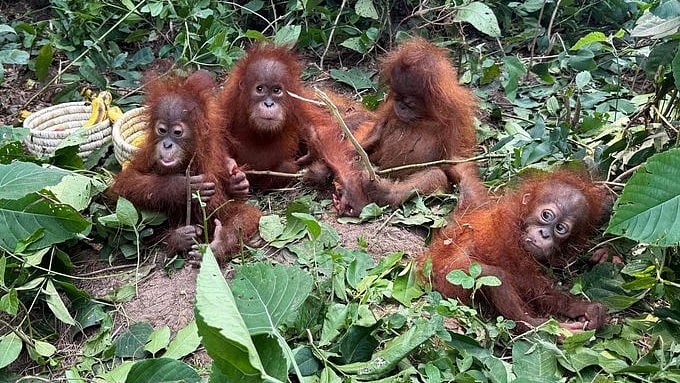
Odisha Orangutan Rescue Exposes India’s Exotic Primate Smuggling Network
Odisha Orangutans Highlight Wildlife Trade and Repatriation Challenges

Five Infant Orangutans in Odisha Trigger Trafficking Investigation
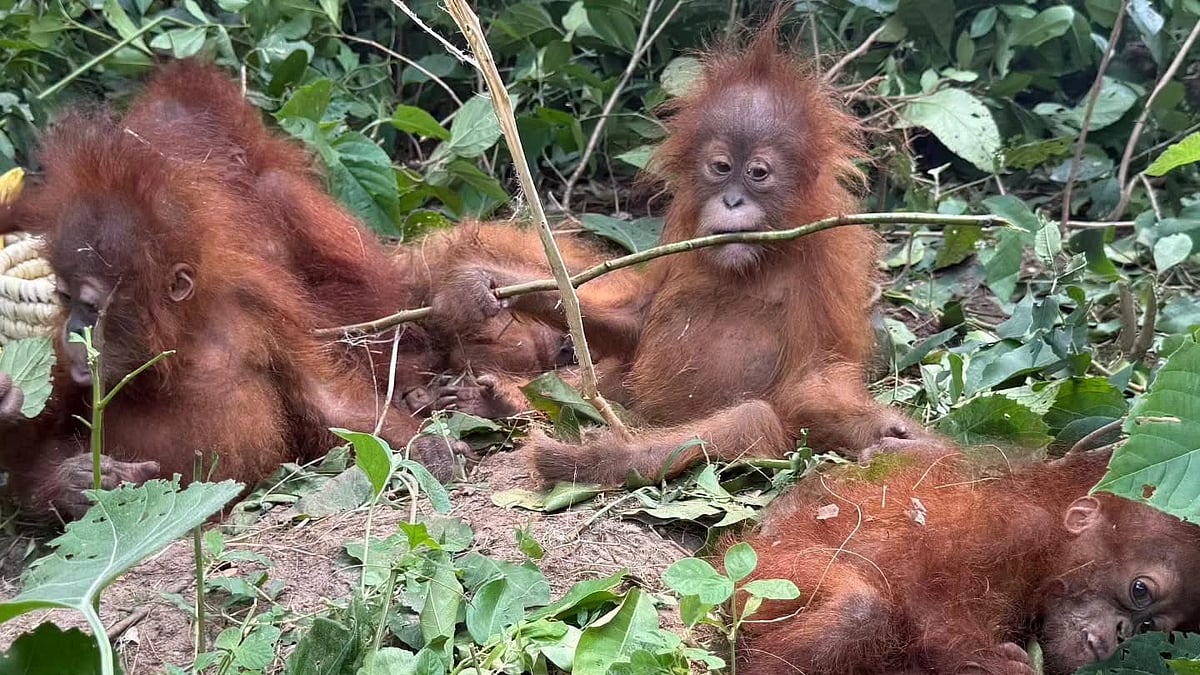
Five Baby Orangutans Rescued in Odisha as Smuggling Probe Begins
Baby Orangutans Expose India’s Hidden Wildlife Trafficking Trade

India Probes Five Baby Orangutans as Indonesia Plans Repatriation
Five Rescued Baby Orangutans Face 90-Day Quarantine at Odisha Zoo
Wildlife SOS Faces Fresh Scrutiny Over Alleged Elephant Smuggling

Wildlife SOS Investigation Raises Questions Over Anti-Poaching Operations

Rescued Orangutan Babies Await Larger Nandankanan Enclosure After Quarantine