

1 day ago
US Treasury Yields Hit 25-Year High, Raising Borrowing Costs

A government bond is like an IOU from the government.
People lend money to the government and receive payments in return.
The yield tells them how much they may earn from that loan.
When inflation rises, future payments may buy fewer goods, so investors often demand better returns.
Investors can also sell existing bonds, causing their prices to fall.
When bond prices fall, their yields rise.
The US government then has to offer higher returns when it borrows more money.
This can leave less money in its budget for other priorities.
Higher yields can also make business loans and home loans more expensive, which may slow the economy.

The yield on the 30-year US Treasury bond reached its highest level in about 25 years on Tuesday.
Bond yields reflect the return lenders expect, while bond prices and yields generally move in opposite directions.
Inflation concerns and strong demand for loans are pushing investors to seek higher returns across borrowing durations.
Higher yields increase borrowing costs for the US government and could direct more budget money toward interest payments.
Because US Treasury debt is viewed as highly safe, rising US yields can raise borrowing costs for governments, businesses, and households worldwide.
- Who
- The United States government, investors, other governments, businesses, and borrowers are affected.
- What
- The yield on the 30-year US Treasury bond reached an approximately 25-year high, while yields rose across borrowing durations.
- Where
- The development concerns the US Treasury and bond markets, with effects extending to borrowers internationally.
- When
- The 30-year yield reached that level on Tuesday; annual US interest payments were reported at $1.2 trillion as of 2025.
- Why
- Inflation concerns, increased demand for loans, and high government and corporate borrowing are prompting lenders to seek higher returns.
Key facts
- 30-year Treasury yield
- Reached its highest level in around 25 years on Tuesday.
- Bond yield
- The return a lender expects from lending money for a specified period.
- Main drivers
- Inflation concerns and increased demand for loans by governments and businesses.
- US government debt
- The article says the existing debt pile has risen to more than $40 trillion.
- Annual interest payments
- Rose from around $600 billion before the Covid-19 pandemic to $1.2 trillion in 2025.
- Broader impact
- Higher US yields can increase borrowing costs for governments, businesses, and home-loan borrowers.
Sources
Related news
US 30-Year Treasury Yield Hits Highest Level Since 2004
Rising US Bond Yields Threaten Global Growth and Budgets
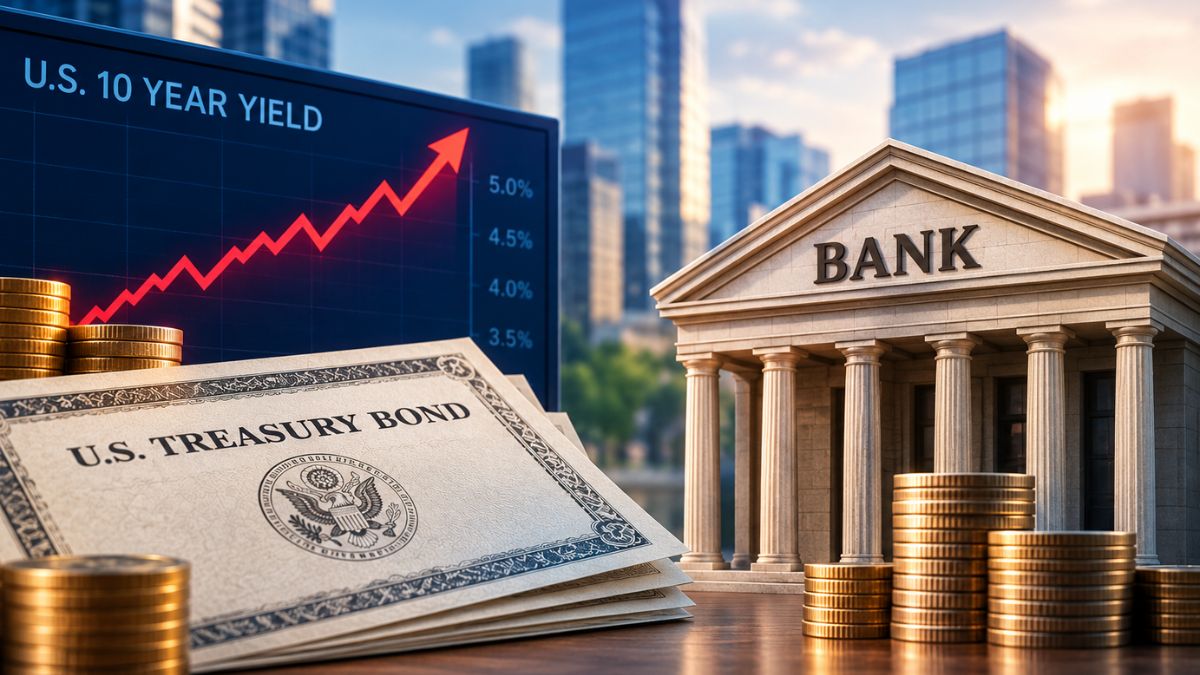
Global Bond Rout Deepens as US Yields Hit 24-Year High
Global Bond Yields Hit Multidecade Highs Amid Debt Worries

Global Bond Yields Surge as Inflation and Debt Risks Rise

US Bond Yields Surge, Pressuring Nifty and Sensex

Dollar Gains Third Week as Treasury Yields Hit 2002 High

US Expands Middle East Presence as Trump Warns Iran

Short Bets on Treasuries Raise US Repo Market Disruption Risks
France Fiscal Woes Drive Haven Demand for US Treasuries
