3 weeks ago
India's private firms develop indigenous engines for UAVs and missiles
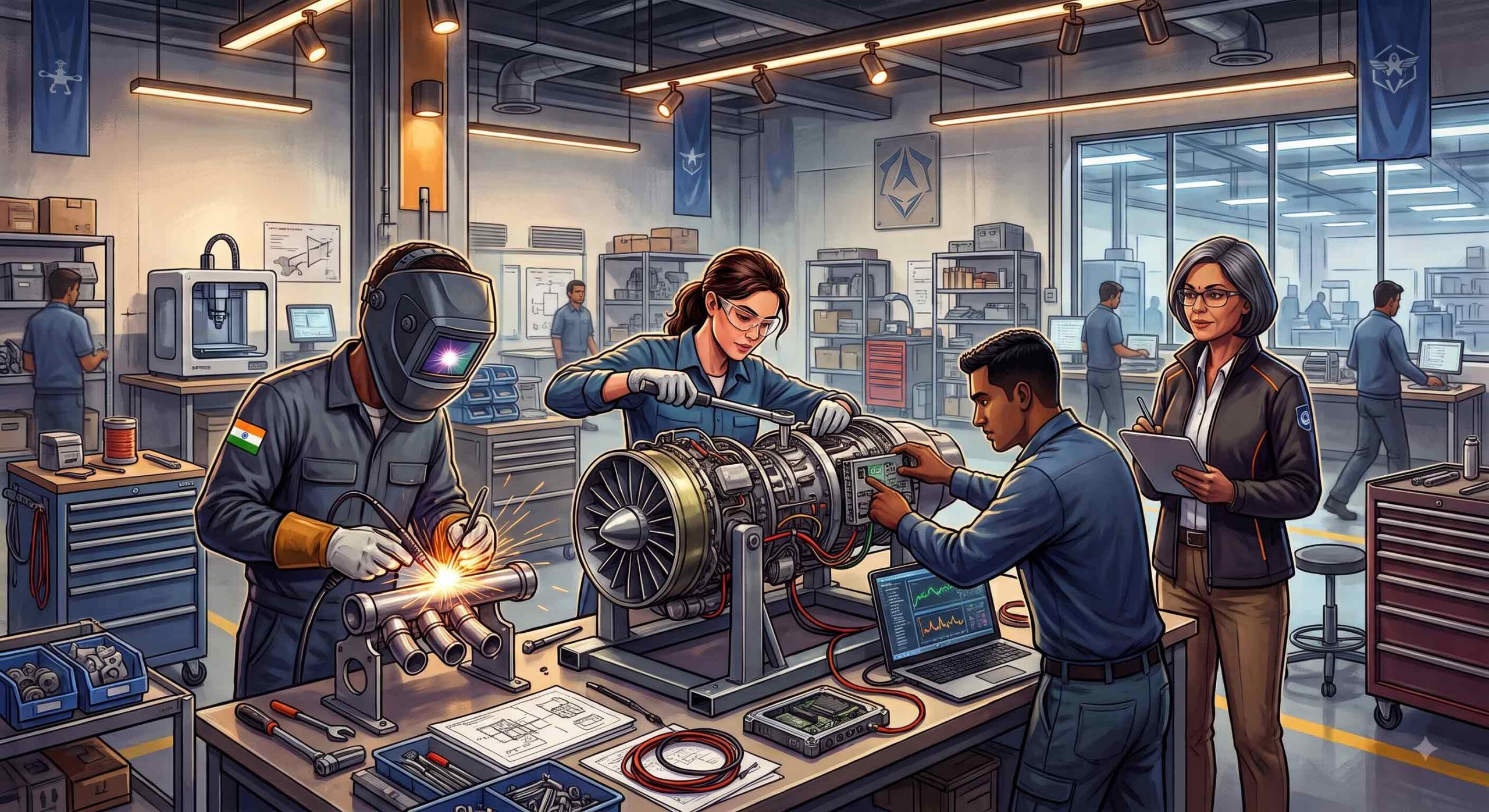
Engines help planes, drones and missiles fly by pushing them forward.
For a long time, India bought many of these engines from other countries.
Now, Indian companies are building their own engines.
Some companies make small engines for drones.
Others make bigger engines for missiles.
One company delivered the first engine that India made completely by itself.
Another company made the first private turbofan engine of its size.
Some new engines can even run on hydrogen or diesel, not just special jet fuel.
Engineers test the engines to make sure they work well.
This helps India become strong and independent in making its own flying machines.

Several Indian private companies and deep-tech start-ups are now designing and manufacturing complete aero engines for UAVs, missiles and drones, moving beyond build-to-print component supply.
Hyderabad-based Azad Engineering delivered India's first fully indigenous expendable turbojet in the 350 kg thrust class to DRDO's Gas Turbine Research Establishment on 22 July 2026.
Paninian India unveiled the Yantur 4.5 kilonewton turbofan, described as India's first privately developed turbofan in its thrust class, intended for the Svayatt L1 cruise missile platform.
New Delhi-based DG Propulsion has developed a family of compact turbojets from 20 to 100 kgf thrust, with its flagship DG J40 delivering 40 kgf in a roughly 3.7 kg package.
Bharat Forge validated its KGT 45 gas turbine in January 2023 and signed an MoU with Andhra Pradesh to build India's first private marine gas turbine facility near Visakhapatnam.
Other ventures, including IIT Delhi-incubated Green Aero, IIT Madras-incubated D-Propulse and IISc Bengaluru's Nabhdrishti Aerospace, are working on micro-turbines and advanced combustion engines.
- Who
- Indian private defence firms and deep-tech start-ups such as Paninian India, Azad Engineering, DG Propulsion and Bharat Forge, plus IIT Delhi-, IIT Madras- and IISc Bengaluru-incubated ventures, working with DRDO's Gas Turbine Research Establishment.
- What
- Designing, testing and manufacturing indigenous aero engines — turbojets, turbofans and gas turbines — for UAVs, drones, cruise and anti-ship missiles, and naval applications.
- Where
- Across India, including Hyderabad, New Delhi, Bengaluru and near Visakhapatnam in Andhra Pradesh.
- When
- Reported in 2026; Azad Engineering's turbojet was delivered on 22 July 2026, while Bharat Forge's KGT 45 was validated in January 2023.
- Why
- To achieve self-reliance and strategic autonomy in defence propulsion rather than depending on imported engines.
Key facts
- Yantur turbofan
- 4.5 kN thrust; described as India's first privately developed turbofan in its class; for the Svayatt L1 cruise missile
- Azad Engineering delivery
- 350 kg thrust-class expendable turbojet delivered to GTRE on 22 July 2026
- DG J40
- 40 kgf thrust in a 3.7 kg package, 148 mm diameter, 370 mm length
- KGT 45
- 45 kgf thrust-class gas turbine; validated January 2023; operates up to 8 km altitude
- Bharat Forge marine facility
- India's first private-sector marine gas turbine repair and development complex planned near Visakhapatnam
- D-Propulse RDE
- 5 kN rotating detonation engine hot-fired at a DRDO facility; flight-ready version targeted around 2027
- Nabhdrishti ND400
- 400-newton micro gas turbine; ~3.95 kg core; up to 95,000 rpm
Sources
Related news

India Tests First Fully Indigenous Jet-Powered Loitering Munition Divyastra Mk3

Reliance, Rolls-Royce partner to develop indigenous AMCA combat engine

Reliance and Rolls-Royce partner to develop AMCA fighter jet engines
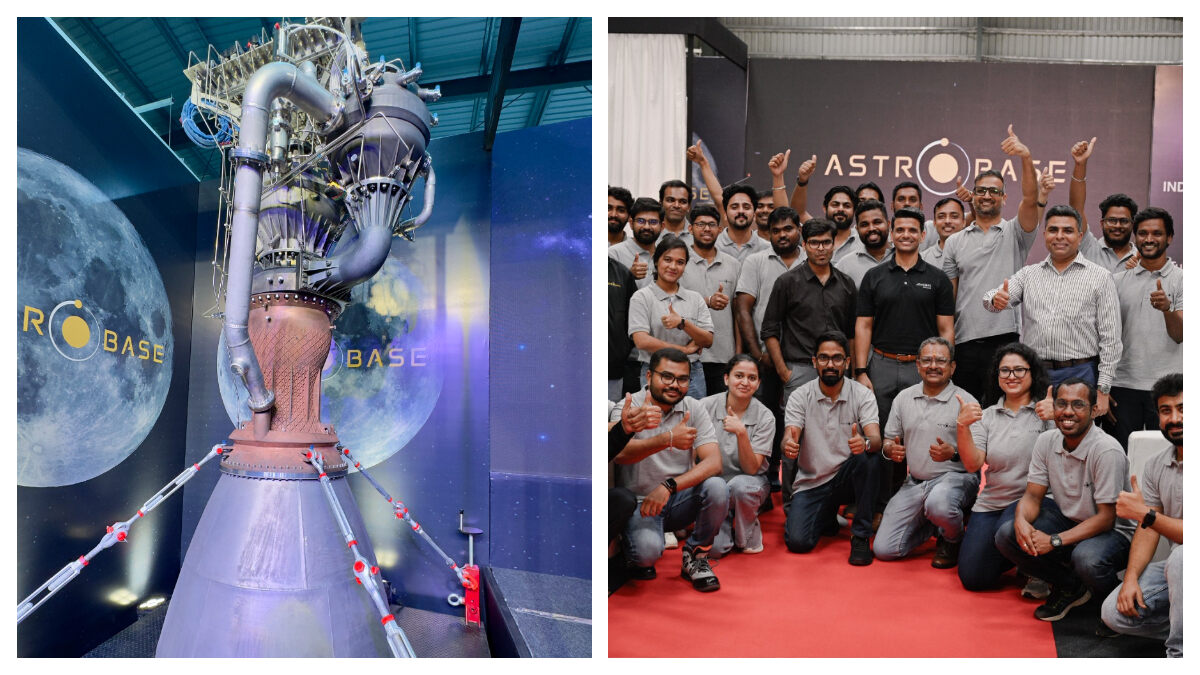
Astrobase unveils EVEREST, India's first private FFSC rocket engine

HAL, Safran Sign Deal for India’s Aravalli Helicopter Engine

HAL and Safran Sign Deal for Aravalli Helicopter Engine

UPSC Key Covers SCO, Electoral Rolls, Economy, Defence and Climate
Indian Navy Receives First Multipurpose Vessel Samarthak

UPSC Key Tracks Talking Cars, Glaciers, Treaties And Growth

India and UK Advance Military Production and Defence Cooperation
Indian Navy Commissions INS Nipun for Deep-Sea Submarine Rescue