

1 hr ago
Why Screen Time Alone Cannot Protect Children’s Mental Health
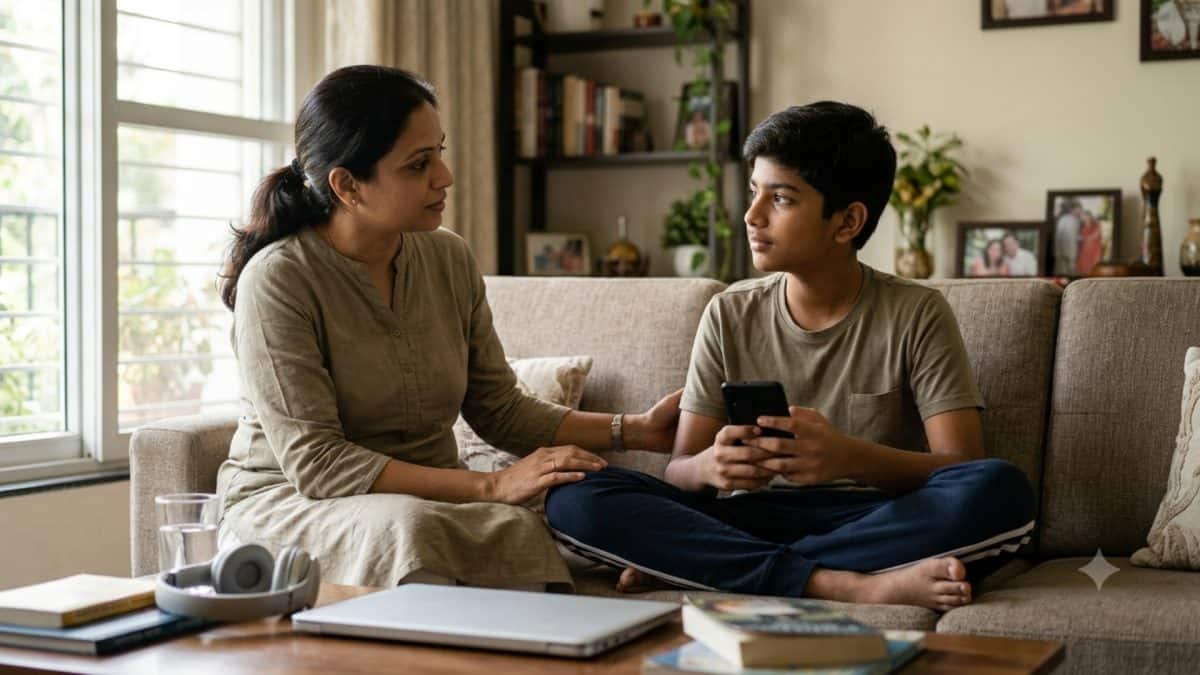
Children spend time online for many reasons, such as talking to friends, playing games, and learning.
The number of hours they use a screen does not tell the whole story.
Some online experiences can help children feel connected, while others can make them feel left out or pressured.
AI can help with questions, but children also need chances to think through problems themselves.
Parents can ask how online activities make their children feel.
Listening calmly can help children feel safe talking about hard things.
Changes in mood or online habits may be a reason to talk, but they do not prove that something is wrong.
Rules can help, especially when parents explain them and keep talking with their children.

Psychotherapist Mansi Poddar says parents should consider what children experience online, not just how long they use screens.
Social media and gaming can offer connection and entertainment, but may also expose children to comparison, exclusion and pressure.
COP founder Sandeep Kumar cautions that overreliance on AI may limit chances to practise independent problem-solving.
Changes in a child’s online habits or mood can be reasons to check in, but do not by themselves establish a mental health problem.
The experts recommend open, non-judgmental conversations alongside appropriate boundaries and parental judgment.
- Who
- Children and adolescents, their parents, psychotherapist Mansi Poddar, and COP founder Sandeep Kumar.
- What
- The article discusses how parents can support children’s mental health by understanding their online experiences rather than focusing only on screen-time totals.
- Where
- Children’s digital environments, including social media, gaming and AI tools.
- When
- In a World Mental Health Day article; no publication date is stated.
- Why
- Online experiences can affect children’s feelings, relationships, confidence and learning, so parents are encouraged to notice context and keep conversations open.
Potential benefits
Potential concerns
Social media and gaming
Potential benefits
Digital spaces can offer children connection, entertainment, achievement and self-expression.
Potential concerns
They can also involve comparison, exclusion, pressure to keep up and habitual use.
AI tools
Potential benefits
AI can help children access information and complete tasks.
Potential concerns
Relying on AI for every answer may reduce opportunities to practise independent problem-solving.
Parental boundaries
Potential benefits
Rules and limits can be part of helping children develop healthier digital habits.
Potential concerns
Restrictions or threats alone may fail to address why children use devices and may make them less willing to share difficult experiences.
Key facts
- Psychotherapist
- Mansi Poddar, described as trauma-informed.
- COP founder
- Sandeep Kumar.
- Digital areas highlighted
- AI, social media and gaming.
- Poddar’s focus
- Screen quality and what children experience online, not screen duration alone.
- Potential signs to discuss
- Changes in usage patterns, mood while or after using a phone, longer hours on messaging apps, or unusual digital behaviour.
- Important qualification
- These signs alone do not establish that a child has a mental health difficulty.
- Suggested approach
- Use open, non-judgmental conversations, supported by suitable boundaries and parental judgment.
Sources
Related news

Musk's Gaming Claim Sparks Kolkata Debate Over Children's Screens

India’s Childhood Conversation Turns From Screens Toward Play
Noida Schools Limit Classroom Screen Time Amid Child Health Concerns

Ankur Warikoo Reflects on Screen Time and Family Disconnect

Professor Offers Parents Guidance On Teen Friendships, Social Media

Excessive Screen Time May Affect Children’s Sleep, Learning, Development
Indian Para-Shooters Protest Selection for 2026 Asian Para Games

Para-Shooters Allege Kickbacks in Asian Games Selection

MCD Debates Winter Measures to Prevent Delhi’s Pollution Crisis

Uttar Pradesh Startups Showcase Innovations at International Trade Show
