

3 hrs ago
Centre Plans Faceless GST Assessments, Starting With Central Taxpayers

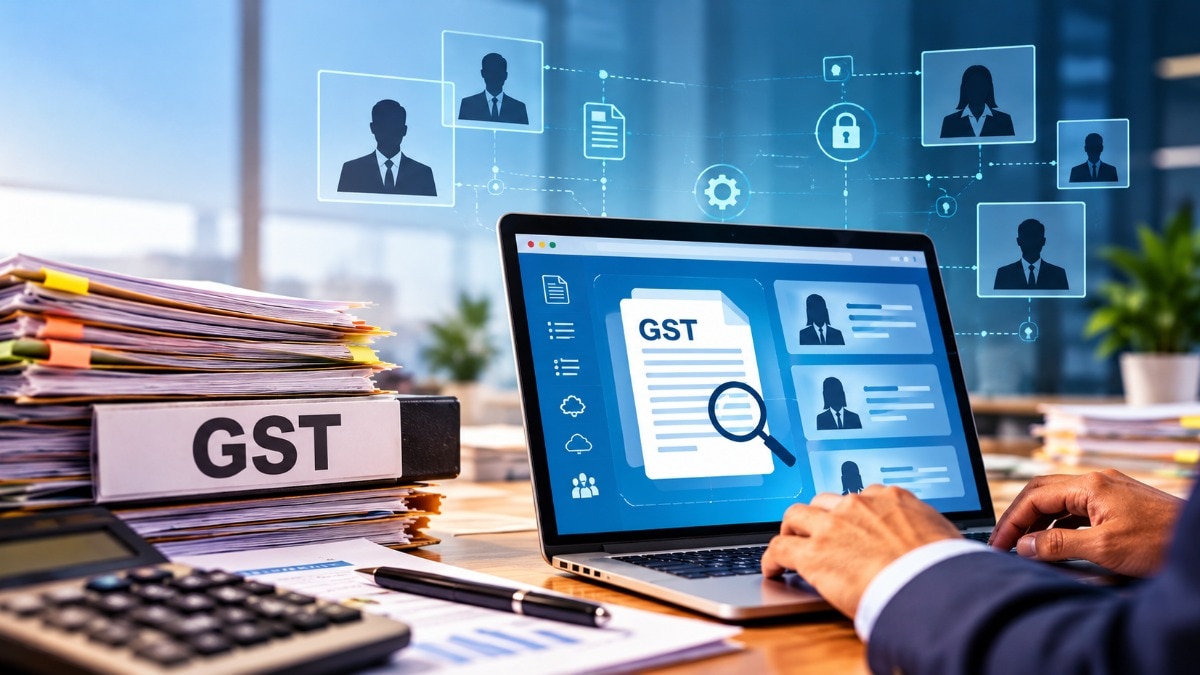
The government plans to handle some GST tax assessments online, without taxpayers needing to meet an officer in person.
The plan is expected to start with taxpayers assigned to the central tax administration.
Officials say the system would use technology and teams to review cases.
Experts think this could make decisions more predictable and reduce unnecessary interactions.
Businesses working in many states, exporters and large manufacturers may benefit.
Some experts say the system should begin with simpler cases and expand gradually.
They also want taxpayers to have enough time to respond and a way to request video hearings.
An independent channel for complaints could help address problems.

The Finance Ministry plans to introduce faceless GST assessments in a few months, initially for taxpayers assigned to central formations.
The scheme would remove in-person contact where technologically feasible and use team-based assessments with dynamic jurisdiction.
Of more than 1.70 crore registered GST taxpayers, over 73.5 lakh are assigned to central formations and over 97 lakh to States and Union Territories with legislatures.
Experts say the system could improve predictability and reduce taxpayers’ dependence on individual officers, particularly for multi-State businesses, exporters and large manufacturers.
Experts also call for gradual rollout and safeguards, including reasonable response times, video hearings for proposed adverse decisions and an independent grievance channel.
- Who
- The Finance Ministry plans the system for GST taxpayers initially assigned to central formations.
- What
- A faceless GST assessment system that reduces in-person interaction and uses team-based assessments.
- Where
- The announcement was reported as made “here,” but the location is not specified.
- When
- The government official said it was planned for introduction in a few months; the report was published October 6, 2026.
- Why
- To improve administrative efficiency and reduce person-to-person interaction; experts also cite predictability and fewer opportunities for arbitrariness.
Potential benefits
Cautions and safeguards
How quickly to roll out
Potential benefits
A faceless regime could improve efficiency, predictability and ease of compliance, particularly for businesses operating across multiple states.
Cautions and safeguards
Experts recommend starting with routine scrutiny and smaller demands, then expanding after the system demonstrates its effectiveness.
Protecting taxpayers in online proceedings
Potential benefits
Random case allocation and online records of notices, replies and hearings could reduce dependence on individual officers and limit arbitrariness.
Cautions and safeguards
Taxpayers should have reasonable time to respond, access to video hearings when material adverse views are proposed, hearing recordings, and an independent grievance channel.
Key facts
- Planned launch
- In a few months, according to a government official
- Initial coverage
- Taxpayers under central formations
- Possible later expansion
- States could be offered the scheme as an option
- Registered GST taxpayers
- More than 1.70 crore
- Central formations
- More than 73.5 lakh taxpayers
- State and UT formations
- More than 97 lakh taxpayers in States and Union Territories with legislatures
- Assignment basis
- Turnover: above ₹1.5 crore, Centre and State split 50:50; below ₹1.5 crore, split 10:90
- Report publication date
- October 6, 2026
Quotes
Government official
A top government official discussing the planned GST assessment scheme.
“We plan to introduce a faceless assessment scheme in few months under GST. Initially, we would like to bring assessees under central formations under the scheme. Later, it could be offered to States as optional.”
 thehindubusinessline.com
“A GST faceless assessment regime may be most effective if it is designed from inception with robust taxpayer safeguards.”
thehindubusinessline.com
Brijesh Kothary
Partner at Khaitan & Co.
“The implementation should start with routine scrutiny and smaller demands and gradually expand once the system has demonstrated its effectiveness.”
thehindubusinessline.com
Sources
Related news
Central GST May Introduce Faceless Tax Assessments Soon

GST Council to Consider Major Process and Compliance Reforms
GST Council Proposes Streamlined Officers’ Committee Structure
GST Council Weighs Sweeping Compliance Reforms for Businesses

GST 2.0 to Focus on Faster Refunds and Simpler Compliance
