

3 weeks ago
Vitamin B12 Drug-Delivery Shows Promise Against Glioblastoma in Preclinical Research
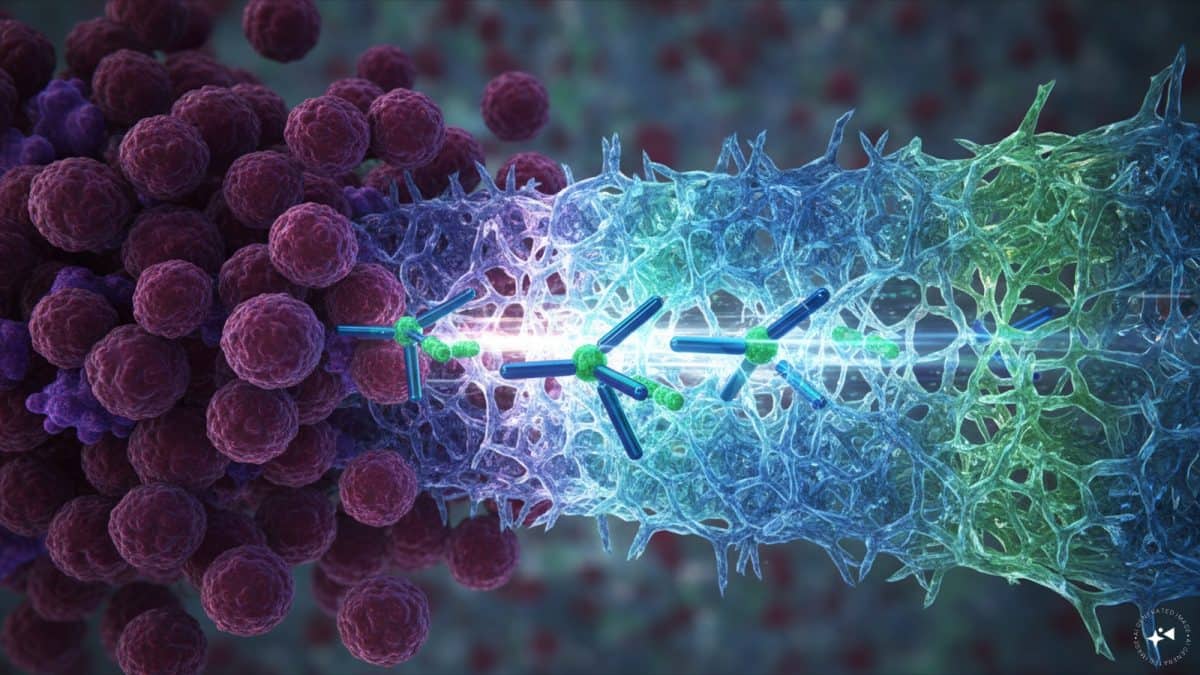
Glioblastoma is a very serious kind of brain cancer that is hard to treat.
The brain has a special shield called the blood-brain barrier that keeps many medicines out.
Scientists have a clever idea: using vitamin B12 as a delivery truck for medicine.
Brain cancer cells need a lot of vitamin B12 to grow, so they let it inside.
By attaching medicine to a special version of vitamin B12, the medicine might be able to ride along into the cancer cells.
This research is still very new and has only been tested in labs and on animals.
It has not been tried in people yet, so we do not know if it works or is safe.
Taking regular vitamin B12 pills will not cure brain cancer.
Even if the idea works, it would likely help alongside surgery, radiation and chemotherapy instead of replacing them.

A modified form of vitamin B12 is being studied as a vehicle to deliver therapeutic drugs to glioblastoma cells.
Glioblastoma cells require increased vitamin B12 to synthesize DNA, a property researchers aim to exploit using vitamin B12 transporters.
The approach uses vitamin B12's natural transport mechanisms to help drugs cross the blood-brain barrier, a major obstacle in brain cancer treatment.
The findings are preclinical, based on laboratory and animal experiments, and would need Phase I, II and III trials before human use.
Experts say regular vitamin B12 supplements cannot treat or prevent glioblastoma, and the therapy would likely complement rather than replace surgery, radiation and chemotherapy.
- Who
- Researchers studying glioblastoma, as explained by Dr. Nandini Mitta, Consultant - Neurology at SPARSH Hospital, Yelahanka (Bangalore), in an interview with Firstpost.
- What
- A novel vitamin B12-based drug-delivery approach using modified vitamin B12 to carry therapeutic agents into glioblastoma cells across the blood-brain barrier.
- Where
- Preclinical research conducted in laboratory settings and animal experiments; discussed in an interview with Firstpost at SPARSH Hospital, Yelahanka (Bangalore).
- When
- Recent research, still at the preclinical stage with no human trials yet conducted.
- Why
- To address the challenge of the blood-brain barrier, which prevents many cancer drugs from reaching brain tissue in sufficient concentrations.
Key facts
- Condition
- Glioblastoma, among the most aggressive and difficult-to-treat brain cancers
- Research stage
- Preclinical — tested in laboratory settings and animal experiments
- Approach
- Modified vitamin B12 used as a delivery vehicle for therapeutic drugs
- Mechanism
- Glioblastoma cells need increased vitamin B12 for DNA synthesis; drugs attached to B12 analogues enter cells via vitamin B12 transporters
- Blood-brain barrier
- Highly selective protective system that restricts many substances, including several medicines, from reaching brain tissue
- Clinical trials needed
- Phase I, II and III trials before the therapy could be prescribed to patients
- Vitamin B12 supplements
- No scientific evidence that regular supplements can prevent or treat glioblastoma
- Expert source
- Dr. Nandini Mitta, Consultant - Neurology, SPARSH Hospital, Yelahanka (Bangalore)
Quotes
Dr. Nandini Mitta
Consultant neurologist at SPARSH Hospital, Bangalore
“The research involves a modified version of vitamin B12 that serves as a drug‑delivery system rather than as a dietary supplement.”
 firstpost.com
“The blood‑brain barrier is a highly selective barrier that restricts the entry of many foreign substances into the brain.”
firstpost.com
Sources
Related news

IIT Bombay Study Reveals Why Deadly Brain Cancer Returns

India’s Smart Cancer Drug RK-251 Targets Tumor Cells
Australian Researchers Challenge Old Assumptions in Brain Tumour Treatment

Indian Scientists Develop Smart Drug Targeting Aggressive Breast Cancer
Sildenafil Shows Promise Against Cancer Spread; Human Trials Still Needed
Mother's 'Pins and Needles' Dismissed as Injury Was Glioblastoma

Human-Wildlife Conflict Likely in Telangana, Andhra Tiger Reserves
