

16 hrs ago
ISB Dean Says Business Schools Must Offer Relevant, Flexible Learning
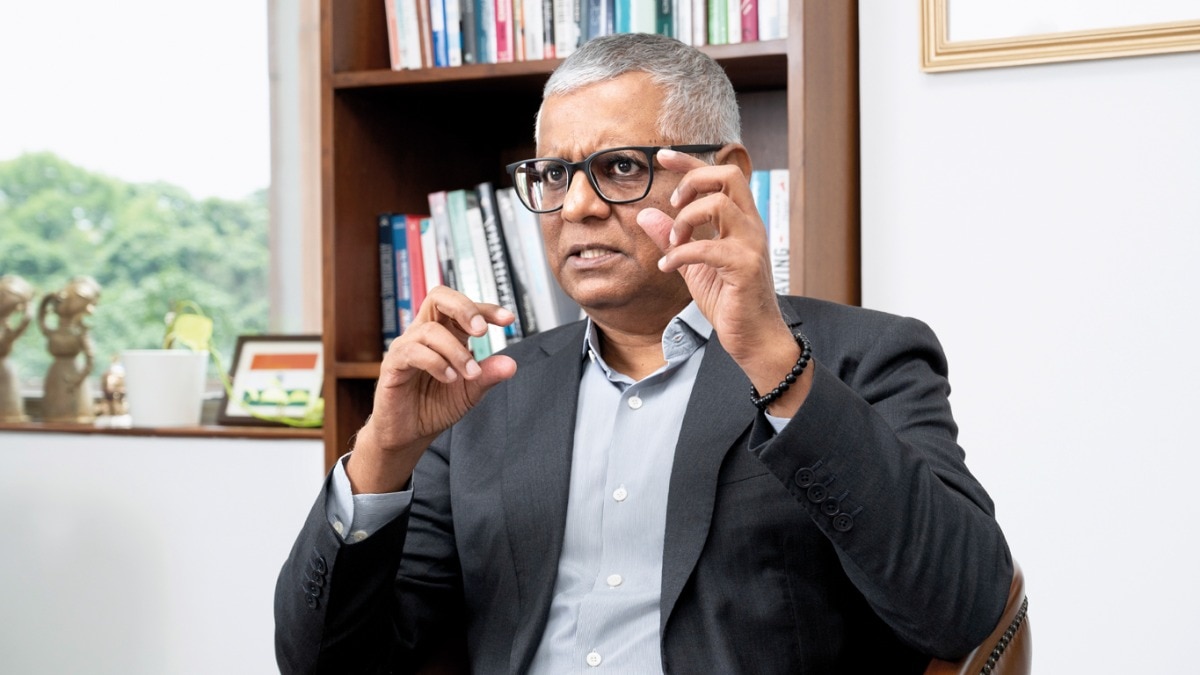
Madan Pillutla leads the Indian School of Business, which is marking 25 years.
He says business schools may need to change how they teach.
Instead of taking one large package of courses, people might return to learn particular skills when they need them.
Companies may also help choose and pay for training for their employees.
Pillutla says people will still need to think carefully, ask good questions and work well with others.
He says AI can help with some work, but students also need to practise solving problems themselves.
He hopes ISB will study how businesses work in India and share useful lessons with the rest of the world.
He describes these changes as possibilities schools should prepare for, not certainties.

Madan Pillutla says ISB’s next phase should develop insights from India’s business experience for global use.
He expects management education to become more specialised, personalised and available throughout people’s careers.
Pillutla says future managers will need judgement, critical thinking, curiosity and relationship-building skills alongside technical knowledge.
He says companies may increasingly commission customised courses for employees and assess their value.
ISB is still working out how AI should be used in education, including when it may undermine students’ learning process.
- Who
- Madan Pillutla, Dean and Professor of Organisational Behaviour at the Indian School of Business (ISB).
- What
- He discussed ISB’s future and argued that management education may become more relevant, specialised and flexible.
- Where
- The Indian School of Business in India; the interview was published by Business Today.
- When
- In an interview marking ISB’s 25th anniversary; the article gives no interview date.
- Why
- Pillutla says rapid change in business, technology and careers is prompting new expectations for management education.
Concerns and constraints
Potential benefits and opportunities
Flexible, personalised learning
Concerns and constraints
Pillutla says a flexible model would require schools to reorganise and manage less predictable demand; personalised education may also cost more.
Potential benefits and opportunities
He sees the potential for learners to choose relevant courses when needed and for companies to develop skills through customised programmes.
AI in education
Concerns and constraints
Pillutla warns that instant answers and summaries may stop students from struggling through problems, which he considers part of learning.
Potential benefits and opportunities
He says people with deep expertise may become more effective with AI and expects institutions to learn where and how it should be used.
Key facts
- Institution
- Indian School of Business (ISB)
- Milestone
- ISB is completing 25 years.
- Interviewee
- Madan Pillutla, Dean and Professor of Organisational Behaviour.
- ISB deanship
- Pillutla has been Dean since July 2021.
- Previous institution
- He spent 22 years at London Business School before joining ISB.
- Possible education model
- Pillutla says learning may become more à la carte, with people taking courses at different career stages; he describes this as a hypothesis.
- Public policy work
- ISB established the Bharti Institute of Public Policy to contribute research, data and analysis for policymakers.
Quotes
Madan Pillutla
Dean and Professor of Organisational Behaviour at ISB
“The biggest shift is that education will become less about a single point in time and more about a continuous journey.”
 businesstoday.in
“The future may look more like an à la carte model where people choose courses at different points in their careers.”
businesstoday.in
Sources
Related news
Indian Business Schools Rethink MBA Programmes Amid Change
Why India’s Two-Year MBA Faces Pressure as Students Reconsider

Globally Benchmarked Programmes Aim to Prepare Future Business Leaders
TGCHE Chairman Releases Book on Management Education’s Future

Swapan Dasgupta Plans Revival of India’s First Business School
CEA Warns AI Could Eliminate Management Entry-Level Jobs
India’s One-Year MBA Programs Offer Faster Career Advancement

IIM Bangalore Rises to Second in Asia-Pacific Business Rankings

Punjab Government Backs Youth Ideas Through Startups And Education
