0 months ago
India-China Talks Reveal Diplomacy Built on Deep Wariness
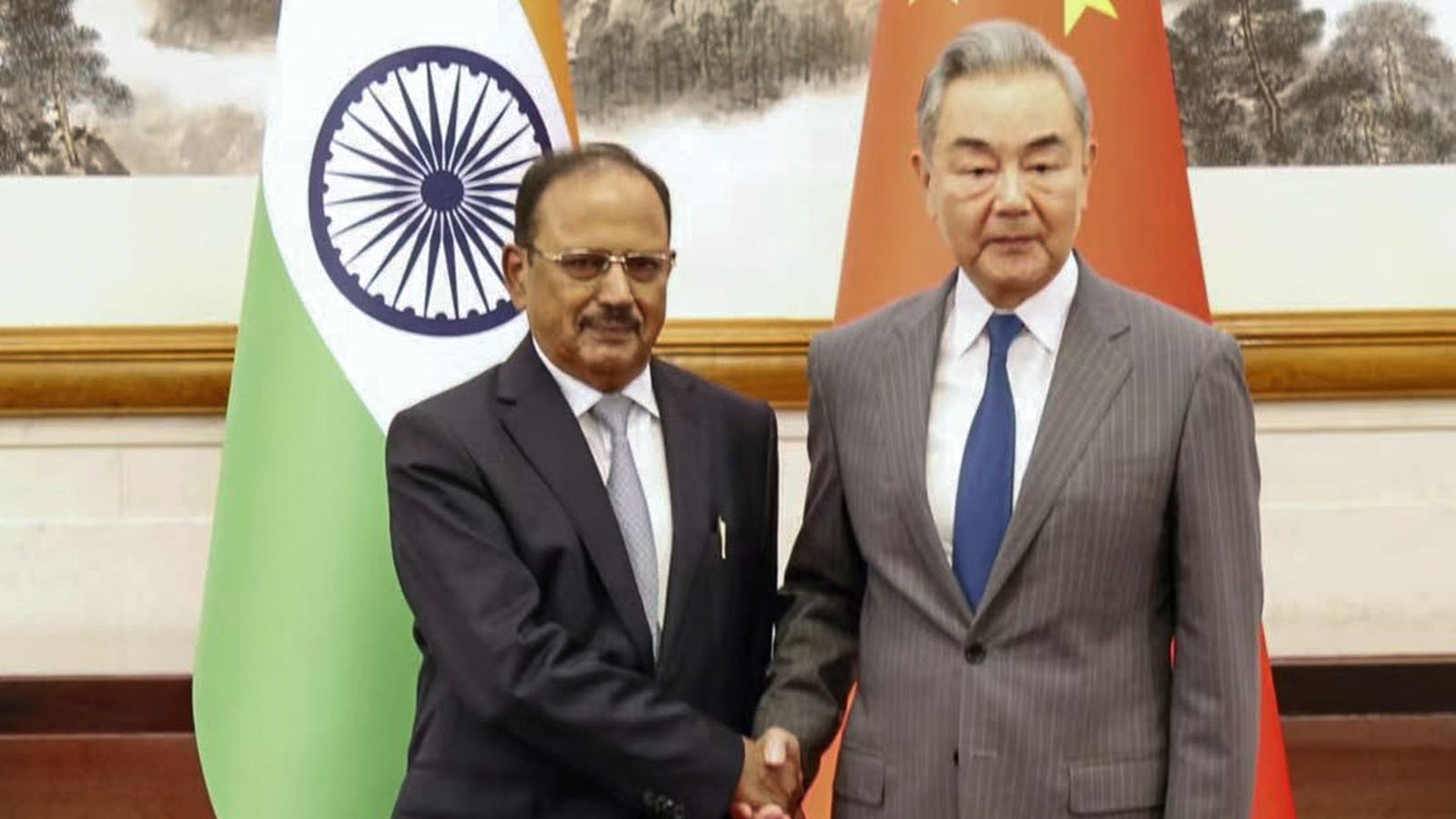
India and China held an important meeting about their difficult relationship.
At first, each country published its own description of what was discussed.
About 24 hours later, both countries published the same eight-point agreement.
They agreed to improve communication between their militaries and work on some border issues.
They also discussed river cooperation, border trade and travel to Kailash-Mansarovar.
The countries used very careful words because they still disagree about the border.
They avoided using the word Tibet in their shared statement.
The delay showed that both sides wanted cooperation but remained very cautious.
The article says this careful approach is how diplomacy currently works between India and China.

India and China issued separate accounts after August 25 talks, then released an identical eight-point consensus the next day.
The agreement proposed progress on boundary delimitation, two military meeting points and two border hotlines in eastern and middle sectors.
The sides also agreed to discuss trans-border rivers, facilitate the Kailash-Mansarovar Yatra and resume border trade.
The carefully worded statement avoided references to Tibet and described LAC cooperation without implying recognition of the disputed boundary.
The agreement was seen as an effort to stabilize ties before upcoming Shanghai Cooperation Organisation and BRICS summits.
- Who
- India, represented by National Security Adviser Ajit Doval, and China, represented by Foreign Minister Wang Yi.
- What
- The sides held the 25th Round of Special Representatives talks and later issued an eight-point joint consensus.
- Where
- The talks were held in Beijing, China.
- When
- The talks took place on August 25, with the joint consensus released on August 26; the year is not specified.
- Why
- The countries sought to maintain stability, expand cooperation and manage border-related risks amid continuing mistrust.
Cooperation and Stabilization
Caution and Strategic Wariness
Meaning of the joint consensus
Cooperation and Stabilization
The agreement and its eight points indicate political intent to stabilize relations and expand practical cooperation.
Caution and Strategic Wariness
The 24-hour delay and highly conditional language show that deep mistrust and disagreements remain.
Border mechanisms
Cooperation and Stabilization
Additional hotlines and military meeting points could improve communication and reduce misunderstandings.
Caution and Strategic Wariness
The wording avoids recognizing the Line of Actual Control and reflects sensitivity over disputed territorial claims.
Public messaging
Cooperation and Stabilization
Separate initial statements allowed each government to present the meeting in a way suited to domestic audiences before reaching common wording.
Caution and Strategic Wariness
The differing initial descriptions and Beijing's uncertainty over President Xi Jinping's BRICS attendance illustrate continuing strategic ambiguity.
Key facts
- Indian representative
- National Security Adviser Ajit Doval
- Chinese representative
- Foreign Minister Wang Yi
- Meeting
- 25th Round of Special Representatives talks
- Joint agreement
- An eight-point consensus released about 24 hours after the meeting
- Border measures
- Two new military meeting points and two new border hotlines in the Eastern and Middle sectors
- Other cooperation
- Trans-border rivers, Kailash-Mansarovar travel and the resumption of border trade
- Next Special Representatives round
- Planned for India in 2027
Quotes

Indian Embassy in Beijing
India’s diplomatic mission in China, which issued the initial account of the Doval-Wang meeting.
“reviewed bilateral ties and discussed ways to further expand cooperation and maintain stability.”
 indianexpress.com
“supports India in hosting a successful BRICS summit”
indianexpress.com
Sources
Related news

India-China Talks Show Signs of Border Ties Stabilizing
China-India Talks Reopen High-Level Channels Beyond Border Disputes

India and China Seek Border Stability, Boundary Talks

India-China Consensus Offers Cautious Momentum, Not Strategic Breakthrough
India-China Boundary Talks Make Progress, But Long Road Remains
India and China Begin Implementing Eight-Point LAC Consensus

Manasi Parekh Recalls Life-Changing Kailash-Mansarovar Yatra After Nepal Flood

Kolkata Puja Committee Donates to Nepal Flood Victims

Xi’s BRICS Visit Tests China-India Ties and Grouping

Nepal Flash Flood Death Toll Reaches 1,385; Thousands Missing

Gujarat Collects DNA From Kin of 29 Nepal Flood Missing