3 weeks ago
ONOE: A Predicament for the World's Largest Governing Body?
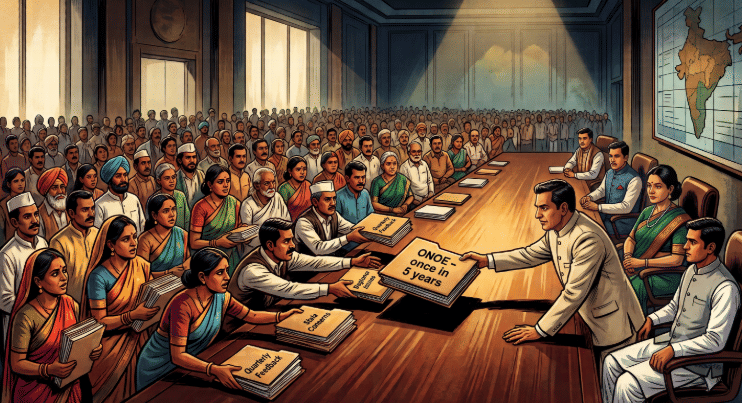
Imagine India is the world's biggest club, with about a billion people who all get to vote.
Every five years, club members vote to choose the Prime Minister, the person who runs the country.
Members also vote from time to time to choose leaders for their own states.
The government has a plan called One Nation, One Election.
The plan would make all these votes happen on the same day, once every five years.
Some people think this is a good idea because it would be simpler and less tiring.
Others worry that voters would have fewer chances to show they are unhappy with the leaders.
Sometimes countries like Switzerland and Ireland let people vote on special questions in between elections.
The writer worries that in India, issues like leaked exam papers would not get attention.
So the big question is whether combining all elections helps or hurts the people.

The One Nation, One Election (ONOE) proposal would hold Lok Sabha and Vidhan Sabha elections together once every five years.
India's electorate is roughly one billion strong, described as the world's largest Governing Body.
Supporters say ONOE would avoid the burden of convening frequent elections for the government.
Critics argue it would reduce opportunities for voters to hold the government accountable and weaken regional diversity.
The article cites exam paper leaks and electoral bonds as issues voters cannot raise between elections, noting Switzerland and Ireland hold referendums.
- Who
- Citizens of India, an electorate of roughly one billion, and the government ('the management') that proposed ONOE.
- What
- The One Nation, One Election (ONOE) proposal to hold Lok Sabha and Vidhan Sabha elections together once every five years.
- Where
- India (Bharat).
- When
- Discussed ahead of India's next General Elections, scheduled for 2029.
- Why
- To reduce the burden of frequent elections, though critics say it would weaken voter accountability and regional diversity.
Supporters of ONOE
Critics of ONOE
Accountability
Supporters of ONOE
Merging elections into one event every five years reduces the burden of frequent polls and lets the government focus on governing.
Critics of ONOE
State elections are a key chance for voters to hold the government accountable; merging them leaves voters with only one opportunity every five years.
Regional diversity and local issues
Supporters of ONOE
A single national electoral calendar simplifies the management of the country's elections.
Critics of ONOE
Separate state elections let voters prioritise geography-specific concerns and promote regional cultural heritage; ONOE would reduce this diversity.
Special meetings (referendums)
Supporters of ONOE
Given the size and complexity of the country, the government refuses calls for special meetings (referendums) on issues like exam paper leaks and electoral bonds.
Critics of ONOE
Countries such as Switzerland and Ireland hold referendums; without frequent elections, Indian voters would have no other channel to raise such issues.
Key facts
- Proposal
- One Nation, One Election (ONOE)
- Current national election cycle
- Lok Sabha Elections, once every five years
- Next Indian General Elections
- 2029
- Electorate size
- About one billion voters
- Accountability issues cited
- Exam paper leaks, electoral bonds
- Countries holding referendums
- Switzerland and Ireland
- Publication
- ThePrint SubscriberWrites (subscriber opinion, not fact-checked)
Sources
Related news

Chouhan, Dhami Back One Nation, One Election Proposal
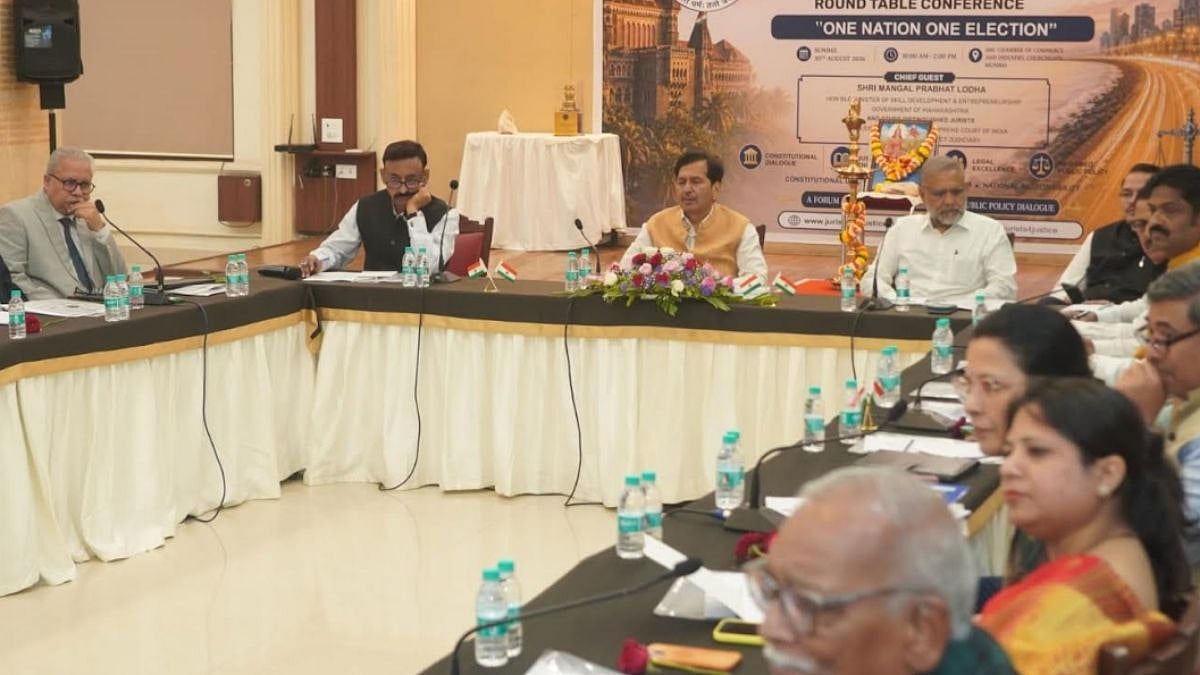
Roundtable Unanimously Endorses One Nation, One Election
NDA Weighs 2029 Simultaneous Polls Across 22 States

Chidambaram Opposes One Nation, One Election Before Panel
UPSC Mains 2026 Revision: Top 15 Polity Topics Aspirants Need

Bengaluru Civic Elections Face Uncertainty as SIR Flags Millions
What Railway PNR Details Reveal Before Your Journey

Jyoti Yadav’s Covid Book Challenges India’s Forced Forgetting
Single-Income Families With Home Loans Should Prioritize Term Insurance
Why Indian Work Permit Seekers Face Costly Misinformation
Punjab Faces Calls for Verification Amid Crime and Migration Concerns