4 hrs ago
Citizen Groups Urge Basin-Wide Plan To Save Chennai Wetlands
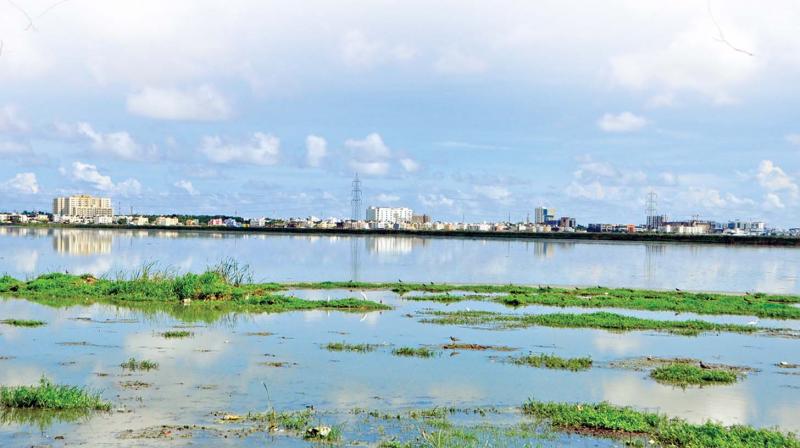
Citizen groups say Chennai’s Pallikaranai watershed should be managed as one connected water system.
It includes many lakes, ponds, canals and wetlands.
Water from these areas eventually drains toward the Pallikaranai marshland.
The groups say building projects and encroachments have damaged parts of this system.
They want government departments to work together instead of handling each lake separately.
They also want wetlands and floodplains to be clearly marked and protected.
Sewage, garbage and construction debris should be kept out of the waterways.
The groups say better drainage and lake restoration could help reduce flooding and water stress.
They have proposed a charter listing problems and actions for government agencies and communities.

The Chennai Wetlands Action Collective and Oorvani Foundation released a Citizen’s Charter for the Pallikaranai watershed.
The watershed includes 65 major lakes and hundreds of ponds draining toward the protected Pallikaranai Ramsar wetland.
Citizen groups want an independent inter-departmental committee to coordinate planning, assign responsibilities and set implementation timelines.
The charter calls for wetland and floodplain protection, action against encroachments, sewage and dumping, and improved drainage infrastructure.
Groups also seek scientific lake restoration, canal clearance, an end to further Perungudi dumping and dedicated flood-mitigation plans for vulnerable areas.
- Who
- The Chennai Wetlands Action Collective, Oorvani Foundation, resident associations, conservation groups, activists and experts formed the initiative.
- What
- They issued a Citizen’s Charter seeking integrated, basin-level protection and management of the Pallikaranai watershed.
- Where
- The Pallikaranai watershed in Chennai, including areas such as Nanmangalam, Velachery, Navalur, Sholinganallur, Semmenchery and Perumbakkam.
- When
- The article does not specify a date; the charter followed a consultation at Indian Institute of Technology Madras Research Park.
- Why
- Citizen groups say unregulated urban expansion, encroachments, sewage, dumping and blocked waterways are damaging wetlands and worsening flood and water-stress risks.
Key facts
- Watershed system
- The Pallikaranai watershed contains 65 major lakes and hundreds of ponds draining toward the Pallikaranai marshland.
- Wider basin
- The watershed is part of the Kovalam water basin.
- Protected wetland
- The Pallikaranai marshland is a protected Ramsar wetland.
- Proposed coordination
- The groups seek an independent, specialised and inter-departmental committee including experts and people’s representatives.
- Legal protection sought
- The charter calls for wetland and floodplain demarcation under the Wetland (Conservation and Management) Rules, 2017, implementation of 2020 guidelines and a Flood Plain Zoning Act in Tamil Nadu.
- Canal action
- The groups have called for desilting the entire 13-kilometre Buckingham Canal and clearing construction debris near Sholinganallur-Akkarai Road and the Muttukadu estuary.
- Wastewater measures
- The charter seeks decentralised catchment-based sewage treatment plants, underground drainage and strict action against untreated sewage discharge.
Quotes
Atish Baisantry
Member of the OMR Gandhinagar (T&S) Plot Owners Welfare Association
“Navalur lake has been restored, but its downstream outlet does not have the capacity it needs. The canal is clogged with vegetation, sewage and waste, while walls and construction have further obstructed the natural waterway. Gandhinagar floods every monsoon because there is no proper storm drainage”
 deccanchronicle.com
“The charter is a collective reference to the key challenges facing the watershed, while providing a common platform to advocate for its protection and sustainable management”
deccanchronicle.com
Dr. S. Janakarajan
Former professor at the Madras Institute of Development Studies and hydrologist
“Inter-departmental coordination is critical. Agencies cannot continue to work independently when the entire watershed functions as one connected system”
deccanchronicle.com
Sources
Related news
Opposition Grows Over Proposed Mamallan Reservoir Near Chennai

How 2,000 Chitlapakkam Residents Revived a Sewage-Choked Lake
Kolleru Stakeholders Seek Review of Expanded Wetland Boundary
HYDRAA Advances Phase-II Restoration at Three Hyderabad Lakes
Bhopal’s Bhoj Wetland Set for Seventh Boundary Demarcation

MMC Chief Orders Priority Desilting of Devender Nagar Drain

Floods Sweep Five Elephants Toward Barrage in Uttar Pradesh

Rare Nilgiri Marten Highlights Western Ghats Conservation Challenge

Professor turns subtitles into literacy tool for millions

Indian Bank Stock: Key Levels and Market Outlook