3 weeks ago
Parliament Passes UPI Fee Bill Amid Tax Misinformation Row
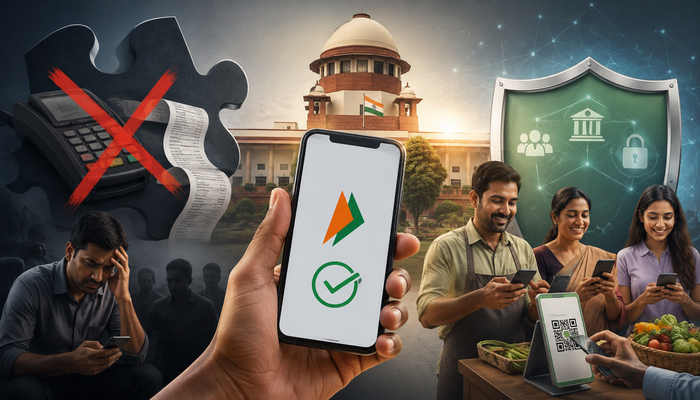
India has a phone payment system called UPI that lets people send and receive money.
Most people do not pay any fee to use it.
The government recently passed a new law about taxes and other rules.
This law removes an old rule that protected free UPI payments.
Some people think this means UPI will now cost money.
The government says the law does not add any fees by itself.
It only lets the government decide about fees in the future.
Right now, UPI payments are still free.
The head of India's central bank said the system cannot stay free forever.
But nothing has changed for users yet.

The Taxation and Other Laws (Amendment) Bill, 2026, introduced by Finance Minister Nirmala Sitharaman on August 4, 2026, was passed by the Lok Sabha on August 6, 2026.
The bill removes Section 10A of the Payment and Settlement Systems Act, 2007, which had legally barred banks and payment service providers from charging Merchant Discount Rate (MDR) on UPI and RuPay transactions.
The bill does not itself levy any tax on digital payments; it gives the central government discretionary power to decide future MDR charges through official notification.
Congress MP Jairam Ramesh and commentator MK Venu alleged the change was made under pressure from US President Donald Trump, citing a 2026 USTR report criticizing free UPI and RuPay for driving out Visa and MasterCard.
RBI Governor Sanjay Malhotra said operating the UPI system entirely free of charge indefinitely is not feasible, while the Payment Council of India proposed MDR of 0.3%–0.5% only on large merchants with turnover above ₹50 crore.
- Who
- The Modi government and Finance Minister Nirmala Sitharaman, with criticism from Congress MP Jairam Ramesh and commentator MK Venu.
- What
- The government passed the Taxation and Other Laws (Amendment) Bill, 2026, which removes the legal ban on Merchant Discount Rate charges for UPI and RuPay transactions without itself levying any tax.
- Where
- In the Lok Sabha, the lower house of India's Parliament.
- When
- The bill was introduced on August 4, 2026, and passed on August 6, 2026.
- Why
- Because government subsidies cover only a small fraction of the costs of running the UPI system, and the government wanted discretionary power over future digital payment charges.
Government and supporters
Opposition and critics
Does the bill tax UPI transactions?
Government and supporters
The bill levies no tax; it only removes a legal prohibition and gives the government discretionary power to decide future MDR charges by notification, so UPI remains free for now.
Opposition and critics
The bill removes the statutory guarantee that keeps UPI transactions free and opens the door to MDR charges that could easily be expanded to all payments in the future.
Was the amendment driven by US pressure?
Government and supporters
The changes are economic and fiscal measures addressing the financial sustainability of the payment system, not a payments-policy overhaul under external pressure.
Opposition and critics
The amendment follows the USTR 2026 report criticizing free UPI and RuPay for driving out American platforms like Visa and MasterCard, suggesting the Prime Minister acted under pressure from his friend Donald Trump.
Key facts
- Bill
- Taxation and Other Laws (Amendment) Bill, 2026
- Introduced
- August 4, 2026, by Finance Minister Nirmala Sitharaman
- Passed
- August 6, 2026, in the Lok Sabha
- Key change
- Removes Section 10A of the Payment and Settlement Systems Act, 2007, which barred MDR on UPI and RuPay transactions
- Tax impact
- No tax levied by the bill itself; charges can only be imposed by a future government notification
- Annual government subsidy
- ₹1,500 crore for the UPI ecosystem
- PCI cost estimate
- Around ₹10,000 crore to run and expand the UPI ecosystem
- PCI proposal
- MDR of 0.3%–0.5% only on merchants with annual turnover above ₹50 crore, for transactions above ₹2,000
Quotes

Jairam Ramesh
Congress Member of Parliament
“"Indeed, the real reason why this amendment is being introduced is perhaps more concerning. It follows the U.S. Trade Representative’s 2026 report, which criticises UPI and RuPay for being free and accuses them of having driven out American payment platforms like Visa and MasterCard. Is the Prime Minister seeking to dilute UPI and open the digital payments sector to American businesses under pressure from his good friend Donald Trump?"”
 opindia.com
Sources
Related news
Congress Slams Government, Alleging UPI Dilution to Favor US Firms

Sitharaman: No UPI charges as Parliament clears tax Bill
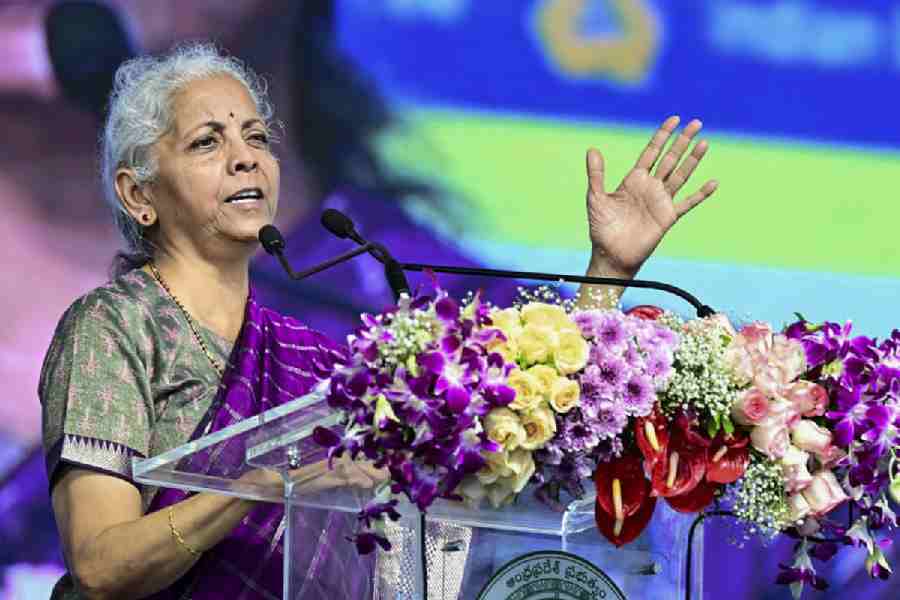
Sitharaman clarifies UPI charges apply to merchants, not customers

FM Sitharaman rejects UPI charge claims, accuses Ramesh of canard
Lok Sabha Passes Bill Enabling Future UPI MDR, Sitharaman Clarifies
Parliament clears taxation bill; Sitharaman says UPI remains free

RBI Governor Meets US Fed Chief Kevin Warsh at G20

FCNR(B) Inflows Cross $100 Billion as RBI Closes Window

Indian Bond Yields Near 7% as Rate Hike Bets Rise

India Hosts BRICS 2026 Amid US-Iran War Tensions

Finance Ministry Flags Global Yield and Inflation Risks for India