1 week ago
India's Convergence Governance Seeks Better Outcomes Beyond Individual Schemes
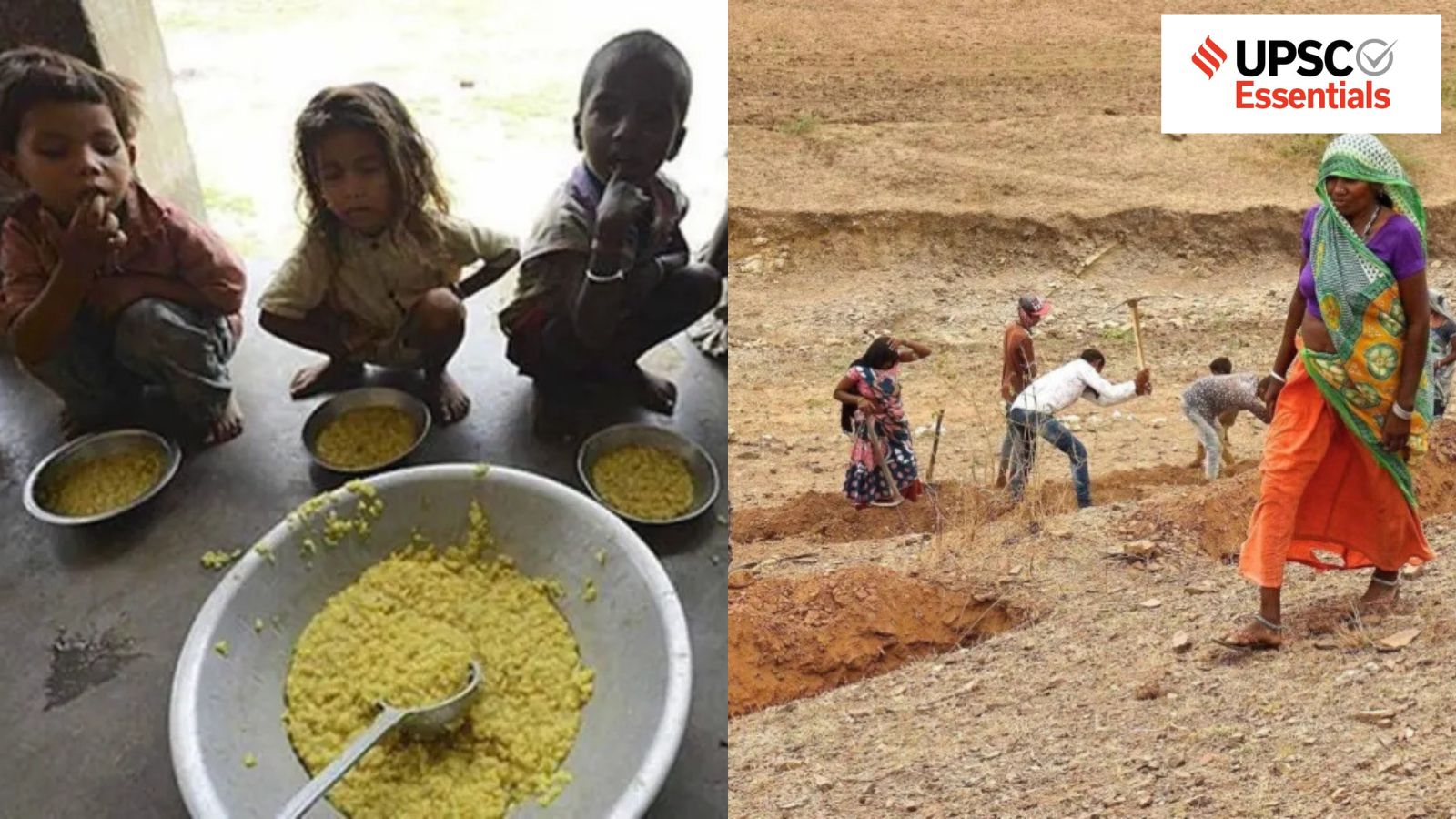
Convergence means government programmes working together to solve a shared problem.
A family may need food, healthcare, clean water, education and income support at the same time.
These services are usually managed by different departments.
Convergence helps those departments plan and act together.
It does not always mean combining schemes or budgets.
For example, improving nutrition may require food support, healthcare, clean water and sanitation.
A local plan can help decide which programme will provide each part.
The main goal is to improve people’s real outcomes, not simply to list many schemes.
Convergence can be difficult when programmes have different rules, schedules and responsibilities.

Convergence aligns multiple public programmes, institutions and resources around shared development outcomes without necessarily merging schemes or budgets.
A draft framework under the VB–G RAM G Act, 2025, proposes a Gram Panchayat-level Viksit Gram Panchayat Plan using “Single Plan–Multi Funding.”
India’s Aspirational Districts Programme, PM Dhan-Dhaanya Krishi Yojana, DAY-NRLM and Mission Poshan 2.0 illustrate different forms of convergence.
Effective convergence requires coordinated planning, permissible funding, clear responsibilities, aligned timelines, integrated services and usable shared data.
Different scheme rules, administrative boundaries, approval timelines, databases and added coordination requirements can make convergence difficult to implement.
- Who
- Indian government departments, local administrations and development programmes, with Gram Panchayats playing an important planning role.
- What
- A governance approach that coordinates programmes, funding, services, administration and data around shared development outcomes.
- Where
- Across rural India, particularly at the Gram Panchayat, block and district levels.
- When
- The draft convergence framework was discussed during a high-level inter-ministerial consultation in June 2026; the VB–G RAM G Act, 2025, came into force on July 1.
- Why
- Development challenges such as malnutrition, poverty and low farm productivity often involve several connected needs that one scheme cannot address alone.
Case for Convergence
Implementation Concerns
Coordinating programmes
Case for Convergence
Multiple schemes can address connected needs together while retaining specialised mandates, budgets and accountability systems.
Implementation Concerns
Different eligibility rules, technical standards, procurement procedures and funding norms may prevent programmes from fitting together smoothly.
Local planning and funding
Case for Convergence
A common Gram Panchayat plan can map local gaps and combine permissible resources from several programmes toward a shared result.
Implementation Concerns
A plan may remain theoretical if approvals and funding arrive at different times or if administrative boundaries do not match.
Measuring success
Case for Convergence
Monitoring shared outcomes can show whether services actually improve nutrition, livelihoods or other development conditions.
Implementation Concerns
Convergence can become an accounting exercise if officials merely list schemes together, add meetings and portals, or blur responsibility for delays.
Key facts
- Core concept
- Different programmes retain their mandates while aligning their planning, resources and delivery around a common outcome.
- Local planning framework
- The proposed Viksit Gram Panchayat Plan would place local planning at the centre of convergence.
- Funding model
- “Single Plan–Multi Funding” would allow permissible funding streams from different programmes to support complementary components.
- Aspirational Districts Programme
- Launched in 2018, it covers 112 districts and uses convergence, collaboration and competition.
- PM Dhan-Dhaanya Krishi Yojana
- It covers 100 districts and is designed around 36 existing schemes across 11 departments, alongside State schemes and local partnerships.
- Rural livelihoods
- DAY-NRLM’s March 2026 compendium presented 67 field experiences from 19 states involving self-help groups and cross-sector partnerships.
- Main implementation risks
- Different rules, timelines, administrative boundaries, databases and unclear accountability can weaken convergence.
Sources
Related news

Naidu Urges Faster Constituency Plans to Elevate Andhra Pradesh

Tata Motors Foundation Launches Rural Development Programme in Dharwad

Mission Samriddh Gaon Launches Rural Development Pilots in Madhya Pradesh

Madhya Pradesh prepares development plans for urban, large gram panchayats

PIB Workshop in Chamoli Targets Last-Mile Welfare Awareness
Uttar Pradesh Launches Month-Long Seva Sankalp Campaign for Modi
Surgana Ranks 77th in NITI Aayog Aspirational Programme
Suman Chandra Calls to Stop Child Marriages in Beed

UNDP Official Lauds India's Inclusive Growth Model
Minister Reaffirms Development Commitment in Chhattisgarh’s Narayanpur