8 hrs ago
CAQM Shifts Focus From Stubble Fire Counts to Intensity

The air-quality commission wants to measure farm fires more carefully.
It previously looked mainly at how many fires satellites detected.
Scientists say this method may miss fires because satellites look only at certain times of day.
The commission now also wants to measure how much land was burned.
It is preparing rules for making these measurements.
A government claim said stubble-burning events dropped sharply in Punjab and Haryana.
An iForest study found that the burned area declined more slowly.
Officials also want to measure how strongly fires burn so responsibility can be assigned more fairly.

CAQM is assessing stubble-fire intensity in Punjab and Haryana rather than relying only on satellite-derived fire counts.
The commission is developing a protocol to measure the land area affected by fires, known as burnt area.
Environment Minister Bhupender Yadav said stubble-burning events fell 93 percent in Punjab and 91 percent in Haryana since 2021.
An iForest study found burnt area reductions were slower: 37 percent in Punjab and 25 percent in Haryana over the cited periods.
CAQM said measuring fire intensity could improve accountability by distinguishing between different amounts of burned stubble.
- Who
- The Commission for Air Quality Management, Environment Minister Bhupender Yadav, and the iForest research outfit are involved.
- What
- CAQM has begun assessing stubble-fire intensity and burnt area instead of relying only on fire counts.
- Where
- Punjab and Haryana, with the effort intended to help curb winter pollution in Delhi-NCR.
- When
- The report is dated September 4; it also cites a December 2025 ministerial claim and data through 2025.
- Why
- Fire counts may miss some fires, while intensity and burnt-area measurements could provide a fuller assessment and help assign accountability.
Government and CAQM Position
Study-Based Concerns
Scale of the decline
Government and CAQM Position
Environment Minister Bhupender Yadav claimed stubble-burning events had declined by 93 percent in Punjab and 91 percent in Haryana since 2021.
Study-Based Concerns
The iForest study found a more gradual decline in burnt area: 37 percent in Punjab over 2022–2025 and 25 percent in Haryana from its 2019 peak to 2025.
How fires should be measured
Government and CAQM Position
CAQM is moving beyond fire counts to measure burnt area and fire intensity, saying this can improve accountability.
Study-Based Concerns
The study argued that fire-count data is limited because satellites observe only fixed daytime periods and cannot calculate the actual number of fires across a full 24-hour period.
Key facts
- Agency
- Commission for Air Quality Management in NCR and Adjoining Areas (CAQM)
- States covered
- Punjab and Haryana
- Current focus
- Fire intensity and burnt area, in addition to fire counts
- Government claim
- Bhupender Yadav said stubble-burning events fell 93 percent in Punjab and 91 percent in Haryana since 2021.
- iForest finding: Punjab
- Burnt area fell from 31,447 square kilometres in 2022 to 20,000 square kilometres in 2025, a 37 percent reduction.
- iForest finding: Haryana
- Burnt area fell from 11,633 square kilometres in 2019 to 8,812 square kilometres in 2025, a 25 percent reduction.
- Satellite limitation
- The cited satellites observed fires at fixed times between 10:30 a.m. and 1:30 p.m. and detected active fires rather than total fires over 24 hours.
Quotes
A senior CAQM official
An unnamed senior official of the Commission for Air Quality Management.
“There is a difference between the intensity of burning of, say, 80 kg and 20 kg of stubble. Therefore, we need to measure intensity and hold people accountable based on it.”
 theprint.in
“Given that taking account of fire counts has proven to be a limited method, there is a need for the assessment of burnt area and we are coming up with a protocol for it.”
theprint.in
Sources
Related news
Punjab CM Mann Seeks Wider Campaign to Curb Stubble Burning
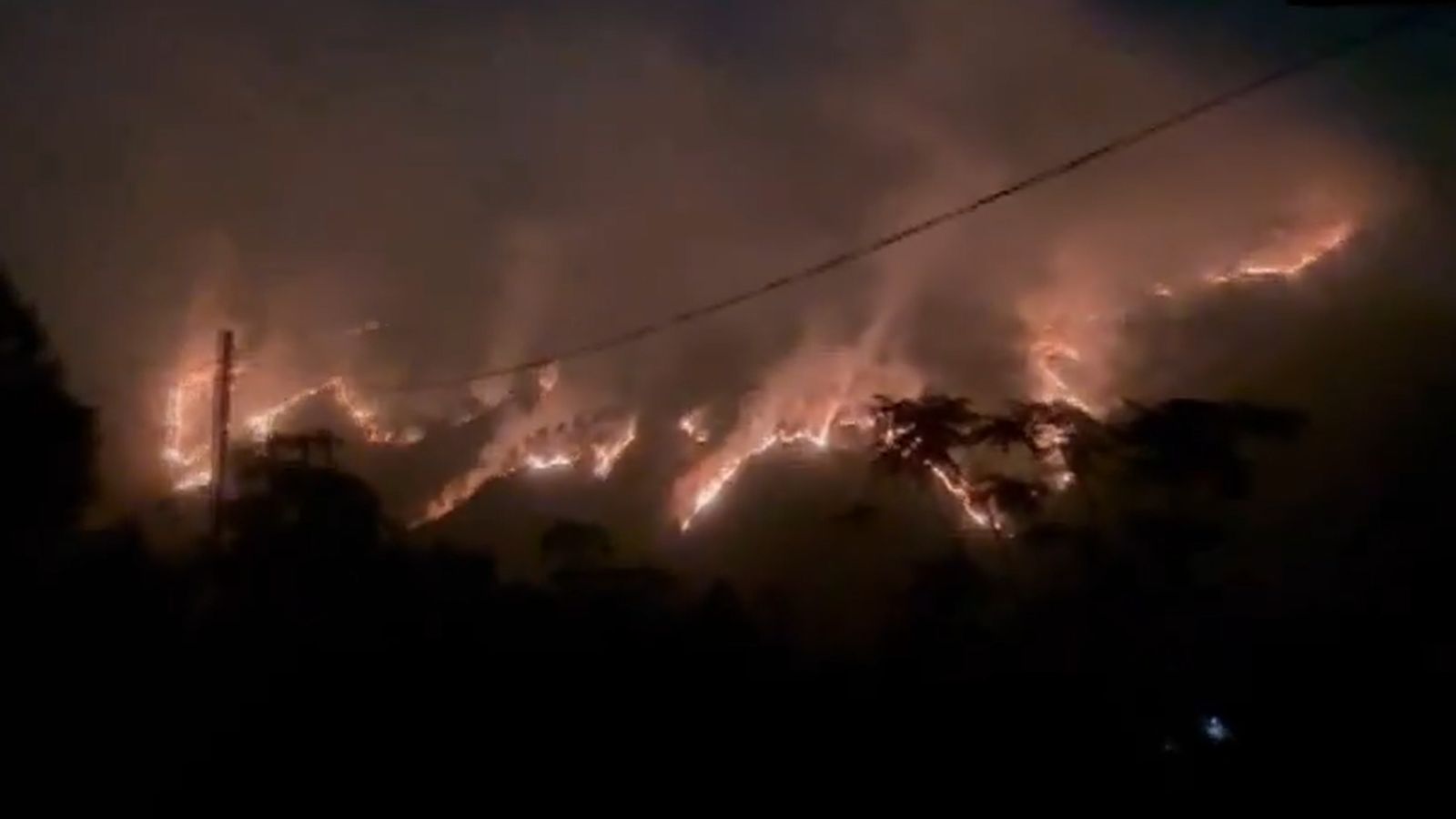
India panel urges geostationary satellite for Himalayan forest fire monitoring

Delhi, Neighbouring States Set Seven-Month Pollution Awareness Plans
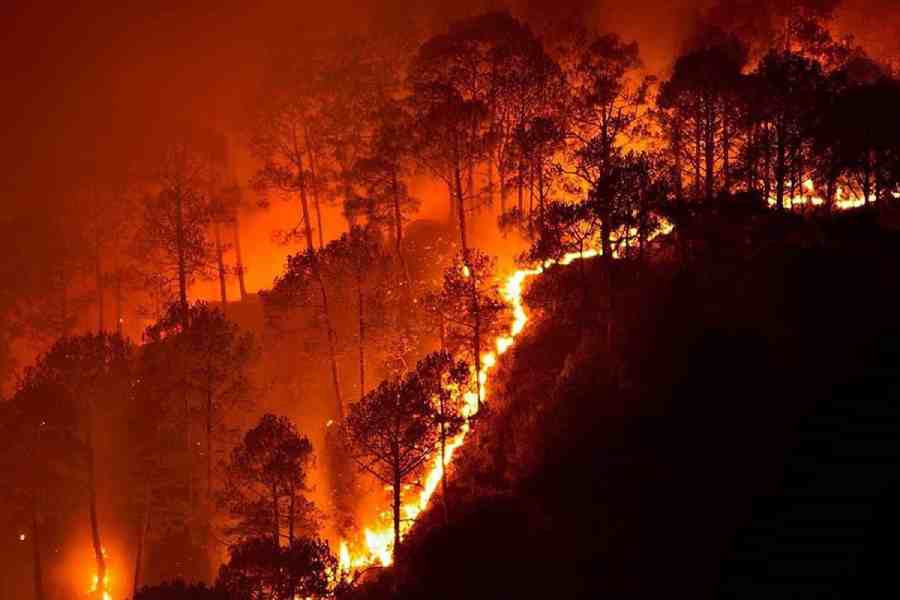
Indian parliamentary panel seeks 24x7 satellite forest fire tracking
Punjab forest cover just 3.67%; three Shivalik districts hold 63%
UPSC Weekly Quiz: 10 Current Affairs Questions for Prelims 2027

Delhi, Mumbai Set for More Rain, Heavy Showers Elsewhere

Haryana Government Transfers 29 IPS Officers and One HPS Officer

Punjab, Haryana Temples Celebrate Janmashtami With Krishna Chants

Police Intensify Hunt for Two Accused in Ankit Murder