1 day ago
Nashik Draft Electoral Roll Opens Claims Until September 30
Nashik has published a temporary list of registered voters.
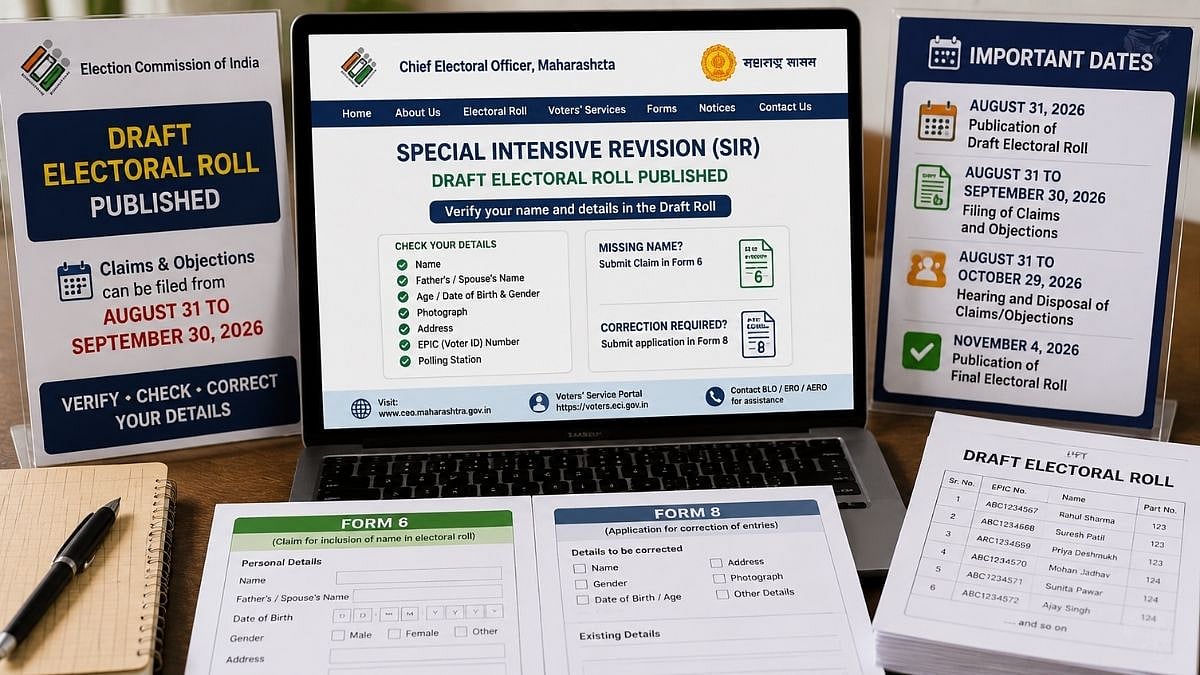
People should check whether their names and details are correct.
If someone’s name is missing, they can apply to add it.
New voters who will be 18 by October 1, 2026, can also apply.
Claims and objections must be submitted by September 30, 2026.
Form 6 is used to add a name, Form 8 fixes details, and Form 7 requests a deletion or raises an objection.
Officials are using technology to find possible mistakes in the records.
People will be given a chance to explain and provide documents before a final decision is made.

Nashik district’s draft electoral roll has been published for public review.
Citizens can file claims or objections regarding the roll until September 30, 2026.
People missing from the roll can apply through Form 6 for inclusion.
Form 8 allows corrections, while Form 7 supports deletions or objections.
Those turning 18 by October 1, 2026, are urged to register as voters.
- Who
- Eligible citizens, first-time voters, migrant voters, political parties, and Nashik District Election Officer and Collector Ayush Prasad.
- What
- The draft electoral roll for Nashik district has been published, opening a process for claims, objections, new registrations, corrections, and deletions.
- Where
- At local self-government offices, tehsil offices, Electoral Registration Officer offices, and the Nashik district administration website or voter services portal.
- When
- Claims and objections may be filed until September 30, 2026; citizens turning 18 by October 1, 2026, may apply as voters.
- Why
- The Special Intensive Revision aims to make the electoral roll accurate, transparent, and inclusive, ensuring eligible voters are not excluded.
Key facts
- Deadline
- September 30, 2026
- Eligibility date
- Citizens attaining age 18 on or before October 1, 2026, can apply as voters.
- Inclusion form
- Form 6
- Correction form
- Form 8
- Deletion or objection form
- Form 7
- Legal warning
- False declarations may result in up to one year’s imprisonment, a fine, or both under Section 31 of the Representation of the People Act, 1950.
- Review process
- Technology is being used to identify discrepancies in personal details, ages, and similar photographs.
Sources
Related news
Palghar Publishes Draft Electoral Roll Under Special Revision
Raigad Draft Rolls Flag Unmapped Voters Ahead Of Final Revision
Delhi SIR Draft Roll Opens Claims Window for Missing Voters

Pune SIR Draft Roll Excludes 28.66 Lakh Names; Claims Open
ECI Sets August 17 Deadline for Maharashtra Voter Enumeration Forms

Tribal Family Rescued From Alleged Bonded Labour At Coal Kiln

Rahul Gandhi Meets Protesting Tribal Students in Nashik
Nashik NDRF Conducts Disaster Training After Earthquake Incidents
MANS Urges Eco-Friendly Ganesh Festival, Ban Dolby And Lasers
Nashik Plans Online Permissions for Public Ganesh Mandals