2 weeks ago
What 'food divorce' could mean for couples' relationships
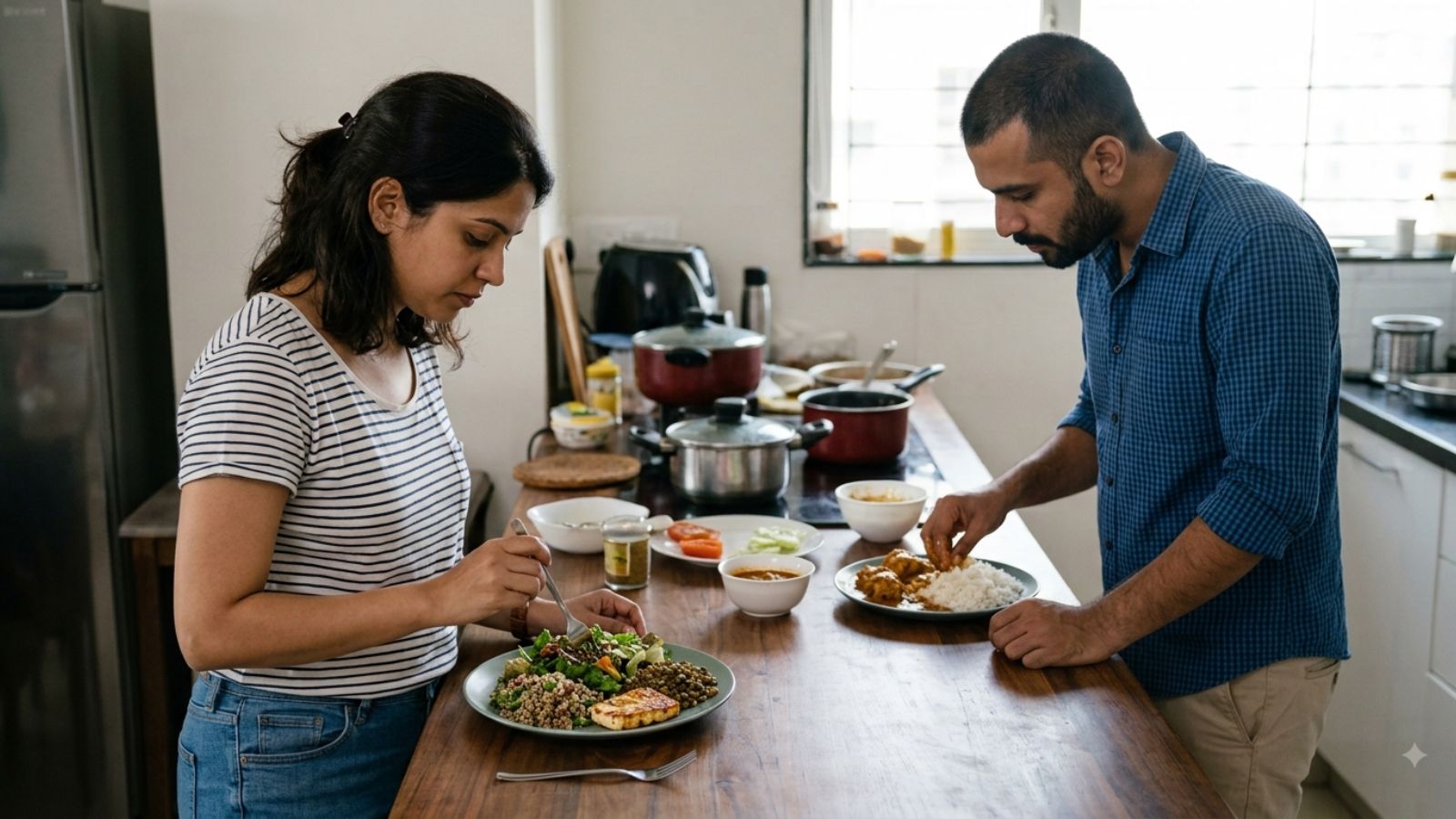
'Food divorce' doesn't mean getting divorced.
It's a term for when couples who live together choose to shop, cook and eat their meals separately.
This can happen when partners have different diets, like one being vegetarian and the other not, or when their schedules don't match.
It can also happen when one partner follows a special diet, like a weight-loss plan.
Sometimes eating separately seems like a practical way to stop arguing about food.
But meals are often a time when couples talk and spend time together.
If couples stop eating together, they might also talk less and feel more distant.
A psychologist says arguments about food are sometimes really about feeling ignored, judged or controlled.
The good news is that couples don't have to eat the same food to stay close.
They can share other moments, like morning tea, weekend cooking or a walk after dinner.

'Food divorce' describes couples living together who choose to shop, cook and eat separately because their dietary preferences, schedules or food choices repeatedly clash.
Changing attitudes towards fitness, weight management and eating patterns are shaping the trend, including differences over vegetarian and non-vegetarian preferences and restrictive diets.
The trend is considered particularly relevant in India, where eating together has traditionally been closely associated with family bonding.
Counselling psychologist Athul Raj says repeated food conflicts may reveal deeper issues around consideration, autonomy or resentment rather than food itself.
Experts suggest couples can maintain different diets while preserving connection by respecting each other's choices and creating shared moments that do not depend on eating identical meals.
- Who
- Couples living together with clashing dietary preferences, schedules or food choices, with insight from counselling psychologist Athul Raj.
- What
- The 'food divorce' trend, in which partners choose to shop, cook and eat separately to reduce friction around meals.
- Where
- Discussed with particular relevance to India, where eating together has traditionally been tied to family bonding.
- When
- No specific timing is given; it is described as a trend shaped by current changing attitudes towards fitness and eating patterns.
- Why
- Differences such as vegetarian and non-vegetarian preferences, restrictive diets, appetite changes and hectic schedules make shared meals a recurring source of conflict.
Separate meals as a healthy compromise
Shared meals as a bonding ritual
Eating separately
Separate meals as a healthy compromise
Separate meal routines can be a perfectly healthy arrangement for couples with different work schedules, dietary needs or tastes; not every meal needs to be a negotiation.
Shared meals as a bonding ritual
Meals are often one of the few unstructured times couples naturally talk and sit together; eating separately can mean fewer conversations, less time together and reduced shared routines, risking emotional distance.
What food conflicts signal
Separate meals as a healthy compromise
Arguments about ordering takeout, eating late or following a particular diet are surface-level disagreements over practical food choices.
Shared meals as a bonding ritual
Repeated food conflicts can carry deeper emotions, such as feeling that preferences aren't considered or feeling judged, monitored or controlled, pointing to larger issues around consideration, autonomy and resentment.
Key facts
- Term
- Food divorce
- Definition
- Couples living together who shop, cook and eat separately
- Main causes
- Dietary preferences, restrictive diets, appetite changes and hectic schedules
- Expert quoted
- Athul Raj, counselling psychologist (indianexpress.com)
- Key location context
- India, where eating together is tied to family bonding
- Potential risk
- Fewer conversations, less time together and reduced shared routines
- Recommended approach
- Respect food choices and create shared moments not dependent on identical meals
Quotes
Athul Raj
Counselling psychologist interviewed for the article
“When food repeatedly becomes a source of conflict, I would look beyond the food itself. One partner may feel their preferences aren’t being considered, while the other may feel judged, monitored, or controlled. Food is also tied to comfort, family habits and the ways we have learnt to experience care, so people can have stronger reactions to it than they realise.”
 indianexpress.com
Sources
Related news
Love, rivalry and match nights: how sports unite couples

When Love Meets Different Dreams, Compromise Needs Boundaries

Shehnaaz Gill Discusses Emotional Needs, Reciprocity and Financial Independence

Modern Marriage: Separation, Reconciliation and Acceptance of a Mother-in-Law

Eight Questions Couples Avoid Because Answers Could Change Everything
A Delhi Dinner Turns Into A Study Of Couple Negotiations

Swara Bhasker’s Jauhar Remarks Revive Padmaavat’s Historical Debate

Young Government Bank Officer Reveals Salary, Benefits After 2.5 Years

India’s Dementia Crisis May Affect 16.9 Million Seniors by 2036

Five Student-Friendly Laptops Covering Every College Budget and Workload

Putin Faces Western Isolation While Russia Builds Non-Western Ties