32 mins ago
Delhi Uses BRICS Summit For West Asia Diplomacy
India hosted a BRICS meeting while countries in West Asia were arguing about a conflict.
Iran wanted stronger criticism of Israel and the United States.
Gulf countries, including the United Arab Emirates, had different security concerns.
India helped the group agree on careful language instead of taking one side.
The declaration called for protecting civilians, respecting countries’ sovereignty and using dialogue.
It also supported safe shipping and freedom of navigation.
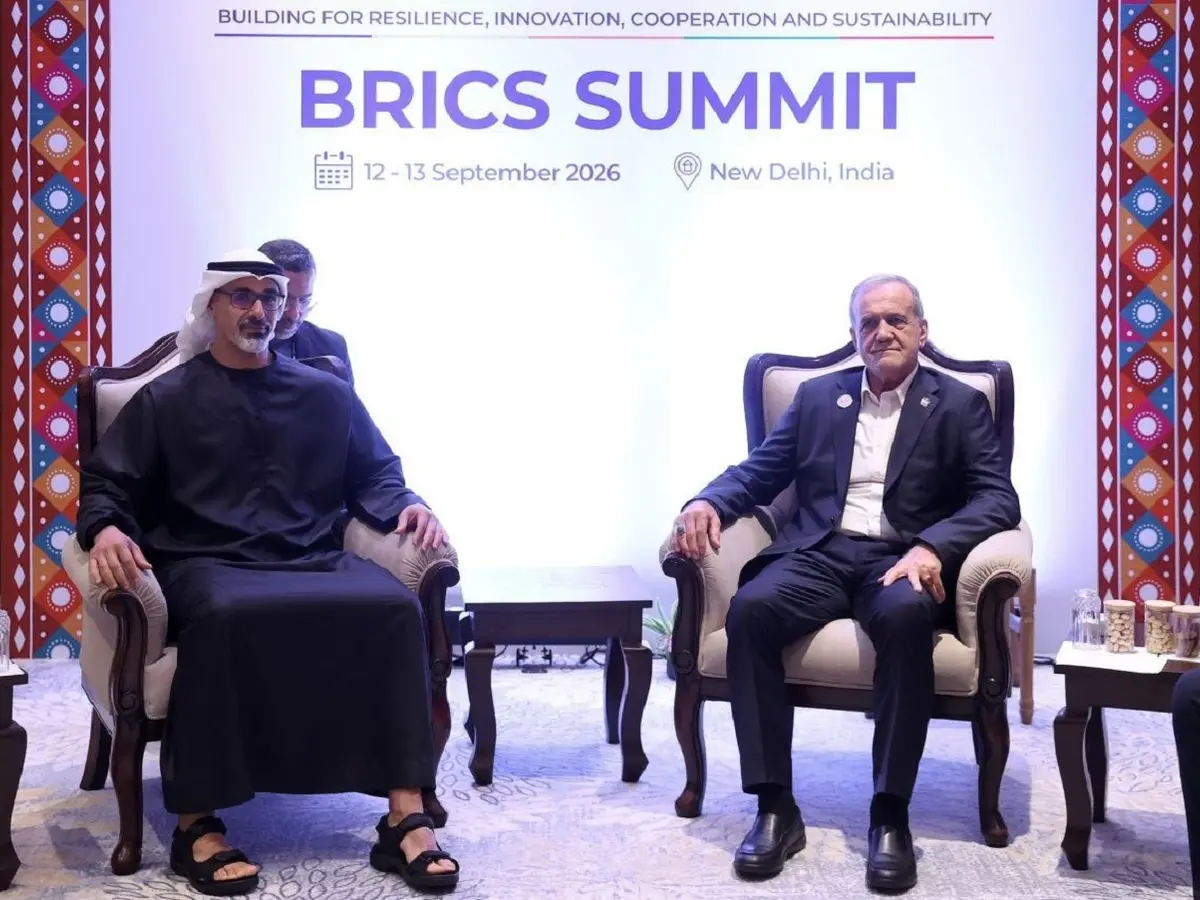
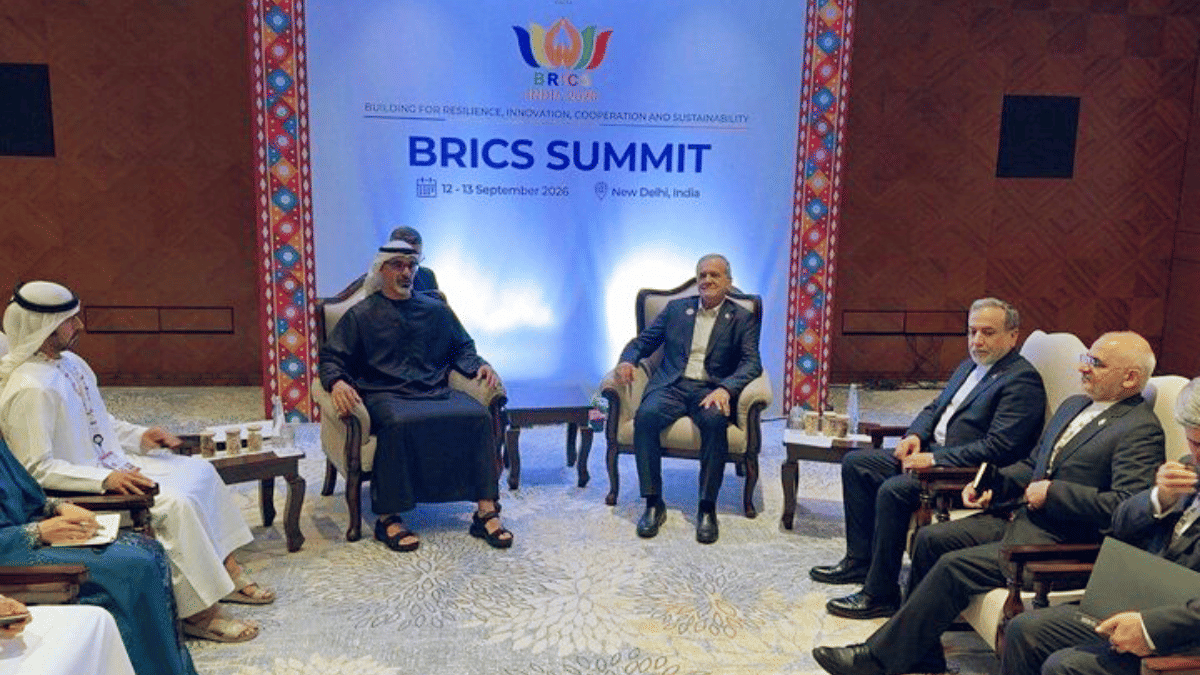
Iran’s president met a senior UAE leader during the summit.
This showed that the BRICS meeting gave regional rivals a place to talk.

India used the BRICS Summit to manage divisions over the West Asia conflict.
The New Delhi Declaration emphasized civilian protection, sovereignty, restraint, dialogue and diplomacy.
Iran’s President Masoud Pezeshkian met UAE Crown Prince Sheikh Khaled bin Mohamed bin Zayed Al Nahyan outside the formal proceedings.
The declaration avoided assigning blame while calling for maritime stability and protection of commercial shipping and seafarers.
Pezeshkian’s visit was his first trip to India as president and the first Iranian presidential visit there in more than eight years.
- Who
- India, Iran, the United Arab Emirates and other BRICS members, including Prime Minister Narendra Modi and President Masoud Pezeshkian.
- What
- The BRICS Summit produced consensus language on the West Asia conflict and hosted a high-level Iran-UAE meeting.
- Where
- At the BRICS Summit in India; the specific venue is not stated.
- When
- During the ongoing BRICS Summit; the articles do not provide an exact date.
- Why
- To prevent divisions over the conflict from undermining BRICS consensus and to support dialogue, diplomacy and maritime stability.
Iran’s Position
Gulf States’ Concerns
Language on the West Asia conflict
Iran’s Position
Iran sought stronger condemnation of Israeli and US actions.
Gulf States’ Concerns
Gulf countries sought language reflecting their security concerns, including concerns over Iranian attacks on Gulf targets.
Key facts
- Host country
- India
- Main diplomatic challenge
- Reconciling Iran’s demand for stronger condemnation of Israeli and US actions with Gulf countries’ security concerns.
- Declaration language
- The New Delhi Declaration called for restraint, dialogue, diplomacy, respect for sovereignty and civilian protection.
- Iran-UAE engagement
- Masoud Pezeshkian met UAE Crown Prince Sheikh Khaled bin Mohamed bin Zayed Al Nahyan.
- Maritime concerns
- India stressed freedom of navigation, commercial shipping and protection of seafarers.
- Pezeshkian’s visit
- It was his first visit to India as Iran’s president and the first visit by an Iranian president to India in more than eight years.
Sources
Related news
Iran and UAE Leaders Meet Amid War Tensions at BRICS
UN Calls Iran-UAE Meeting Important, Hails India’s Bridge-Building Role
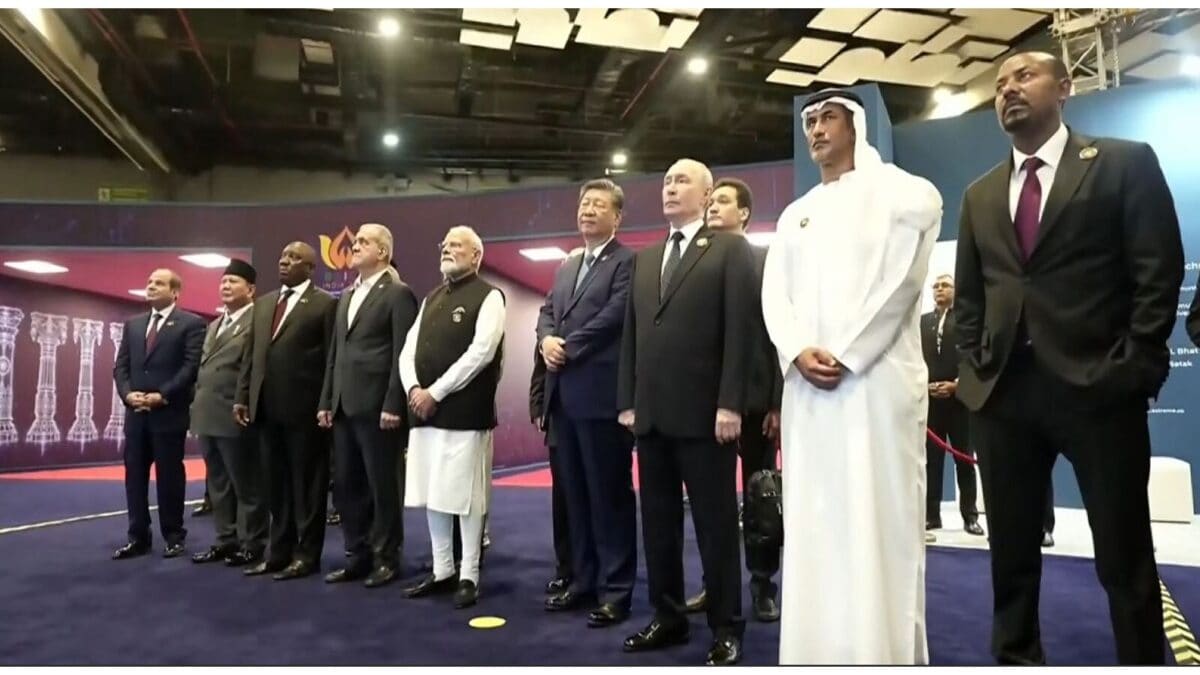
India Secures Unanimous BRICS Declaration After Overnight Diplomacy

BRICS Sherpas Seek Consensus as West Asia War Deepens
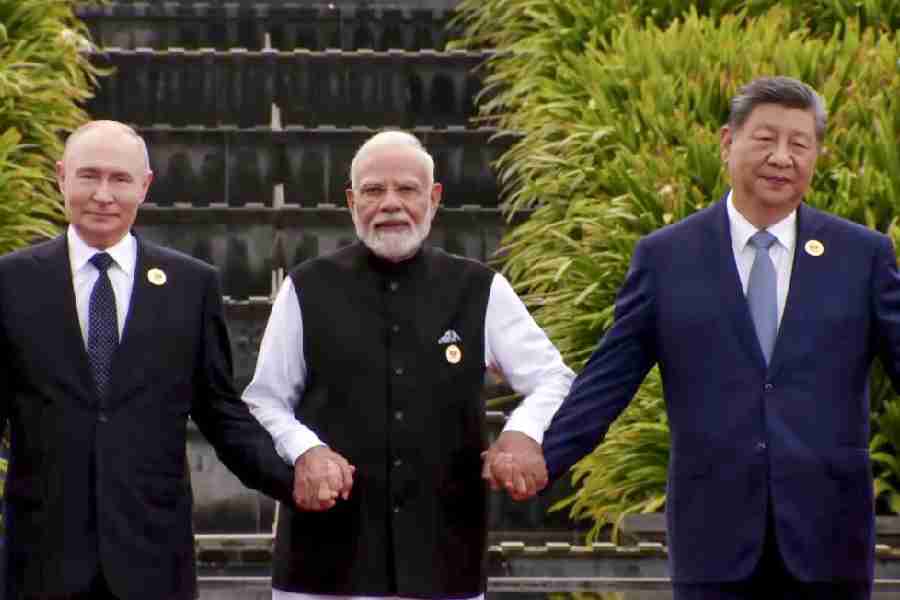
BRICS Reaches New Delhi Consensus Despite Iran-UAE Divisions
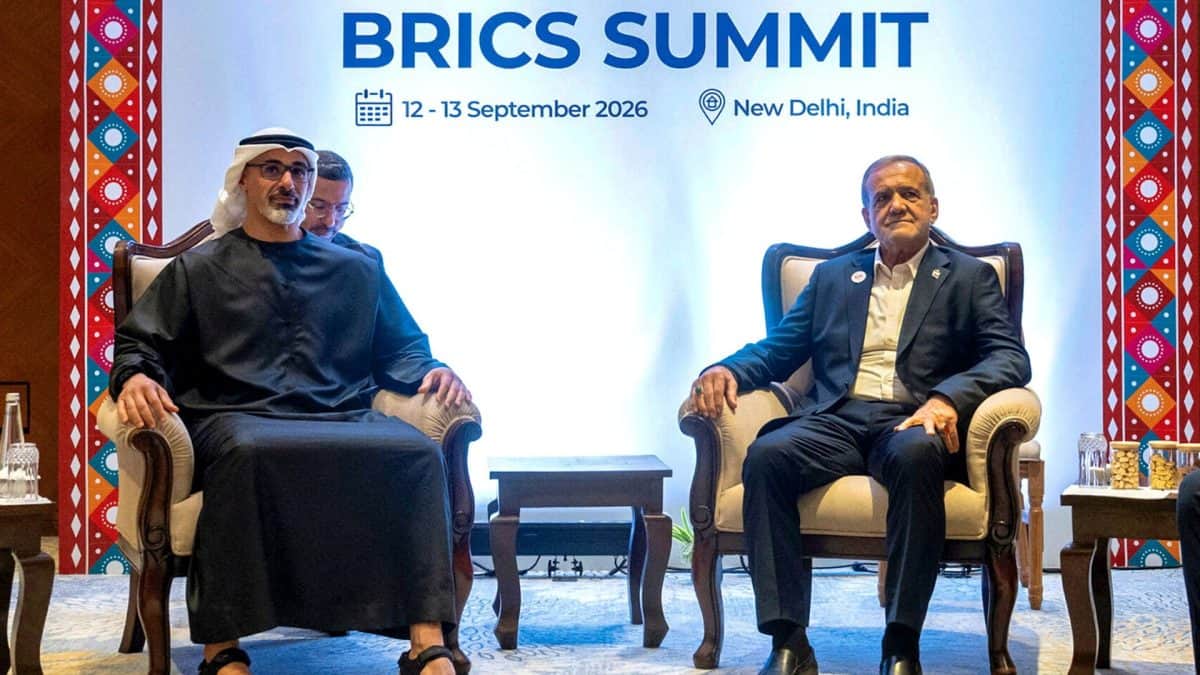
India Helps Iran, UAE Bridge Divisions at BRICS Summit

Opposition Criticises Vegetarian Menu at Modi’s BRICS Gala
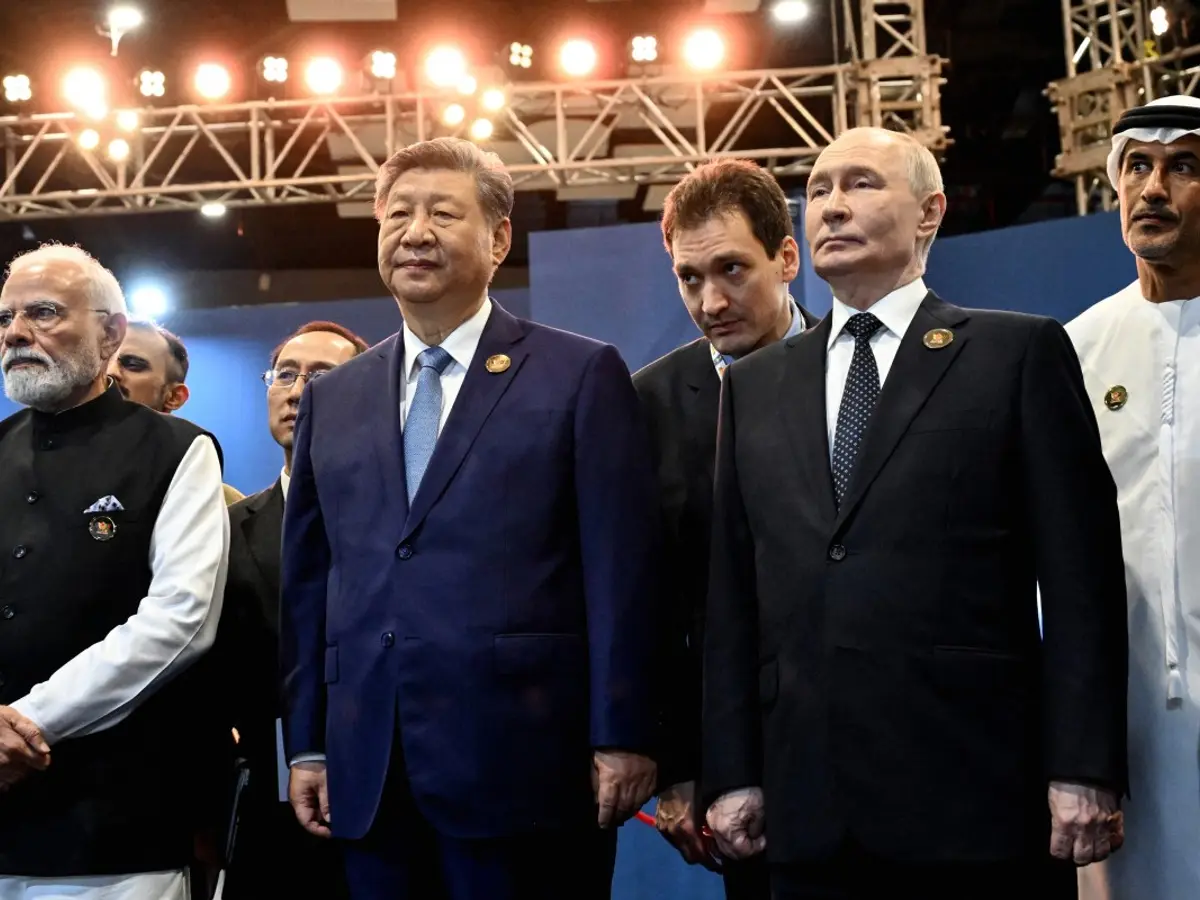
India Softens BRICS Tariff Language Amid US Trade Talks

BJP Plans to Use BRICS Summit Success Ahead of Elections

India Engages Global South Leaders at BRICS Summit