3 weeks ago
Punggye-ri radiation suspected in defectors' chromosomal mutations, study says
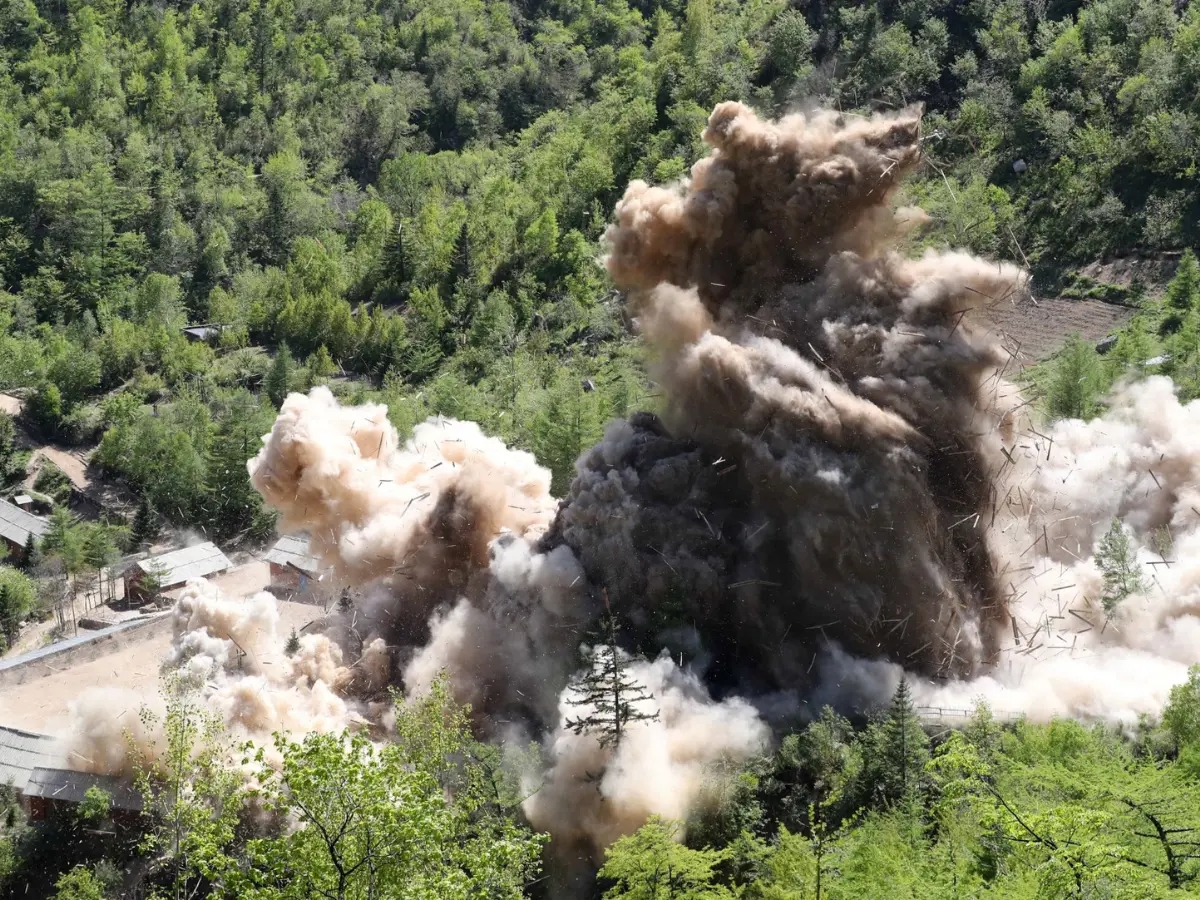
In North Korea, there is a place called Punggye-ri where the country used to test nuclear bombs underground.
Nuclear tests can make harmful radiation that may hurt people's bodies.
Scientists in South Korea studied people who left that area.
They looked at tiny parts inside the body called chromosomes.
These parts hold the instructions that make us who we are.
Many of the people they studied had changes in their chromosomes.
Scientists think the nuclear tests may have caused these changes.
But they are not completely sure yet.
The changes could also be caused by other things in the environment.
Scientists want to test more people to find the real answer.

A South Korean study found chromosomal mutations in 64 of 214 North Korean defectors from the Punggye-ri area, about one in three.
26 of 59 defectors who lived in eight cities and counties near Punggye-ri showed chromosomal abnormalities.
An official at the National Radiation Emergency Medical Centre said radiation from the nuclear tests was the most likely cause.
Researchers cautioned the genetic changes could stem from environmental factors, and more tests are needed to confirm a link.
Fresh tests are planned on 50 new defectors and 10 who were already checked.
- Who
- North Korean defectors from the Punggye-ri area, studied by South Korea's unification ministry and the National Radiation Emergency Medical Centre
- What
- A study found chromosomal mutations in about one in three defectors, possibly caused by radiation from nuclear tests
- Where
- Punggye-ri in North Hamgyong province, North Korea, with the study carried out in South Korea
- When
- Over five years, with the latest series of tests conducted last year
- Why
- Radiation from the nuclear tests at Punggye-ri is suspected as the most likely cause of the mutations
Radiation link theory
Environmental factors caution
Cause of the mutations
Radiation link theory
Radiation from the nuclear tests carried out at Punggye-ri is the most likely cause of the chromosomal abnormalities, according to an official at the National Radiation Emergency Medical Centre.
Environmental factors caution
Officials caution that the genetic changes are possibly tied to environmental factors, and more tests are needed to establish a clear link between the nuclear tests and the mutations.
Key facts
- Defectors with mutations
- 64 of 214 tested (about 1 in 3)
- Nearby defectors with abnormalities
- 26 of 59 from eight cities and counties near Punggye-ri
- Study duration
- 5 years
- Defectors settled in South Korea
- At least 800 from the Punggye-ri area
- First nuclear test at site
- 2006
- Nuclear tests in 2016
- 2
- 2017 tunnel collapse deaths
- 200 workers
- Planned new tests
- 50 new defectors and 10 previously checked
Sources
Related news

North Korea Fires Missiles as Trump Seeks Kim Talks

North Korea Replaces Defence Minister Amid US-South Korea Drill Tensions

Ukraine Says Russia Received North Korean KN-30 Missiles

South Korea fires warning shots as North soldiers cross border

North Korea denounces US-South Korea drills, vows stronger nuclear deterrence

India’s Solar Module Glut Threatens Factories With Low Utilisation

Modi-Xi Signals May Help Reset India-China Ties

India’s Fourth BRICS Chair Faces a Much Larger Summit

Nepal Families Seek Missing Loved Ones After Deadly Flash Floods

Putin Faces Western Isolation While Russia Builds Non-Western Ties