2 weeks ago
How Generative AI Is Democratising Creativity for India's Generation
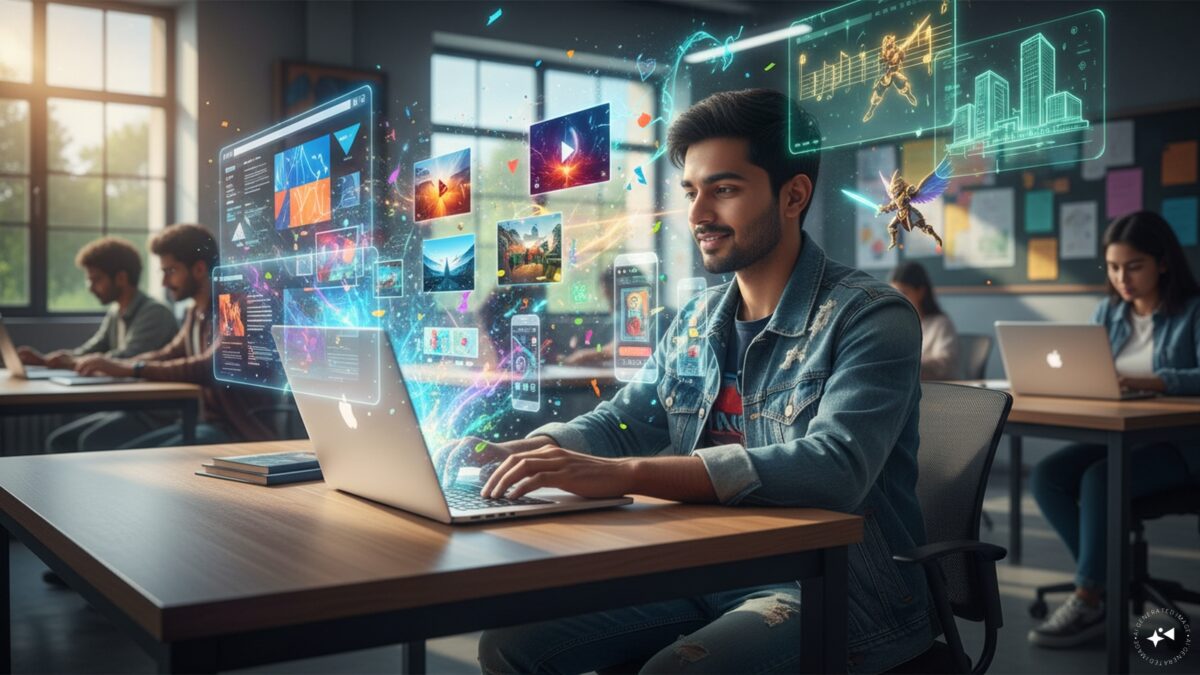
India got its freedom in 1947, and every year the country celebrates Independence Day.
This year's celebration is also about a new kind of freedom — the freedom to create things using smart computer tools called generative AI.
These tools can help people write, draw, make videos and build apps.
Before, making a logo or a marketing ad needed expensive experts.
Now, a student can build an app and a teacher can make lesson plans in minutes.
Even farmers can get crop advice in their own language using AI.
India is already one of the world's biggest places for AI skills, and AI could bring lots of money to the country by 2030.
But using AI smartly and safely is a challenge, and people's own ideas still matter most.
The article says AI helps people create, but their own culture and ideas make their work special.

India's creative economy was valued at around Rs 2.5 trillion in 2024 and is projected to grow at 7% annually to nearly Rs 3.06 trillion by 2027.
India ranks third globally in Stanford University's AI Vibrancy Index and has the world's second-largest AI talent pool.
IBM's Institute for Business Value estimates AI could generate more than $500 billion in economic value for India by 2030.
India's animation and VFX industry is worth around Rs 103 billion, the gaming sector about Rs 232 billion, and live entertainment has crossed Rs 100 billion.
The article cites estimates that 8-12% of India's non-agricultural jobs face substitution risk from AI by 2030, while 42-48% are likely to be augmented.
- Who
- India's young, digitally connected population — students, teachers, farmers, architects, game developers and small businesses — as well as AI industry figures like Parth Chadha, Co-Founder and CEO of STAN.
- What
- Generative AI is democratising creativity by giving millions of Indians tools to create apps, content and businesses, expanding the country's creative economy.
- Where
- India
- When
- Around India's Independence Day 2026; the article was published on August 14, 2026.
- Why
- Generative AI lowers barriers to creation that once required expensive software, specialised skills or large teams, and India regards AI as a strategic national capability.
AI Optimists
AI Skeptics
Impact on Jobs
AI Optimists
AI will mostly augment work: estimates cited suggest 42-48% of non-agricultural jobs are likely to be augmented by AI by 2030, and AI could generate more than $500 billion in economic value for India.
AI Skeptics
AI poses disruption risks: estimates suggest 8-12% of non-agricultural jobs face substitution risk by 2030, particularly in the services sector, and India could become dependent on AI built by other countries.
Creativity and Originality
AI Optimists
Generative AI democratises creativity, removing the cost and skill barriers that once limited who could design, produce and build, and acts as a collaborator that speeds up repetitive work.
AI Skeptics
When everyone uses similar AI tools, prompts and templates, creative output risks becoming repetitive; accessibility does not always mean originality, so human context and perspective remain the real advantage.
Key facts
- Creative economy value (2024)
- Around Rs 2.5 trillion, projected to reach nearly Rs 3.06 trillion by 2027
- AI economic value estimate (2030)
- More than $500 billion, per IBM's Institute for Business Value
- Global AI ranking
- 3rd in Stanford University's AI Vibrancy Index
- AI talent pool
- World's second-largest
- Enterprise AI adoption
- 87% of Indian enterprises actively using AI
- Gaming sector value
- About Rs 232 billion
- Animation and VFX industry value
- Around Rs 103 billion
- Creative industry livelihoods
- More than 10 million people, contributing nearly Rs 3 trillion annually
Quotes
Parth Chadha
Co‑Founder and CEO of STAN
“"The year 2026 could definitely be remembered as the year when AI moved ahead of experimentation and emerged as an everyday utility. For India’s young, digital first generation, AI is deeply embedded in how people create, communicate, discover and engage… The actual shift is not simply wider adoption but deep integration into product and workflows. This makes AI not only accessible but also practical and relevant to millions of users beyond traditional technology ecosystems."”
 news18.com
“"AI is definitely making creativity accessible, but accessibility does not always mean originality. When everyone uses similar tools, prompts, templates etc, there is a risk of creative output becoming repetitive. The differentiator here will definitely be human context… AI can accelerate content creation but individuality will always be the real creative advantage for one to succeed."”
news18.com
Sources
Related news
AI Image Generators Reshape Creativity, Human Judgment Remains Essential

Adobe Report Finds AI Boosts Confidence Among Indian Creators
India’s AI Race Gains Momentum, But Jobs Remain Uncertain
India's AI Advantage May Come From Execution, Not Models
Nandan Nilekani says India can become AI use case capital
Stanford Hoover Fellowship Offers Early-Career Researchers Rs 2.18 Crore
Sanders Backs Gates Warning About AI Job Losses
Court Blocks Trump Student Visa Crackdown Over Political Speech

How to Protect Your Feet During a Long Mountain Trek
Judge blocks Trump's deportation efforts over pro-Palestinian speech