

Science & Tech · Science & Environment · 6 hrs ago
Why Singapore’s PSI and other air quality readings differ
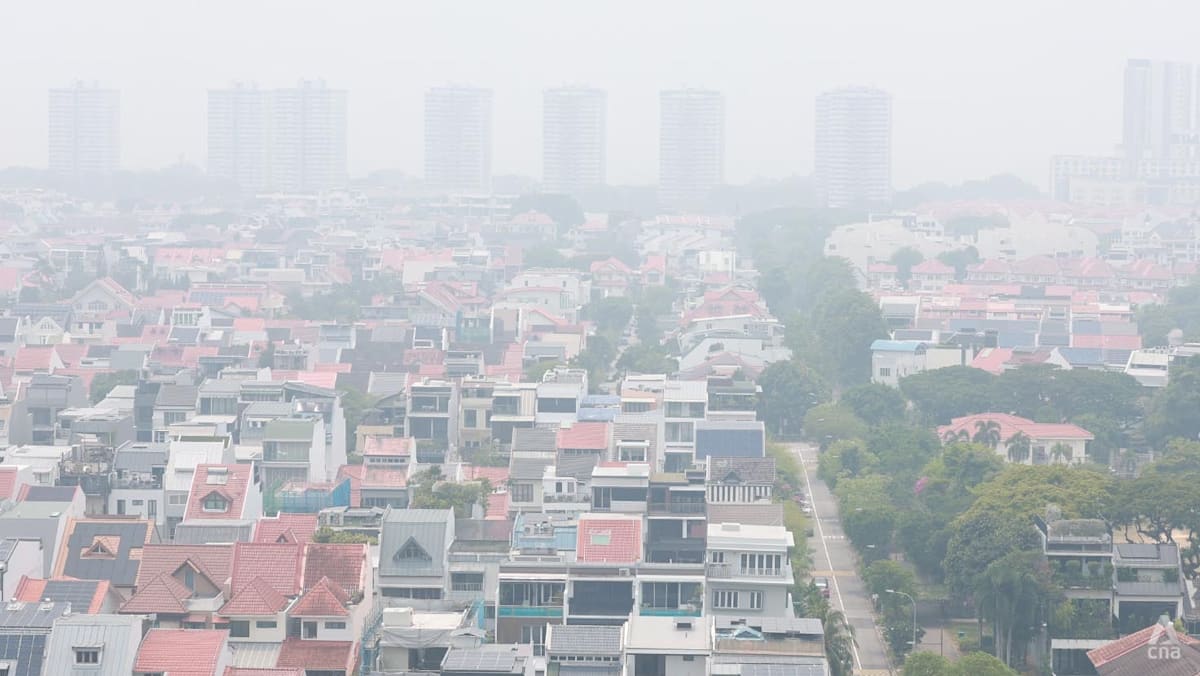
Singapore uses the 24-hour Pollutant Standards Index, or PSI, and a 1-hour PM2.5 reading to track air quality.
Other services, including IQAir, use a version of the US Air Quality Index.
These systems consider several pollutants and generally use the highest pollutant sub-index to set the overall reading.
Their numbers differ because they use different concentration thresholds and divide air quality into categories in different ways.
During haze in Singapore, fine particles known as PM2.5 are usually the main pollutant.
The National Environment Agency has announced possible measures, including distributing N95 masks and closing schools, if the 24-hour PSI reaches certain levels.
Singapore’s PSI also provides health advice for groups such as children, older people and those with chronic heart or lung conditions.

Singapore uses the 24-hour Pollutant Standards Index and 1-hour PM2.5 readings to report air quality.
International platforms such as IQAir use other systems, including a modified version of the US Air Quality Index.
The readings can differ because the systems use different calculation methods, pollutant thresholds and health categories.
Experts say figures from different systems should not be compared directly without accounting for those differences.
Singapore’s PSI includes health advisories for different population groups.
- Who
- Singapore residents and institutions monitoring air quality, and experts explaining the different readings.
- What
- Air quality readings differ because systems use different methods and thresholds.
- When
- During hazy conditions in Singapore in October 2026.
- Where
- Singapore, with comparisons to international air quality systems.
- Why
- Air quality indexes use different calculation methods, pollutant breakpoints and health categories.
This story does not have two clearly opposing sides.
These ranges for determining AQI categories are set by governments according to their situation
So, it should be noted that the index from other countries may not be applicable directly to a country.
Singapore announced measures it would take or consider, including distributing N95 masks and closing schools, if the 24-hour PSI reached certain levels.
International news outlets reported that Singapore topped IQAir's live ranking of the world's most polluted major cities.
CNA reported that hazy conditions persisted in Singapore.
- Singapore’s indicators
- 24-hour PSI and 1-hour PM2.5 reading
- IQAir’s system
- Modified US Air Quality Index, known as US AQI+
- AQI unhealthy PM2.5 range
- 55.5–125.4 µg/m3
- PSI unhealthy PM2.5 range
- 56–150 µg/m3
- PSI pollutants
- PM2.5, PM10, sulphur dioxide, carbon monoxide, ozone and nitrogen dioxide
Sources
Related news

Debate over Monte Verde reopens questions about the first Americans

Africa’s solar installations set a record as official data misses much of the growth

Elephant remains reveal a wetland and woodland habitat in ancient Israel

Northeast monsoon likely to begin over southern India within days

Hyderabad workshop discusses how to make science easier to understand
São Paulo’s century-old underground power network limits weather exposure

Quantum computer demonstrates repeated checks and resets to control errors

MIT team develops flexible sheet that can track surface movement

Srisailam Dam Project earns place in World Book of Records
Farm scientists urge paddy crop holiday as El Niño threatens water supplies

New sugarcane variety sells out in five minutes in Uttar Pradesh
