

Science & Tech · Science & Environment · 3 hrs ago
Landscape damage may be driving invasive plants across India
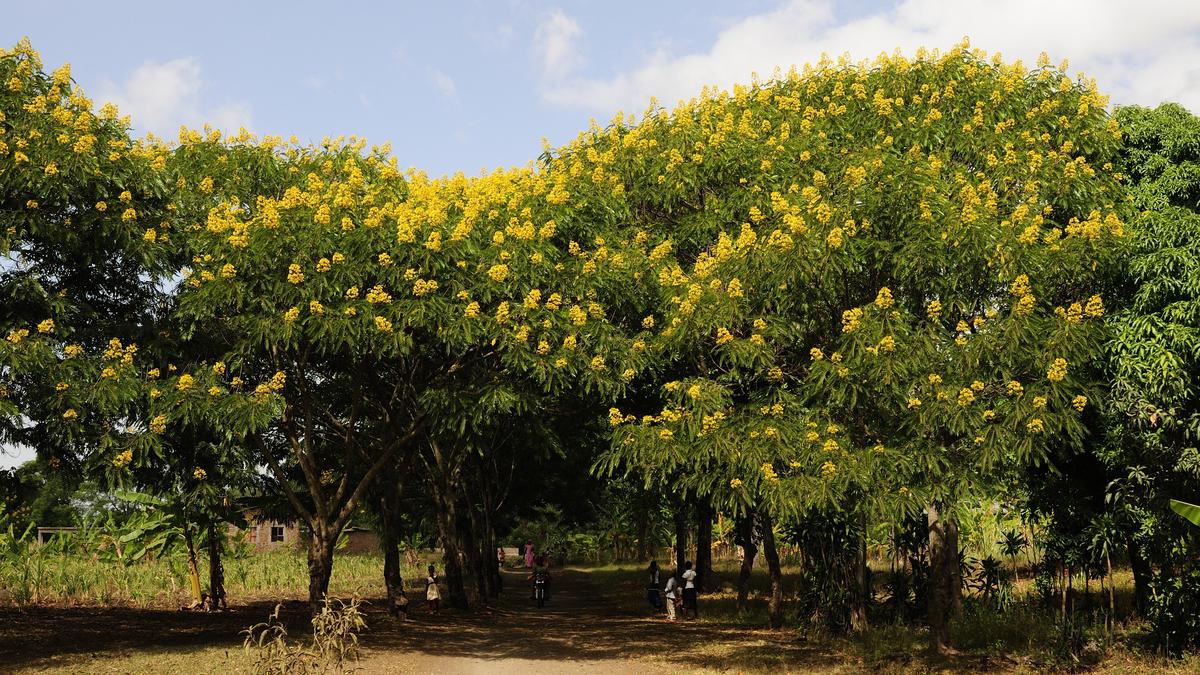
Campaigns to remove invasive plants are expanding across India.
Species targeted include Prosopis juliflora in Tamil Nadu, as well as Lantana camara and Senna spectabilis in other parts of the country.
The analysis argues that many landscapes were already damaged by forest clearing, plantations, roads, mining, farming and other changes before these plants spread.
It says altered water and soil conditions, heavy grazing and pollution can help some invasive species grow.
Clearing a plant without restoring the conditions and ecological relationships that support native species may leave space for the same plant or another invasive species to return.
This matters because ecosystems may not recover through removal alone, while the causes of their decline continue.
The analysis does not set out a specific next step for authorities.

India’s invasive-plant campaigns may overlook how earlier damage to landscapes helped the plants spread, The Hindu reports.
The article says forests and diverse habitats were altered by plantations, settlement, logging, roads, mining and agriculture before invasive plants became dominant.
It argues that removing invasive plants alone may not restore ecosystems if the conditions that favour their return remain.
Prosopis juliflora, introduced to India in 1877, is linked in parts of Tamil Nadu to irrigation-related moisture conditions.
The article also points to grazing, land-use change, pollution and climate change as pressures reshaping ecosystems.
- Who
- Indian authorities are identifying and removing invasive plants; the article examines the ecological conditions behind their spread.
- What
- The article argues that landscape damage and ecological disruption may be driving invasive plants across India.
- When
- Published on October 12, 2026. Prosopis juliflora was introduced to India in 1877.
- Where
- India, with examples including Tamil Nadu and Wayanad.
- Why
- Earlier landscape changes and continuing pressures can create conditions in which invasive plants spread or return.
Indian authorities and eradication campaigns
The article’s ecological perspective
Purpose of removal
Indian authorities and eradication campaigns
Authorities identify, map, classify and remove species deemed ecological threats.
The article’s ecological perspective
Removing invasive plants alone may not restore ecosystems if the conditions that support them remain.
Causes of spread
Indian authorities and eradication campaigns
The article describes campaigns focused on invasive species as ecological threats.
The article’s ecological perspective
The article says altered landscapes, including irrigation-related moisture conditions, can help drive their spread.
The prevailing assumption is simple: remove the invasive species and ecological recovery will follow.
In other words, the plant was present for decades — what changed was the landscape around it.
Prosopis juliflora was introduced to India as part of an ecological experiment.
India’s urban governance footprint roughly doubled, according to the article.
India’s English-language press carried sustained coverage of ecological-loss studies, eradication drives and related human-wildlife conflicts.
The Hindu published the article questioning whether invasive plants are the main cause of ecological damage.
- Species introduction
- Prosopis juliflora was introduced to India in 1877.
- Tamil Nadu clearance
- Government submissions reported clearance of Prosopis juliflora from 517 villages across 32 districts.
- Livestock
- India supports roughly 500 million cattle and other livestock.
- Urea use
- India uses 35–40 million tonnes per year.
- Nitrogen deposition
- 10–30 kg per hectare annually across many regions.
Sources
Related news

China starts building power plant using molten salt and supercritical CO2

September 2026 was western Europe’s warmest on record

Western Europe had a record-warm September as river levels hit new lows
Haze covers Istanbul as air quality reaches sensitive levels in two districts
Zavodovski Island loses largest penguin colony title after chinstrap decline

Study proposes roadmap to strengthen wildlife disease monitoring worldwide
Brazil issues storm alerts across 12 states through Monday night

First Asia-Pacific Earth Science and Remote Sensing Conference opens in Qingdao

Turkish students win record 78 medals at international science olympiads

Young people seek new opportunities in Italy’s hills and mountains

Researchers work to estimate Indigenous population of the Americas in 1492
