Entertainment · Books & Arts · 1 hr ago
Frieze Masters traces queer histories across 20th-century Modernism
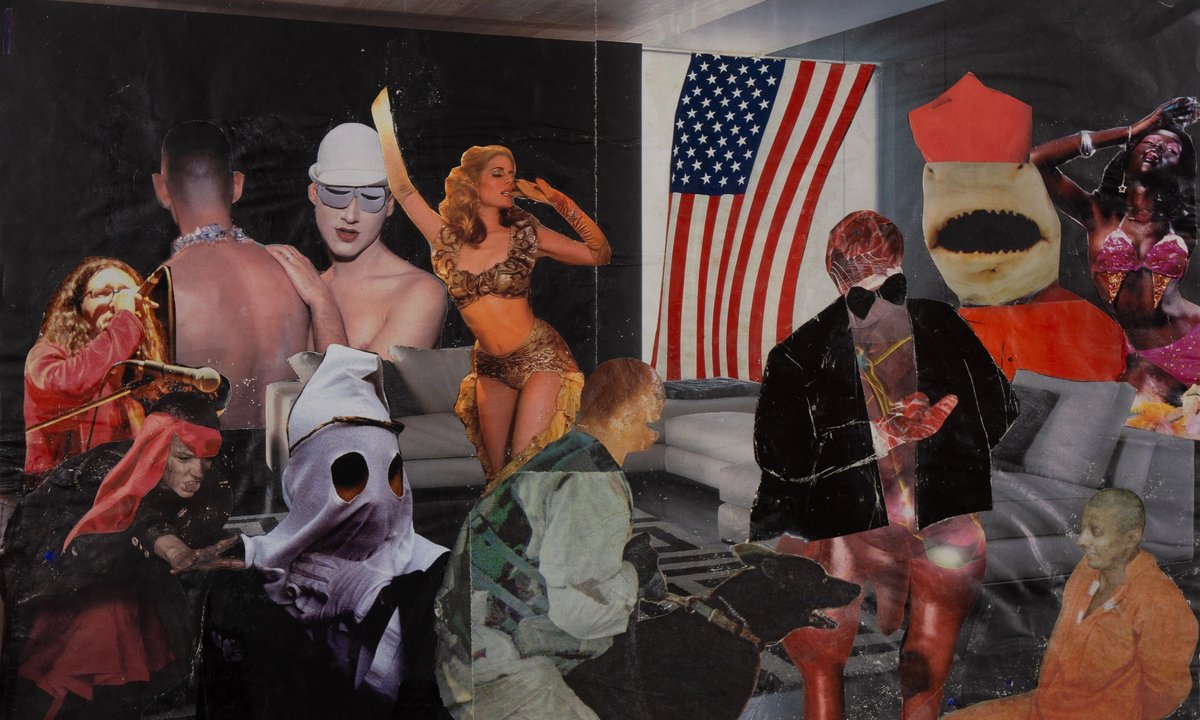
Frieze Masters is presenting a queer history of Modernism through a curated thread spread across the art fair.
Organised by Anke Kempkes, it follows queer experience and LGBTQ+ representation from the early 20th century to the emergence of a Postmodern queer art scene in the 1980s.
When same-sex desire was censored or punished, artists often conveyed it indirectly through myths, religious stories, portraits and other familiar images.
The display shows how artists encoded identities that could not be shown openly.
It includes work by Iranian artist Bahman Mohassess, whose paintings, collages and sculptures are being presented by Ab-Anbar Gallery.
His art used mythological figures and homoerotic imagery to confront political injustice, violence and authoritarianism.
Mohassess’s work brings a wider, non-European perspective to the history of queer Modernism.
His bronze nude Faun Musician, installed outside Tehran’s City Theatre in 1971, was removed and mutilated during the 1979 Islamic Revolution.

Frieze Masters is presenting Queering Modernism: Visual Languages of the 20th Century, a curated thread tracing queer histories across modern art.
Organised by Anke Kempkes, the thread is spread across the fair rather than confined to one area.
It follows LGBTQ+ representation from the early 20th century to the emergence of a Postmodern queer art scene in the 1980s.
The presentation includes work by Iranian artist Bahman Mohassess, whose art Kempkes says offers a more global account of queer Modernism.
The project explores how artists conveyed same-sex desire indirectly when it was censored or punished.
- Who
- Curator Anke Kempkes and artists whose work appears in the Frieze Masters thread, including Bahman Mohassess.
- What
- Queering Modernism: Visual Languages of the 20th Century traces queer histories and LGBTQ+ representation in modern art.
- When
- At Frieze Masters in 2026.
- Where
- Across Frieze Masters. The sources do not state the fair’s location.
- Why
- To examine Modernism through a queer lens and make visible artistic languages and experiences often overlooked by conventional accounts.
This story does not have two clearly opposing sides.
Bahman Mohassess worked in Tehran in the aftermath of Iran’s coup d’état.
Mohassess’s bronze nude Faun Musician was erected in front of Tehran’s new City Theatre.
Faun Musician was removed and mutilated during the Islamic Revolution.
Mohassess began to queer the Minotaur, according to Kempkes.
Kempkes curated the exhibition Queer Modernism 1900 to 1950 at K20 Kunstsammlung Nordrhein-Westfalen in Düsseldorf.
Frieze Masters presented the Queering Modernism thread curated by Kempkes.
- Curator
- Anke Kempkes
- Frieze Masters thread
- Queering Modernism: Visual Languages of the 20th Century
- Mohassess in Tehran
- Worked there from 1954 onwards
- Faun Musician
- Bronze nude erected in Tehran in 1971
- Sculpture’s removal
- Removed and mutilated during the 1979 Islamic Revolution
- Kempkes’s prior exhibition
- Queer Modernism 1900 to 1950, held in Düsseldorf in 2025
What people are saying
uncover a striking wealth of unconventional, at times distinctly anti-canonical, aesthetic languages, subjects and forms of representation
often through an engagement with the grotesque, as both an aesthetic and critical force, intertwined with his larger confrontation with violence, authoritarianism and the alienation of modern life
heavily political and you can see his sexuality in the work
Sources
Related news
Thélyson Orélien denies using AI to write novel, admits plagiarism

Hillary Clinton and Kara Swisher to launch political podcast

Review covers Akane-banashi manga volumes 4-6

Maria Kreyn’s New Exhibition Explores Creation and Regeneration
Thessaloniki’s Hamza Bey Mosque reopens as an arts centre
Van Gogh painting unseen in public for 60 years goes on display in Hong Kong
Xosé López García wins Galicia’s 2027 Diego Bernal journalism prize

Vaidehi urges protection of Kannada poetry from AI influence

Ancient Egyptian mummy portrait restored before first trip abroad
Sacha Baron Cohen to star in Tarantino’s first play in London

New York Comic Con Marks 20 Years as a Fan-Driven Event