

World · Middle East · 9 hrs ago
Attacks near Strait of Hormuz intensify as talks to end Iran war stall

Attacks and military warnings have increased around the Strait of Hormuz and the nearby Gulf of Oman as efforts to end the US-Israel war on Iran remain deadlocked.
The strait lies between Iran and Oman and carries about one-fifth of the world’s oil and gas in peacetime.
Iran’s Revolutionary Guard said an unnamed oil tanker caught fire after hitting a mine while using an unauthorised route, but the United Arab Emirates did not say what caused a fire on a tanker near its coast.
The UK Maritime Trade Operations agency also reported that a projectile struck a tanker leaving the strait.
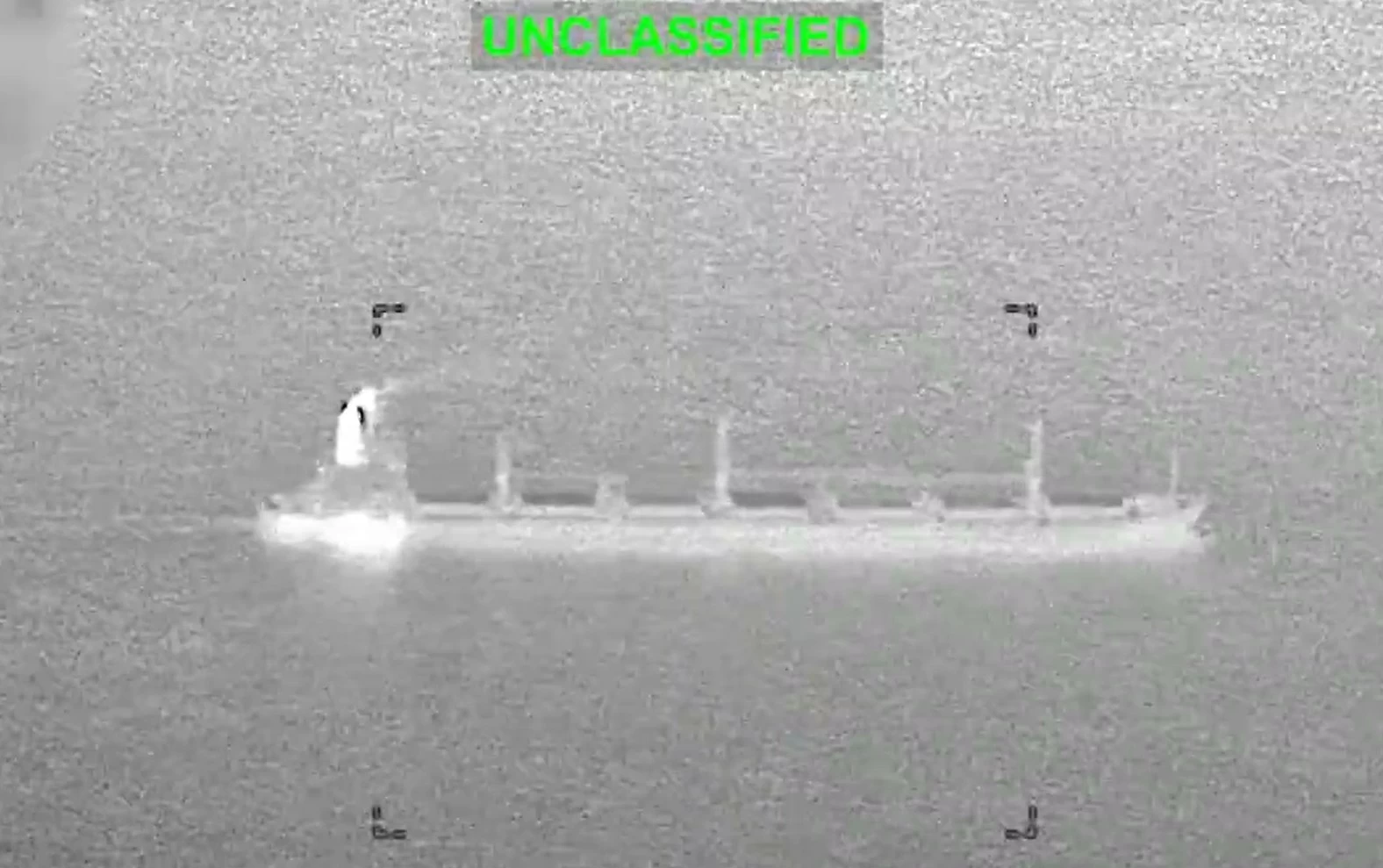
The US military said it disabled a cargo ship in the Gulf of Oman as part of its blockade of Iran’s southern ports.
The attacks have disrupted shipping: crude oil passing through the strait averaged 8.5 million barrels a day in the week ending October 7, about 40 percent below normal.
Iran has called for a return to a collapsed agreement and support for planned routes coordinated with Oman, while efforts to resolve the war remain stalled.

Attacks and warnings involving vessels near the Strait of Hormuz and Gulf of Oman have intensified as efforts to end the US-Israel war on Iran remain deadlocked.
Iran’s Revolutionary Guard warned tankers against ignoring what it called the strait’s security and rules.
The United States said it disabled a Panama-flagged cargo vessel in the Gulf of Oman while enforcing its naval blockade of Iran.
The United Arab Emirates said its coastguard rescued 22 crew members from a tanker fire, but did not identify its cause.
Crude oil flows through the strait averaged 8.5 million barrels per day for the week ended October 7, about 40 percent below the normal level.
- Who
- Iran’s forces, the United States, and vessels transiting the Strait of Hormuz and Gulf of Oman.
- What
- Attacks and warnings against vessels have increased amid stalled efforts to end the US-Israel war on Iran.
- When
- The incidents were reported on Saturday night and Sunday; the article was published on October 11, 2026.
- Where
- The Strait of Hormuz and Gulf of Oman, including waters near the United Arab Emirates.
- Why
- The article links the incidents to the US-Israel war on Iran and the US naval blockade, but does not state the reason for each attack.
Iran
United States
Blockade and control of shipping
Iran
Iran has demanded a return to a collapsed memorandum of understanding and US backing for an Iran-Oman plan for coordinated vessel routes.
United States
The United States says it is enforcing a naval blockade of Iran’s southern ports.
Military action
Iran
Iran’s army says its forces are prepared for defensive and offensive operations and would strike again if Iran were attacked.
United States
CENTCOM says it has disabled vessels to enforce the blockade.
We have struck blows against enemy vessels. If anything else happens against Iran, we will strike them again
The United States and Israel began the war by attacking Iran, according to the article.
Iran and the United States agreed to a memorandum of understanding that later collapsed.
The United States reimposed its naval blockade of Iran.
At least a dozen ships were attacked, the highest number since the war began.
UKMTO reported an unidentified projectile had struck a tanker heading outbound through the Strait of Hormuz.
- Oil and gas traffic
- One-fifth of the world’s oil and gas passes through the strait in peacetime
- Crude flows
- 8.5 million barrels per day for the week ended October 7
- Change in crude flows
- Roughly 40 percent below the normal level
- Crew rescued
- 22 people, rescued by the UAE coastguard
- CENTCOM blockade claims
- Four commercial vessels disabled, 135 ships turned around, and 10 tankers destroyed
Sources
Related news
Netanyahu seeks probe into anonymous soldiers in Gaza film

Projectile hits Riyadh airport terminal in second attack in two days

Riyadh airport hit again after deadly Houthi attack
11 killed and 27 injured in tour bus crash in western Türkiye
Iran says US response to Hormuz reopening conditions is insufficient
Missile attack on Riyadh airport kills 12 and injures more than 300

Attack injures several people and halts operations at Riyadh airport

Oil chiefs and BP withdraw from Riyadh energy conference after airport attack

Gulf customs union and common market work to be accelerated
FAA warns US airlines of safety risks in Saudi airspace
US forces disable cargo ship accused of trying to breach Iran blockade
