

Health · Healthcare & Policy · 10 hrs ago
Health plans urged to look beyond service-area maps when planning growth
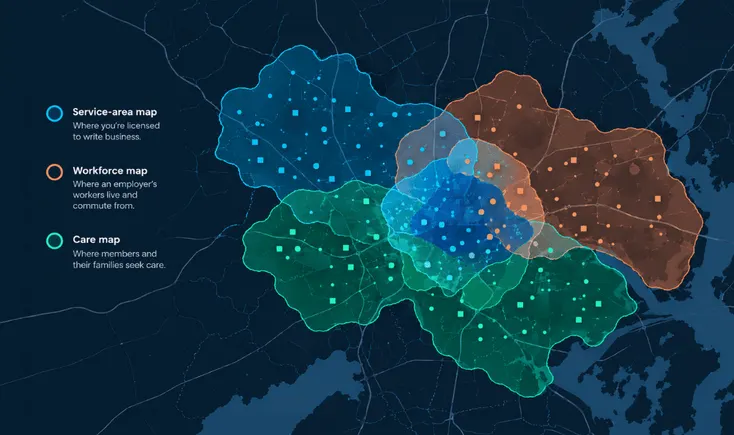
Health plans often use service-area maps to decide where they can sell coverage.
But those maps do not show where an employer’s workers live or where they go for care.
The article says plans should compare three maps: their licensed service area, workers’ home and commuting locations, and the places members seek care.
Where the maps overlap, a plan may find a stronger opportunity to serve an employer and its workers.
Where they do not match, members may have trouble reaching the plan’s network and may leave.
That can waste limited spending on sales, products, and providers, especially for regional and mid-sized plans.
Before pursuing an employer, plans should check where its workforce lives, whether their network reaches those areas, and which competitors are already there.
The three-map approach is meant to help plans decide whether to pursue an account, strengthen their network, protect existing business, or wait.

Health plans are being urged to look beyond service-area maps when deciding where to grow.
A service-area map shows where a plan is licensed to operate, but not where workers live or members seek care.
The article recommends combining service-area, workforce and care maps to identify a plan’s actual market and potential gaps.
It warns that misjudging a market can lead to misplaced network investments, missed accounts and higher acquisition costs.
The article says such mistakes can have a greater impact on regional and mid-market plans than on national plans.
- Who
- Health plans, particularly regional and mid-market plans.
- What
- They are urged to combine service-area, workforce and care maps when planning growth.
- When
- Not stated.
- Where
- Not stated.
- Why
- To identify where workers live and members seek care, and avoid investing in markets their networks do not reach.
This story does not have two clearly opposing sides.
This story does not have a timeline yet.
- Maps to combine
- Service-area, workforce and care
- Employer coverage
- 154 million people under 65, according to KFF's 2025 Employer Health Benefits Survey
- Average family coverage cost
- $26,993 per year
- Workers' share of average family coverage cost
- $6,850 per year
- Source of coverage
- Employer coverage is the largest source of health coverage in the country
Sources
Related news

Paris court upholds limits on treatment for toddler with severe brain injuries
South Korean surgery company cancels Sydney event after questions

Italy faces a growing shortage of general surgeons

NYU Langone opens 28,000-square-foot imaging center in Manhattan

Netherlands to end 13-week pregnancy scan from 2028
Alta Bates Summit named medication safety center of excellence
Six health systems estimate annual losses from proposed 340B payment cut

Abortions in the Netherlands rose slightly to nearly 40,000 in 2025
WVU Health System appoints Matthew Schnur to lead two Pennsylvania hospitals

India asks states to ensure hospitals display service rates
Eastern Plumas Health Care CEO Doug McCoy plans to retire in May