Science & Tech · Science & Environment · 11 hrs ago
Carnivorous plants eat insects, not people
People-eating plants like the one in “Little Shop of Horrors” are fictional.
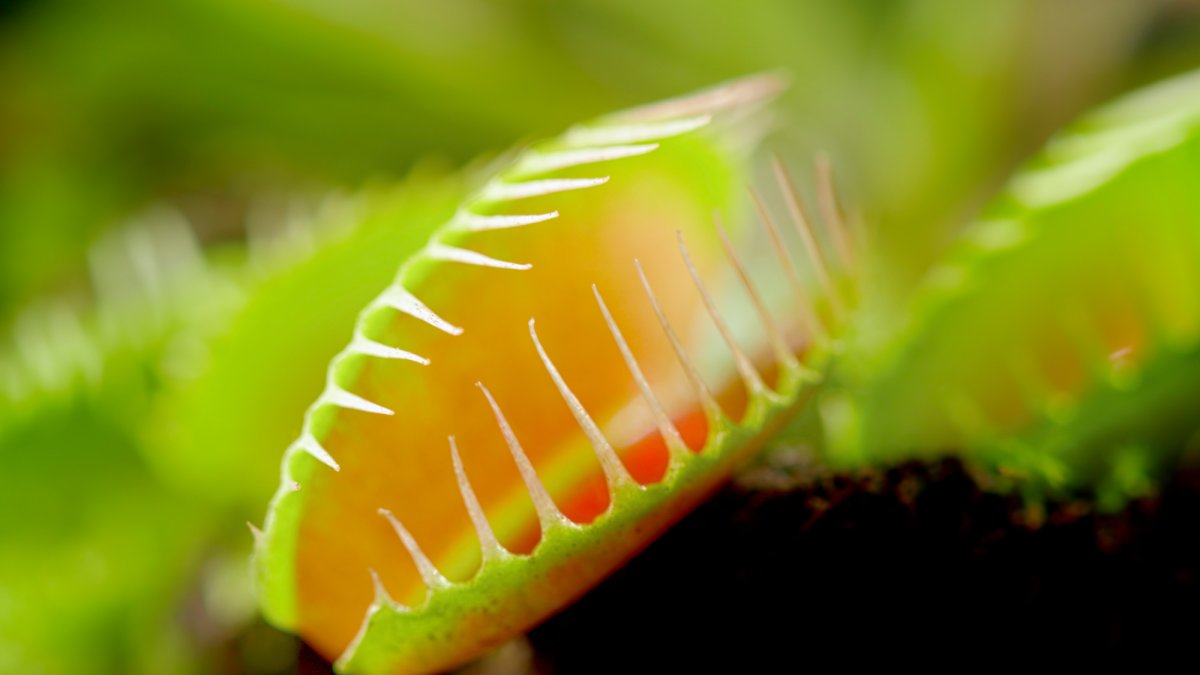
Real carnivorous plants grow on every continent except Antarctica and include Venus flytraps native to the Carolinas.
They make sugars using sunlight, but also trap and digest insects and sometimes small rodents.
This prey provides minerals such as nitrogen and phosphorus that the plants cannot get from nutrient-poor soil.
There are an estimated 800 to 860 species, and carnivory evolved independently at least a dozen times.
Their traps are adaptations that help them survive in environments where other plants may obtain nutrients through different means.

People-eating plants are fictional, while carnivorous plants that trap and digest insects are real.
These plants use photosynthesis to make sugar and obtain extra minerals and nutrients from prey.
Carnivory helps them survive in environments with poor, nutrient-deficient soil.
An estimated 800 to 860 species of carnivorous plants exist worldwide.
Carnivory evolved independently at least a dozen times, rather than being inherited from one meat-eating plant ancestor.
- Who
- Carnivorous plants, which catch and digest animal prey.
- What
- They eat insects and sometimes small rodents to obtain nutrients. People-eating plants are fictional.
- When
- Carnivory evolved independently at least a dozen times; the article says carnivorous plants diversified largely between eight and 72 million years ago.
- Where
- Carnivorous plants occur on every continent except Antarctica, often in sunny places with poor, acidic soil.
- Why
- They obtain nitrogen, phosphorus and other nutrients that they cannot absorb from nutrient-poor soil.
This story does not have two clearly opposing sides.
Carnivorous plants photosynthesize,
Carnivory is primarily an adaptation for plants to get nutrients in low nutrient environments,
Flowering plants had been around for more than 140 million years, according to the article.
Carnivorous plants’ specialized leaf structures evolved and diversified largely during this period.
- Estimated species worldwide
- 800 to 860
- Evolution of carnivory
- At least a dozen independent times
- Continents with carnivorous plants
- Every continent except Antarctica
- Native range of Venus flytraps
- The U.S. Carolinas
- Nutrients obtained from prey
- Nitrogen, phosphorus and other organic nutrients
Sources
Related news

Eztia CEO discusses cooling innovation
Researchers map hair-like sensory cells across squid bodies
Bellbird and Seriema Among the Loudest Birds Measured
Survey finds only 83 mature cheetahs across a vast area of South Africa

British Columbia rogue wave was nearly three times taller than nearby waves
Researchers confirm a new giant waterlily species in Colombia

Detached sea cucumber tissue remained active for more than three years
New book examines the survival skills of 75 fierce forms of nature

Air pollution reaches ‘very poor’ levels in towns near Manaus

Showers and morning fog forecast in parts of Türkiye

Northern lights visible as far south as Devon, Hampshire and Kent