

World · North America · 2 days ago
US announces sanctions against International Criminal Court

The United States has announced sanctions against the International Criminal Court, which is based in The Hague.
The measures would block the court’s assets in the US and prohibit US citizens from doing business with it.
They are due to take effect in 180 days, giving time for diplomatic and legal discussions.
The US says it never joined the court and objects to its ability to prosecute US citizens, military personnel or political leaders.
The court issued an arrest warrant for Israeli Prime Minister Benjamin Netanyahu over alleged war crimes in Gaza, one possible reason for the sanctions.
The court investigates war crimes, crimes against humanity and genocide, and has 125 member states.
It condemned the US move, while Germany and the European Union have reaffirmed support for the court and the EU says it hopes for dialogue before the sanctions take effect.

The United States has imposed sanctions on the International Criminal Court, saying it will restrict the court’s resources and ability to operate.
The measures are due to take effect after 180 days and include blocking the court’s US assets and banning transactions with it by US citizens.
The court condemned the sanctions, saying they undermine the rule of law and seek to obstruct justice.
The US cited its opposition to the court’s authority to prosecute US citizens and the court’s arrest warrant for Israeli Prime Minister Benjamin Netanyahu.
The announcement came hours after former court judge Navanethem Pillay was awarded the Nobel Peace Prize.
- Who
- The US government imposed sanctions on the International Criminal Court.
- What
- The measures include blocking the court’s assets in the United States and prohibiting US citizens from transacting with it.
- When
- Announced on October 9, 2026. The sanctions are due to take effect after 180 days.
- Where
- The sanctions target the International Criminal Court, based in The Hague, and its assets in the United States.
- Why
- The US said it opposes the court’s ability to prosecute Americans. The court’s arrest warrant for Israeli Prime Minister Benjamin Netanyahu was also cited as a possible reason.
US government
International Criminal Court and its supporters
Authority to prosecute
US government
The US opposes the court’s ability to prosecute US citizens, military personnel and political leaders.
International Criminal Court and its supporters
The court says nobody should be above the law and condemned the sanctions as an attack on the rule of law.
Sanctions
US government
The US says it will restrict the court’s resources and ability to operate.
International Criminal Court and its supporters
The court says the measures are unprecedented and seek to obstruct justice.
We need it not. And we do not want it.
It is an attack on the rule of law and on the foundations of the international legal order, undermining the simple principle that no one is above the law.
Germany has supported the International Criminal Court from the beginning — and we must continue to do so.
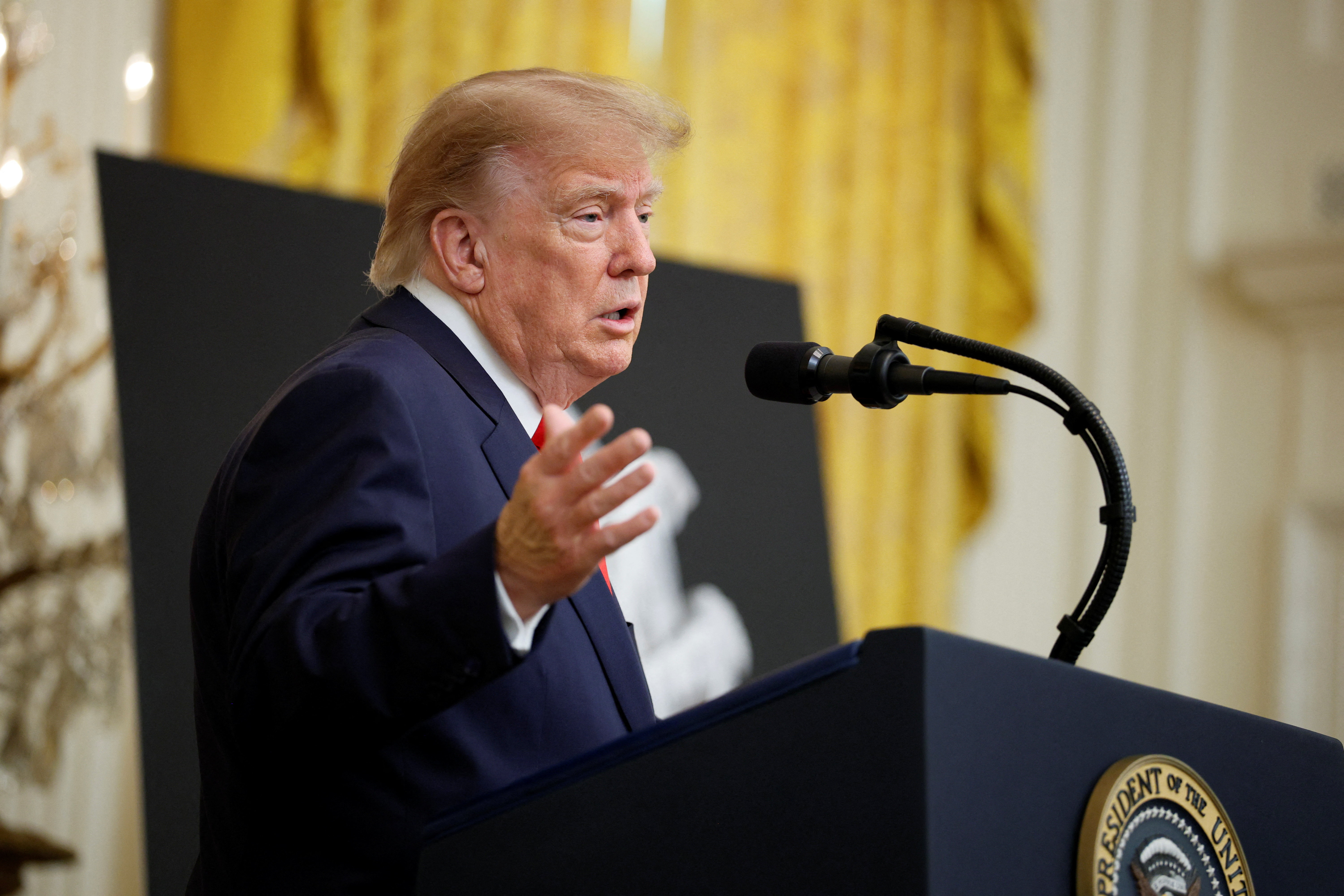
US President Donald Trump called on countries at the UN General Assembly to leave the court.
The US had already imposed sanctions on 13 court judges and prosecutors.
The US announced sanctions against the International Criminal Court, hours after Navanethem Pillay was awarded the Nobel Peace Prize.
The new sanctions are due to take effect.
- Sanctions announced
- October 9, 2026
- Sanctions take effect
- After 180 days
- Earlier US sanctions
- 13 judges and prosecutors
- Court membership
- 125 member states
- Court’s work began
- 2002
- Court location
- The Hague, Netherlands
Sources
Int. Justiz im Visier – USA verhängen Sanktionen gegen Internationalen Strafgerichtshof

Bundesregierung empört - „Schurkengericht!“ USA sanktionieren Strafgerichtshof
IStGH im Visier – USA verhängen Sanktionen gegen Internationalen Strafgerichtshof
IStGH im Visier – USA verhängen Sanktionen gegen Weltstrafgericht

USA verhängen Sanktionen gegen Weltstrafgericht
Related news
Hurricane Isaias kills four and leaves hundreds of thousands without power
Trump says Russia will supply diesel as fuel prices surge

Christa Pike returns to prison after surviving failed Tennessee execution

Nine dead after shooting in Erie, Pennsylvania

US sanctions International Criminal Court after former judge wins Nobel Peace Prize

Isaias weakens after striking Florida and Alabama, leaving hundreds of thousands without power

Florida Zoo Shelters 30 Flamingos in Bathroom During Hurricane Isaias
USS Abraham Lincoln returns to San Diego after record time at sea

Turbulence injures passengers and crew on Avianca flight diverted to Miami

Ontario police warn public after high-risk sex offender is released
Eight people killed in shooting at home in Erie, Pennsylvania
