Business · Economy · 4 hrs ago
Indonesia’s central bank gains a mandate to support jobs and real-sector growth
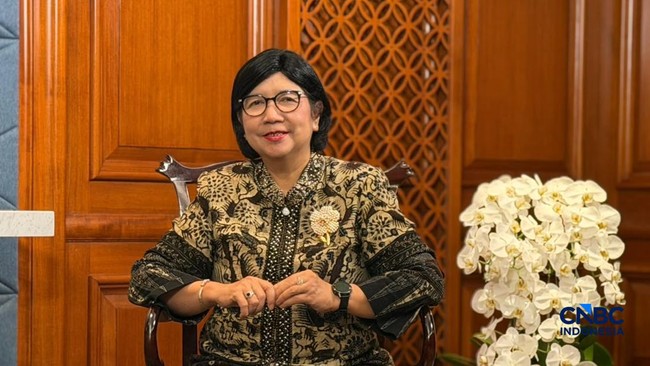
A 2026 law gives Bank Indonesia a broader mandate to foster conditions for economic growth, including growth in the real economy and job creation.
The change applies in Indonesia and is set out in Law No.
4 of 2026 on developing and strengthening the financial sector.
Bank Indonesia official Destry said the central bank cannot achieve these aims alone and must coordinate with government ministries, agencies and other partners.
The central bank also says its policies should include small businesses; it points to QRIS, a payment system whose merchants are mostly micro, small and medium-sized businesses.
One example of cooperation is a 118 trillion rupiah incentive scheme for housing, which Destry said could support construction jobs.
She cited about 115,600 homes and an estimate of four direct workers per home, with further indirect effects that would take time to measure.
The new mandate makes job creation and real-sector growth part of the central bank’s stated responsibilities, but the account gives no further timeline for its implementation.

Indonesia’s central bank has a new mandate to foster conditions that support growth in the real sector and job creation.
The mandate is set out in Law No. 4 of 2026 on Financial Sector Development and Strengthening.
Bank Indonesia official Destry said the central bank must work with government bodies and other stakeholders to meet the mandate.
She cited QRIS, a digital payment system whose merchants are mostly micro, small and medium-sized businesses, as an example of inclusive policy.
Destry said a Rp118 trillion housing-sector incentive scheme could support hundreds of thousands of direct jobs.
- Who
- Bank Indonesia, with government bodies and other stakeholders.
- What
- The central bank has a mandate to support real-sector growth and job creation.
- When
- The mandate is set out in a 2026 law; Destry discussed it on October 12, 2026.
- Where
- Indonesia.
- Why
- To foster economic conditions that support growth in the real sector and create jobs.
This story does not have two clearly opposing sides.
we must create a conducive economic climate and also, of course, encourage growth in the real sector and job creation
In MSMEs, our principle is no one left behind. That is why 96% of QRIS merchants are MSMEs. It means policy must be inclusive.
The Red and White Synergy must be there.
This is a policy that we want to ensure is not just policy for its own sake, but also how it can have an impact on real-sector growth and job creation.
Law No. 4 of 2026 on Financial Sector Development and Strengthening set out Bank Indonesia’s expanded mandate.
Destry discussed the mandate and the need for cooperation to support growth and jobs.
- Legal basis
- Law No. 4 of 2026 on Financial Sector Development and Strengthening
- QRIS merchants
- 96% are micro, small and medium-sized businesses
- Housing incentives
- Rp118 trillion
- Housing construction estimate
- 115,600 homes, with four direct workers per home in Destry’s example
Sources
Related news

Rupiah Edges Higher to Around Rp17,885 per US Dollar
Indonesia’s Jakarta Composite Index opens 0.26% higher

Medco agrees to buy 10% stakes in four East Kalimantan gas contracts

Rupiah Edges Higher as Oil Prices and US Dollar Index Fall

Local banking agent brings food aid closer to 2,000 families in South Kalimantan
Indonesia’s Main Stock Index Falls 1.01% in Morning Trading

Jakarta’s main stock index falls 1% after opening higher

PGUN says Mandiri could seize pledged shares if borrower defaults

63,789 people reported layoffs in Indonesia from January to September

Pertamina Adds Subsidised Diesel for Fishers in Muara Ciasem

Antam gold price rises to Rp 2,592,000 per gram