

Science & Tech · Space · 2 hrs ago
Researchers identify a possible young neutron-star merger remnant in the Milky Way
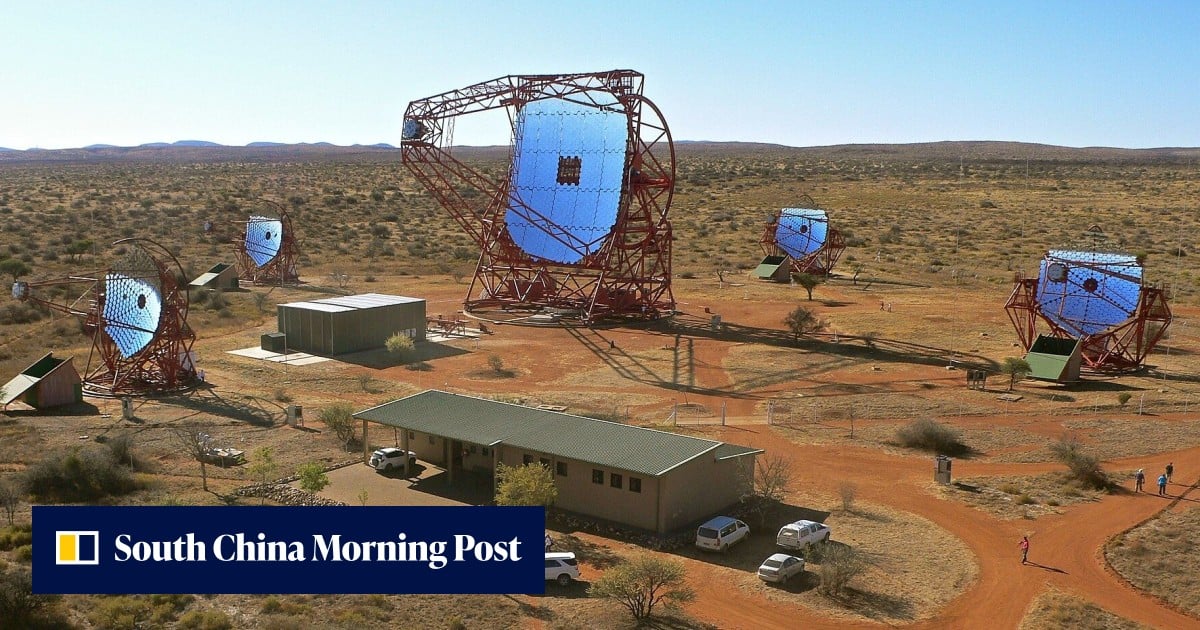
Chinese and US researchers found a mysterious high-energy glow in the Milky Way that may come from a neutron-star collision.
Neutron stars are the extremely dense remains of dead stars, and the team says two of them may have collided.
The collision may have happened less than 1,000 years ago, based on the small, bright cloud left behind.
The blast would have sent out neutrons that helped form heavy elements, including gold, platinum and uranium.
The wreckage may have collapsed into a black hole after the collision.
The finding could help explain how some of the universe’s heaviest elements are made.
The study is a preprint and has not yet been peer-reviewed, so the proposed origin of the glow remains uncertain.

Researchers from China and the United States say a high-energy glow in the Milky Way could be the remains of two neutron stars colliding.
The collision may have produced a cloud rich in heavy elements, including gold, platinum and uranium.
The wreckage may have collapsed into a black hole.
The researchers estimate the blast happened less than 1,000 years ago.
Their study was posted on arXiv and has not been peer-reviewed.
- Who
- Researchers from the Chinese Academy of Sciences and the University of Notre Dame.
- What
- They propose that a high-energy glow may be the remnant of two neutron stars merging.
- When
- The blast probably happened less than 1,000 years ago. The study was posted last week, according to the article.
- Where
- In the Milky Way galaxy.
- Why
- The glow is small and bright, which the researchers say are signs of a young remnant.
This story does not have two clearly opposing sides.
The neutron-star collision probably happened, scattering atoms and neutrons and leaving a glowing cloud.
The researchers’ study was posted on arXiv.
- Researchers
- Chinese Academy of Sciences and University of Notre Dame
- Possible event
- Collision of two neutron stars
- Estimated age
- Less than 1,000 years
- Possible elements
- Gold, platinum and uranium
- Study status
- Posted on arXiv; not peer-reviewed
Sources
Related news
NASA’s Perseverance rover sets record with 45.2km driven on Mars

F-47 fighter targets a 1,000-nautical-mile combat radius

Pramatra Space is building chip-based quantum security for networks

Sanyark Space is building satellites for navigation and communications
Norway proposes NOK 323.3 million for a second Andøya launch pad
Chinese Air Force to show several combat systems at Zhuhai airshow
Why the Hubble constant changes across time and space
A shared time standard may be needed for Moon missions

SpaceX set to send solar arrays and supplies to the space station

French astronaut Sophie Adenot says space brought a full range of emotions

KAI’s AAP drone completes first formation flight with FA-50
