

Business · Markets · 1 hr ago
South Korea’s KOSPI falls 4.48% and drops below 6,100
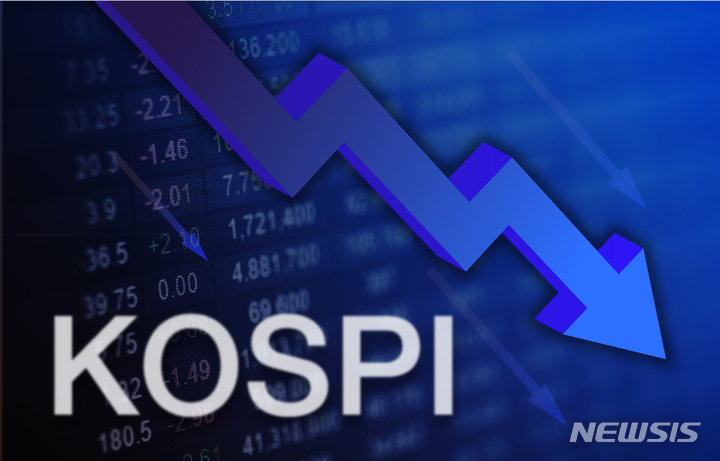
South Korea’s main stock index, the KOSPI, fell 4.48% to 6,098.52 early on Oct.
13.
It dropped below 6,100 for the first time since Aug.
4, about two months earlier.
The decline followed weakness in major US technology stocks, including Micron, AMD, Broadcom and Nvidia.
Investors were also awaiting earnings announcements from major companies and new inflation data.
South Korea’s smaller Kosdaq index was down 3.77% at the same time.
One analyst said the KOSPI’s sharp recent losses and low valuation could create conditions for a short-term rebound, while its 200-day average is an important level to watch.

South Korea’s KOSPI fell 4.48% to 6,098.52 at 9:08 a.m. on October 13, dropping below 6,100.
The index was down 285.72 points from the previous session.
It was the first time the KOSPI had fallen below 6,100 since August 4, about two months earlier.
The article linked weaker investor sentiment to losses among major US technology stocks.
The KOSDAQ fell 3.77% to 817.17.
- Who
- South Korea’s KOSPI and KOSDAQ indices.
- What
- The KOSPI fell 4.48% to 6,098.52, below 6,100. The KOSDAQ fell 3.77%.
- When
- At 9:08 a.m. on October 13.
- Where
- South Korea.
- Why
- Weakness in major US technology stocks weighed on investor sentiment. The US market had closed mixed ahead of major companies’ earnings reports and inflation data.
This story does not have two clearly opposing sides.
US stocks closed mixed ahead of major companies’ earnings reports and the release of inflation data, while large technology stocks weakened.
The KOSPI was down 285.72 points, or 4.48%, at 6,098.52.
- KOSPI level
- 6,098.52
- KOSPI decline
- 285.72 points (4.48%)
- Below 6,100
- First time since August 4, about two months earlier
- KOSDAQ level
- 817.17, down 3.77%
- US semiconductor index
- Philadelphia Semiconductor Index fell 2.67%
What people are saying
In the short term, whether the KOSPI holds support at its 200-day moving average has become important.
Given that the index has fallen nearly 9% over four trading days and its forward price-to-earnings ratio is below 5, lower than during the July sell-off, conditions for a short-term rebound may have formed from a technical and valuation perspective.
Sources
Related news

Hyundai Green Food adds care support for employees’ older relatives
APR shares fall as forecast points to weaker-than-expected third-quarter profit

Shoemarker shoes to be available for delivery through Baemin in South Korea

Samsung Electro-Mechanics executive honored for MLCC technology work

Broadcom and Intel CEOs warn funding could limit AI growth

Woori Bank gives 10 million won to military remains recovery agency

KIWOOM ETF to pay 146 won per share in October distribution
Southeast Asia emerges as a market for South Korea’s KF-21 fighter

KOSPI triggers five-minute trading halt as losses exceed 4%
South Korea’s Kospi falls more than 6% below 6,000

Won trades in the 1,330s as Samsung dividend and US rates pose risks
