

Science & Tech · Science & Environment · 1 day ago
Nightjars trade efficient fast flight for slow, controlled hunting

Researchers in Sweden studied how European nightjars fly, using wind tunnel tests with three birds.
Nightjars catch insects at dusk, flying slowly enough to hover, and also migrate long distances.
Their broad wing tips appear suited to slow flight but become less efficient at generating lift as the birds speed up.
At higher speeds, the birds usually produced two swirling trails of air behind each wing, a pattern that suggests uneven airflow.
The researchers measured lower lift efficiency at faster speeds, but the energy needed to travel a given distance still fell as the birds sped up.
This suggests the wings balance the demands of slow hunting and long-distance travel rather than being optimized for fast flight.
The study describes these three birds, and the available findings do not say what happens next.

Wind tunnel tests found that European nightjars’ broad wing tips help them fly slowly but become less efficient at generating lift as they speed up.
The study measured three nightjars, so its findings describe the species rather than birds in general.
At cruising speeds, the birds usually produced two trailing wingtip vortices, a pattern not described in earlier bird-wake studies.
The nightjars’ lift-generation score averaged 0.72 on a scale where a perfectly even push of air scores 1.
Despite the reduced lift efficiency at higher speeds, the energy needed to travel a given distance fell as the birds sped up.
- Who
- Researchers at Lund University studied European nightjars. Three birds took part in the wind tunnel experiments.
- What
- Wind tunnel measurements found that the nightjars’ broad wings suit slow flight but generate lift less efficiently at higher speeds.
- When
- Five nightjars were captured in summer 2016; the article was published on October 10, 2026.
- Where
- The experiments took place in a wind tunnel at Lund University in Sweden.
- Why
- The study examined how nightjars’ wings handle different flight demands, including catching insects at dusk and traveling at speed.
This story does not have two clearly opposing sides.
This runs counter to the intuitive image of a long-distance migrant as a perfectly optimized flying machine. Instead, the nightjar’s wings appear to be a compromise between several different demands,
Five nightjars were captured and trained to fly in Lund’s wind tunnel.
Three birds that flew steadily across a range of speeds took part, and all the birds were released afterward.
Earth.com published an article about the study’s findings.
- Study location
- Lund University wind tunnel, Sweden
- Birds tested
- 3 European nightjars
- Air speeds
- About 6 to 25 mph (2.6 to 11 meters per second)
- Lift-generation score
- Average 0.72; a perfectly even push scores 1
- Airflow photographs
- 640 per second
Sources
Related news

Hurricane Simon and cold front to bring heavy rain across Mexico

Heavy rain advisory issued for mountainous area of Seogwipo

Eztia CEO discusses cooling innovation

Researchers map hair-like sensory cells across squid bodies

Study finds disinformation can sharply weaken climate policies

Four fossil footprints may show an adult T. rex walking

Göbeklitepe graves point to a natural origin for scattered human bones

World’s oldest known wild bird returns to Midway Atoll at about 75
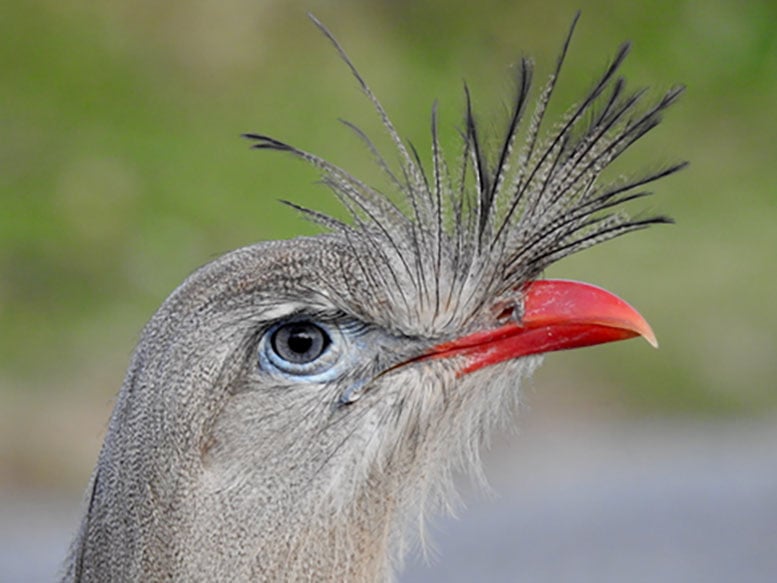
Bellbird and Seriema Among the Loudest Birds Measured

Researchers confirm a new giant waterlily species in Colombia

Survey finds only 83 mature cheetahs across a vast area of South Africa
