Health · Medical Research · 1 hr ago
A transfer RNA may help restore drug sensitivity in prostate cancer
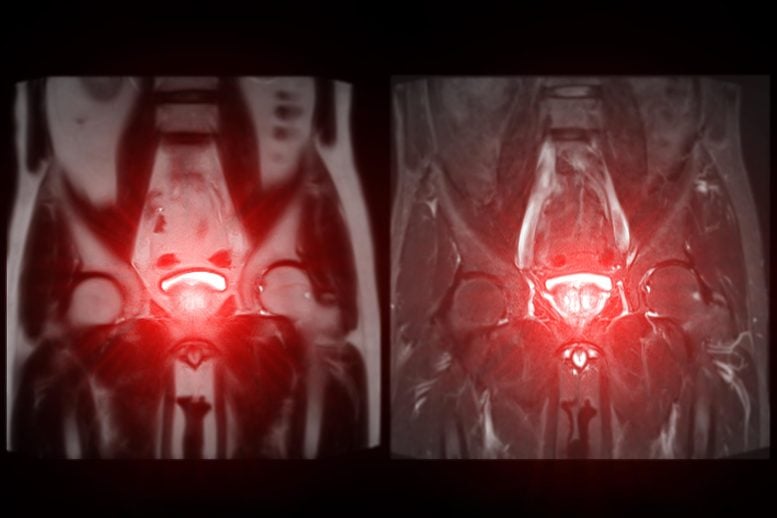
Many prostate cancer treatments target the androgen receptor, a protein that can fuel tumor growth.
Some tumors become less dependent on the receptor and resist these drugs, shifting into a more aggressive form.
Researchers at Fred Hutch Cancer Center studied a molecule called transfer RNA, which helps cells make proteins.
They found that tRNA1Arg(UCU) was more abundant in tumors that depended on the receptor and less abundant in resistant tumors.
In experiments using cells, mice and patient tumor samples, supplying the tRNA made resistant tumors sensitive to receptor-targeting drugs again.
The finding suggests this molecule may help scientists understand resistance and develop future treatment strategies, but the work was in experimental models.

Researchers found that a specific transfer RNA, tRNA1Arg(UCU), may help restore drug sensitivity in resistant prostate cancer in experimental models.
The molecule was linked to cancer cells that depend on the androgen receptor, a protein targeted by many prostate cancer treatments.
Its levels were lower in tumors that were less dependent on the receptor and resistant to treatment.
In follow-up experiments, supplying the tRNA to resistant tumors restored sensitivity to therapies targeting the androgen receptor.
The study by Fred Hutch Cancer Center researchers was published in Nature.
- Who
- Researchers at Fred Hutch Cancer Center, including first author Yeon Soo Kim and co-corresponding author Andrew Hsieh.
- What
- They found that supplying a specific transfer RNA restored sensitivity to androgen receptor-targeting therapies in experimental models of resistant prostate cancer.
- When
- The study was published in Nature; the publication date is not stated in the article text.
- Where
- Fred Hutch Cancer Center; the research also examined cell lines, mouse models and patient tumor samples.
- Why
- The researchers investigated how protein synthesis may contribute to treatment resistance and changes in cancer cell identity.
This story does not have two clearly opposing sides.
This story does not have a timeline yet.
- Molecule studied
- tRNA1Arg(UCU)
- Research institution
- Fred Hutch Cancer Center
- Publication
- Nature
- Experimental systems
- Prostate cancer cell lines, mouse models and patient tumor samples
- Treatment target
- Androgen receptor
What people are saying
The discovery opens an entirely new realm of cancer biology that was previously unrecognized
We found that we can shift the cell state between androgen receptor-dependent to an androgen receptor-independent state with a single tRNA
This is important because changes in cell identity are a major reason prostate cancers become resistant to treatment.
Sources
Related news

Pope Leo has surgery scheduled to remove a lung nodule

Review finds insufficient evidence for medicinal cannabis to treat insomnia

Large study finds abrupt shifts in health markers at menopause

Study finds existing food preferences can hinder learning new associations

Small trials suggest semaglutide may reduce some measures of alcohol use

CT Classification May Help Identify TBI Patients for Early Discharge

Enzyme supplement may ease IBS symptoms, study suggests
US man nearly dies after eating large amounts of beetroot

Rudy Tanzi may be close to a pill to prevent Alzheimer’s

Maternal cells found in children’s brains may persist into old age

Gene-targeted treatment shrinks tumours in some advanced cancers