

Science & Tech · Space · 3 hrs ago
Black hole in NGC 1275 launches radio jets after an X-ray flare
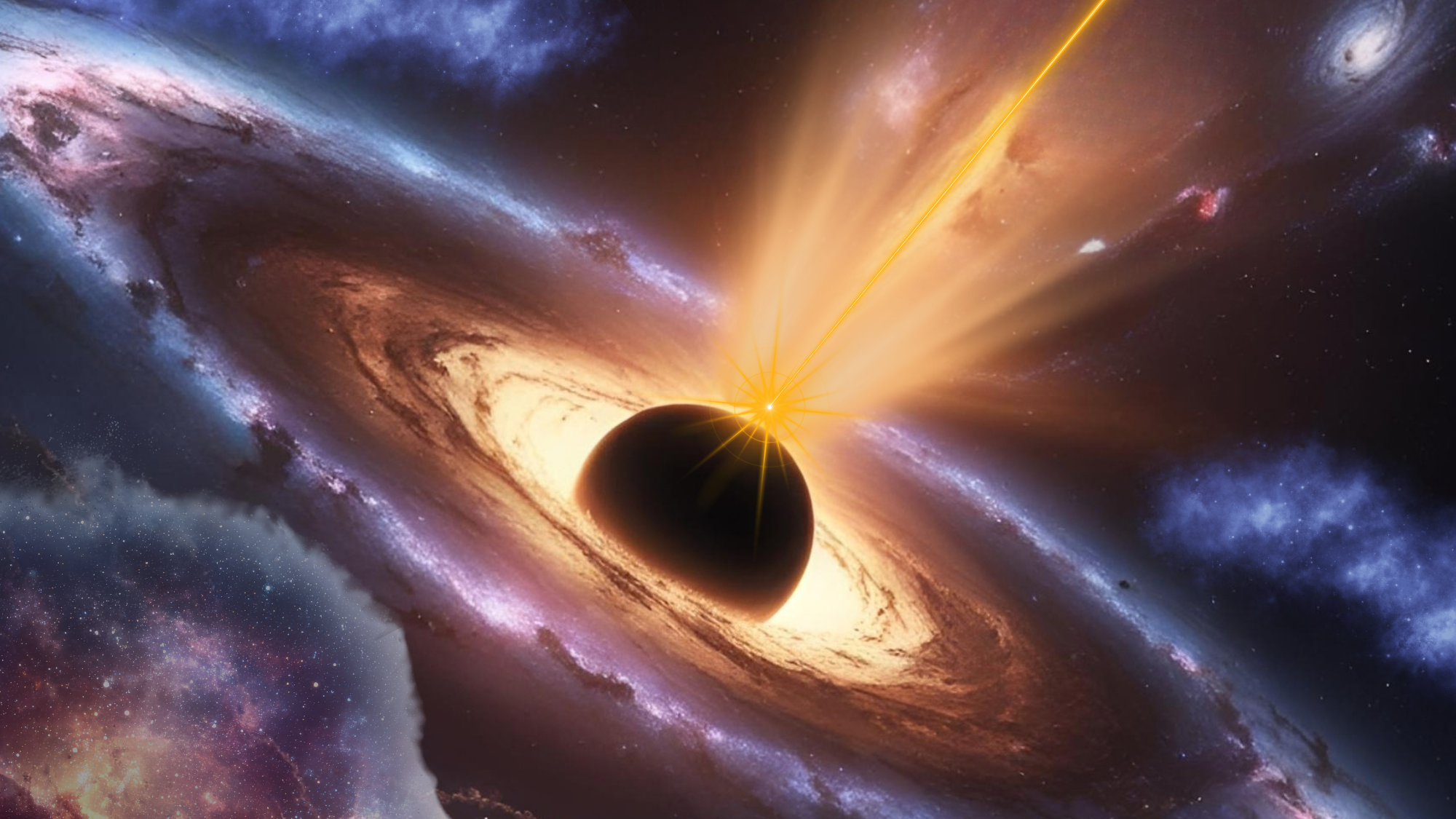
Astronomers observed a supermassive black hole at the center of NGC 1275, the brightest galaxy in the Perseus Cluster.
In February 2023, the black hole’s X-ray brightness doubled during two brief bursts, and the flare lasted less than 60 days.
The flare showed that the black hole was taking in matter more quickly than usual.
About 300 days later, radio observations detected jets of material emerging from the black hole’s poles.
The team ruled out a star being torn apart as the cause of the flare.
Tracking the feeding and the later jets helps researchers study how black holes affect star formation and the growth of galaxies.

Astronomers observed radio jets from the supermassive black hole at the center of NGC 1275 about 300 days after an X-ray flare.
The flare, seen in February 2023, was the strongest ever recorded from NGC 1275 and lasted less than 60 days.
The observations used NASA’s Swift X-ray spacecraft and radio data to study the link between matter falling into the black hole and jets streaming away from it.
Researchers say NGC 1275 offers an opportunity to study how black hole jets affect their host galaxy.
- Who
- Astronomers led by Sarah Ketchum of the University of Michigan.
- What
- They observed radio jets from the supermassive black hole at NGC 1275 after an X-ray flare.
- When
- The strongest recorded X-ray flare was in February 2023; the radio jets were observed about 300 days later.
- Where
- NGC 1275, at the center of the Perseus Cluster.
- Why
- To study the connection between matter accreting onto a black hole and the jets it launches.
This story does not have two clearly opposing sides.
The team used archival Swift data to track changes in X-ray emissions from gas accreting onto the black hole.
NGC 1275 produced its strongest recorded X-ray flare, which lasted less than 60 days.
Astronomers observed radio jets from the black hole.
- Galaxy
- NGC 1275
- Galaxy cluster
- Perseus Cluster
- X-ray flare
- February 2023; less than 60 days
- Radio jets
- Observed about 300 days after the flare
- Observatory
- NASA’s Neil Gehrels Swift Observatory
What people are saying
It is fairly difficult to see the inner region of this AGN because NGC 1275 is at the center of the massive Perseus cluster of galaxies, which adds additional light to our observations.
We developed a model that allowed us to remove the cluster emission from archival Swift data, and in doing so, we were able to see the changes in the X-ray flux from gas accreting onto the black hole in NGC 1275, from 2007 to 2025.
Sources
Related news

SpaceX plans to launch 27 Starlink satellites from California
Red dwarf appears to slowly draw matter from a brown dwarf

SpaceX plans ISS cargo launch carrying solar arrays and research equipment

French astronaut Sophie Adenot says space brought a full range of emotions

NASA releases nearly 800 GB of Artemis II lunar data

Astronomers trace record-distant radio burst to a young galaxy

Hubble data point to a possible second-generation planet around a white dwarf

NASA seeks ways to prevent electrical sparks during moonwalks

NASA releases more than 800GB of Artemis II mission data

Camera captures aurora over parts of the Netherlands

China’s Guowang network connects Arctic and Antarctic in video call
