3 days ago
Meta's US Teen Rules Put India's Age-Verification Debate

Meta agreed in the United States to add stronger safety rules for teenagers on Facebook and Instagram.
These rules include time limits, nighttime blocks and fewer notifications.
Teenagers may also be able to use feeds without recommendation algorithms and turn off autoplay.
Meta will try harder to detect teens who claim to be adults.
India has separate rules requiring parents to approve the use of children's personal data.
Those rules also restrict targeted advertising and profiling of children.
Experts say India needs safety tools designed for its own schools, shared devices and online habits.
WhatsApp is testing a voluntary way for some Indian users to declare their age, but experts say age checks alone will not keep children safe.

A US settlement requires Meta to impose teen screen-time, nighttime and notification restrictions.
Meta will improve technology to identify teenagers who provide adult birth dates.
India's DPDP framework requires verifiable parental consent and limits targeted advertising involving children.
Indian experts say US safety features cannot be copied directly because device and school practices differ.
WhatsApp is testing voluntary age declarations in India, but experts warn self-reporting may be bypassed.
- Who
- Meta, Indian policymakers and experts including Aparajita Bharti and Shruti Narayan.
- What
- The United States has approved Meta's teen-safety settlement, prompting debate over age assurance and child-safety regulation in India.
- Where
- The measures involve Meta's platforms in the United States and India's digital-regulation environment.
- When
- The US settlement was approved by a judge; WhatsApp is currently testing voluntary age declarations in India.
- Why
- The measures address concerns about children's privacy, harmful or addictive content, mental wellbeing, screen time and child sexual abuse material.
US-Style Product Restrictions
India-Specific, Privacy-Conscious Measures
Applying US features in India
US-Style Product Restrictions
Product-level limits on screen time, notifications and recommendations could address harmful or addictive social-media use.
India-Specific, Privacy-Conscious Measures
Experts say the same features may not fit India, where schools generally do not allow phones and shared-device use is common.
Age verification
US-Style Product Restrictions
Stronger age-assurance technology is needed to identify teenagers and apply child-specific protections, including when users provide adult birthdays.
India-Specific, Privacy-Conscious Measures
Age verification can be bypassed and may require collecting more personal information, so it should not be the only safety solution.
Regulatory focus
US-Style Product Restrictions
Social-media safety should include controls for mental wellbeing, screen time, unwanted adult contact and addictive product design.
India-Specific, Privacy-Conscious Measures
India's DPDP framework primarily addresses privacy risks, parental consent and data use, while experts call for local evidence and a principles-based wellbeing-by-design approach.
Key facts
- US daily limit
- The settlement requires a two-hour daily limit for under-18 users on Facebook and Instagram.
- Nighttime restriction
- Teen access is blocked from midnight to 6 a.m.
- Notification restriction
- Notifications are muted from 8 a.m. to 3 p.m.
- Indian privacy rules
- The DPDP framework requires verifiable parental consent before processing children's personal data.
- Advertising restrictions
- The framework prohibits targeted advertising, behavioural monitoring and profiling of children.
- WhatsApp test
- WhatsApp is testing voluntary date-of-birth declarations for some users in India; the test is not mandatory identity verification.
- Separate safety concern
- The Indian government has sought action from platforms over the circulation and promotion of child sexual abuse material.
Quotes
Aparajita Bharti
Founding partner of The Quantum Hub, a Delhi-based research firm
“Copying pasting the same safety features that Meta has offered in the US across platforms in India also is not practical. We have a different context.”
 NDTV
NDTV
“The Indian government should invest in collecting its own evidence and data on potential harms and risks faced by children online”
NDTV
Sources
Related news

India Studies Meta’s $17.1 Billion Settlement on Child Safety

Meta’s Teen Social Media Curfew Faces Enforcement Questions Worldwide

Meta settlement adds teen safeguards, but India awaits protections

India’s Stronger Child-Data Law Awaits Enforcement as Meta Trial Opens

Meta Faces US Child Safety Trial, Indian Scrutiny Over Moderation

Meta Settlement Sets Teen Curfews, Limits, and Safety Changes

Tamil Nadu Cybercrime Probe Targets Deepfake Impersonating CM Vijay

Adilabad Police Arrest Suspect in Rs 5.3 Crore Instagram Fraud

Man loses ₹3.81 lakh in alleged Kerala lottery scam
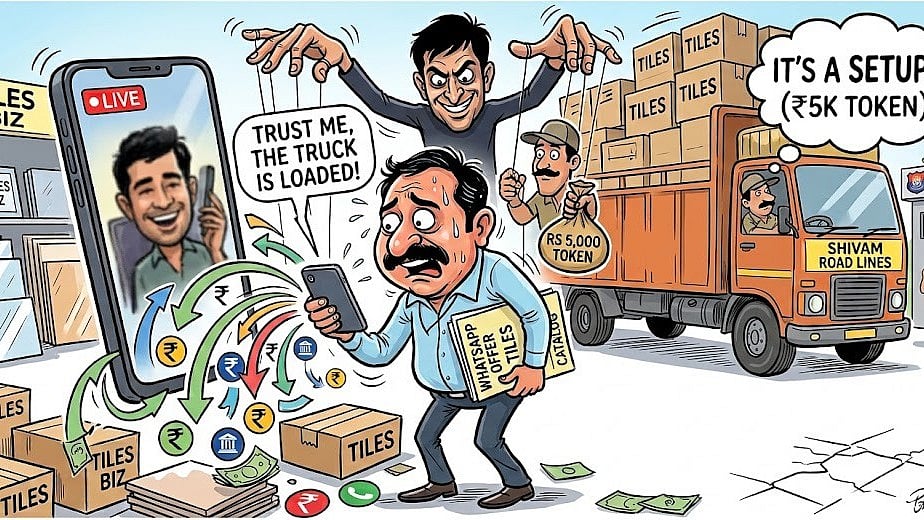
Indore Tile Trader Loses ₹2.5 Lakh in WhatsApp Scam

Chennai Metro Reports 1.04 Crore Passenger Journeys in August