

23 hrs ago
Delhi High Court Protects Jobs After Maternity Leave

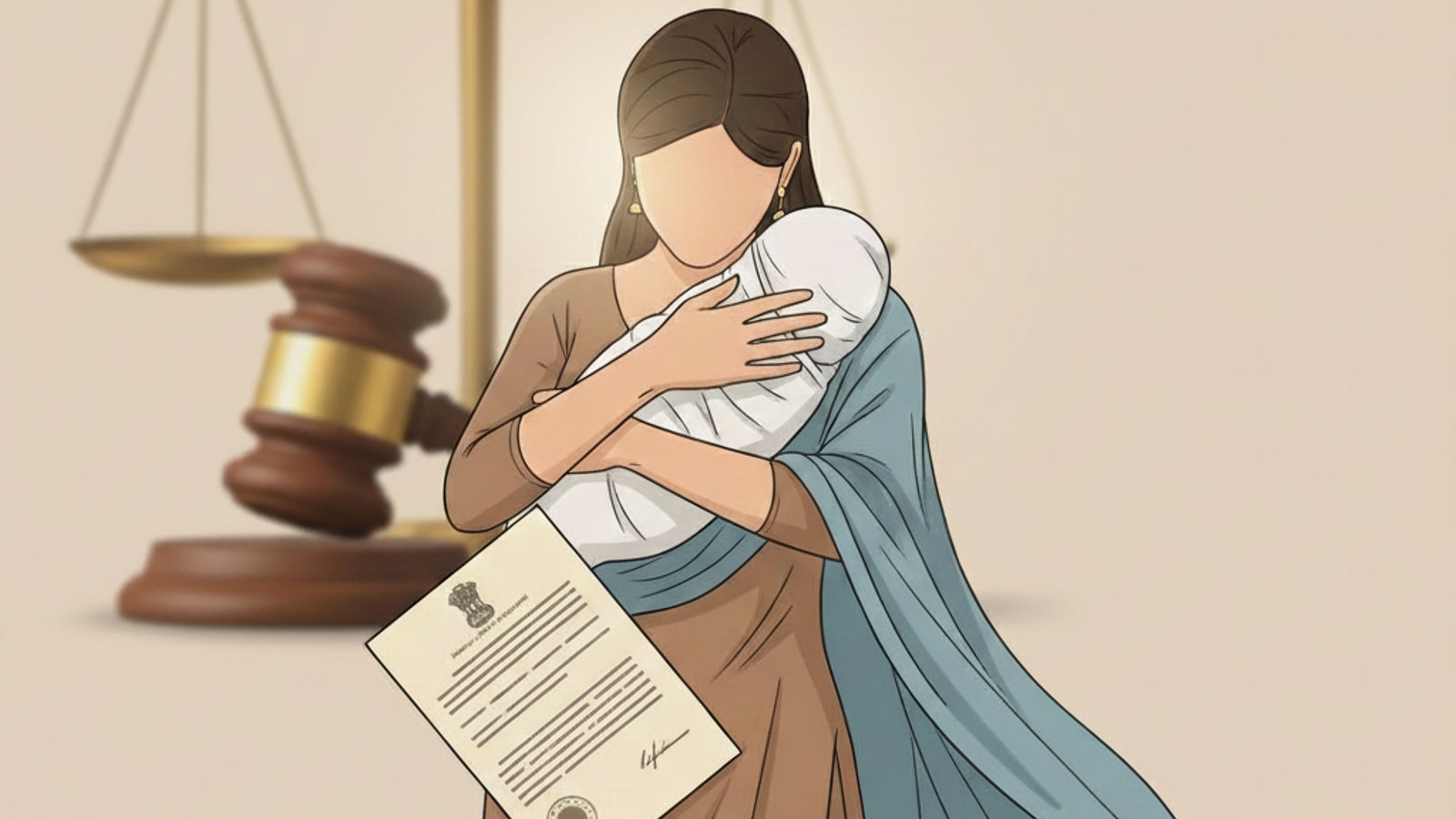
The Delhi High Court said a woman should not lose her career advantages because she took maternity leave.
When she returns, she should normally get the same job she had before.
If that job truly no longer exists, she must receive a job that is almost equal in pay, responsibility and future opportunities.
Keeping the same salary and job title is not enough if the worker loses authority or meaningful duties.
The case was brought by Chartered Accountant Rakhi Bisht after she returned from maternity leave and was moved to another department.
Her employer said her salary, seniority and level stayed the same after an organisational change.
The Court also said a creche must actually be working when employees need it.
The employer was ordered to pay Bisht compensation and legal costs.
The Union government was told to create clearer rules to protect women at work during and after pregnancy.

The Delhi High Court held that women returning from maternity leave are ordinarily entitled to their previous post or a substantially equivalent role.
Equivalent employment must preserve not only pay and designation but also duties, status, reporting structure, authority and promotion prospects.
The ruling arose from Chartered Accountant Rakhi Bisht’s allegation that she was disadvantaged after pregnancy and maternity leave.
The Court found that a non-functional creche does not meet the Maternity Benefit Act’s statutory requirement.
The employer was ordered to pay Bisht Rs 10 lakh in compensation and Rs 1.5 lakh in costs, while the Union government was directed to develop stronger maternity-protection rules.
- Who
- The Delhi High Court, Justice Sachin Datta, Chartered Accountant Rakhi Bisht, her employer and the Union of India.
- What
- The Court interpreted maternity protections to require restoration to the same or an equivalent job after maternity leave and ordered compensation and broader regulatory action.
- Where
- The case was decided by the Delhi High Court in New Delhi.
- When
- The judgment was pronounced on August 31, 2026; Bisht returned from maternity leave in July 2024.
- Why
- The Court found that maternity protection covers duties, authority, status and career prospects, not merely salary and designation, and that a non-functional creche does not satisfy the law.
Employee’s Position
Employer’s Position
Nature of the reassignment
Employee’s Position
Rakhi Bisht said she was moved to the Treasury Department after maternity leave, given substantially inferior work, left without reporting staff and excluded from managerial meetings.
Employer’s Position
The employer said her designation, level, salary and seniority remained unchanged, and that she received investment-accounting and currency-revaluation duties at the same managerial level after organisational restructuring.
Availability of the original post
Employee’s Position
Bisht’s case was that her earlier managerial accounting role was no longer available because it had been given to another employee during her absence, resulting in professional disadvantage.
Employer’s Position
The employer relied on organisational restructuring and maintained that the reassignment preserved her managerial level and employment conditions.
Creche facility
Employee’s Position
Bisht said the employer informed her in September 2024 that a creche was unavailable when she sought to use it.
Employer’s Position
The employer later stated that a creche existed but was not functional on the relevant days.
Key facts
- Judgment date
- August 31, 2026
- Relevant law
- Section 12(1) of the Maternity Benefit Act, 1961
- Petitioner
- Rakhi Bisht, a Chartered Accountant with approximately 14 years of experience
- Employment details
- Appointed Manager, Accounting in 2022 at a monthly salary of Rs 2.60 lakh
- Compensation
- Rs 10 lakh, plus Rs 1.5 lakh in costs
- Payment deadline
- Eight weeks, after which the amount and costs carry 9% annual interest
- Government deadline
- The Union of India must develop the directed maternity-protection framework within six months of the judgment
Quotes
Justice Sachin Datta
Delhi High Court judge who delivered the judgment
“Retention of the same designation and remuneration is, therefore, necessary but not by itself sufficient”
 republicworld.com
Sources
Related news
Delhi High Court Bars Maternity-Based Demotion at Work

Delhi High Court Says Motherhood Cannot Justify Workplace Disadvantage

Himachal High Court grants surrogacy maternity leave to doctor

Delhi HC cuts wife's maintenance from ₹30,000 to ₹25,000

Delhi High Court reinstates probationary teacher fired without inquiry

Telangana High Court Restores Wife’s ₹20,000 Interim Maintenance

Childcare key to sustaining India's women workforce participation
