

1 hr ago
Study Finds Illegal GM Hybrids on Up to 30% of Cotton Area
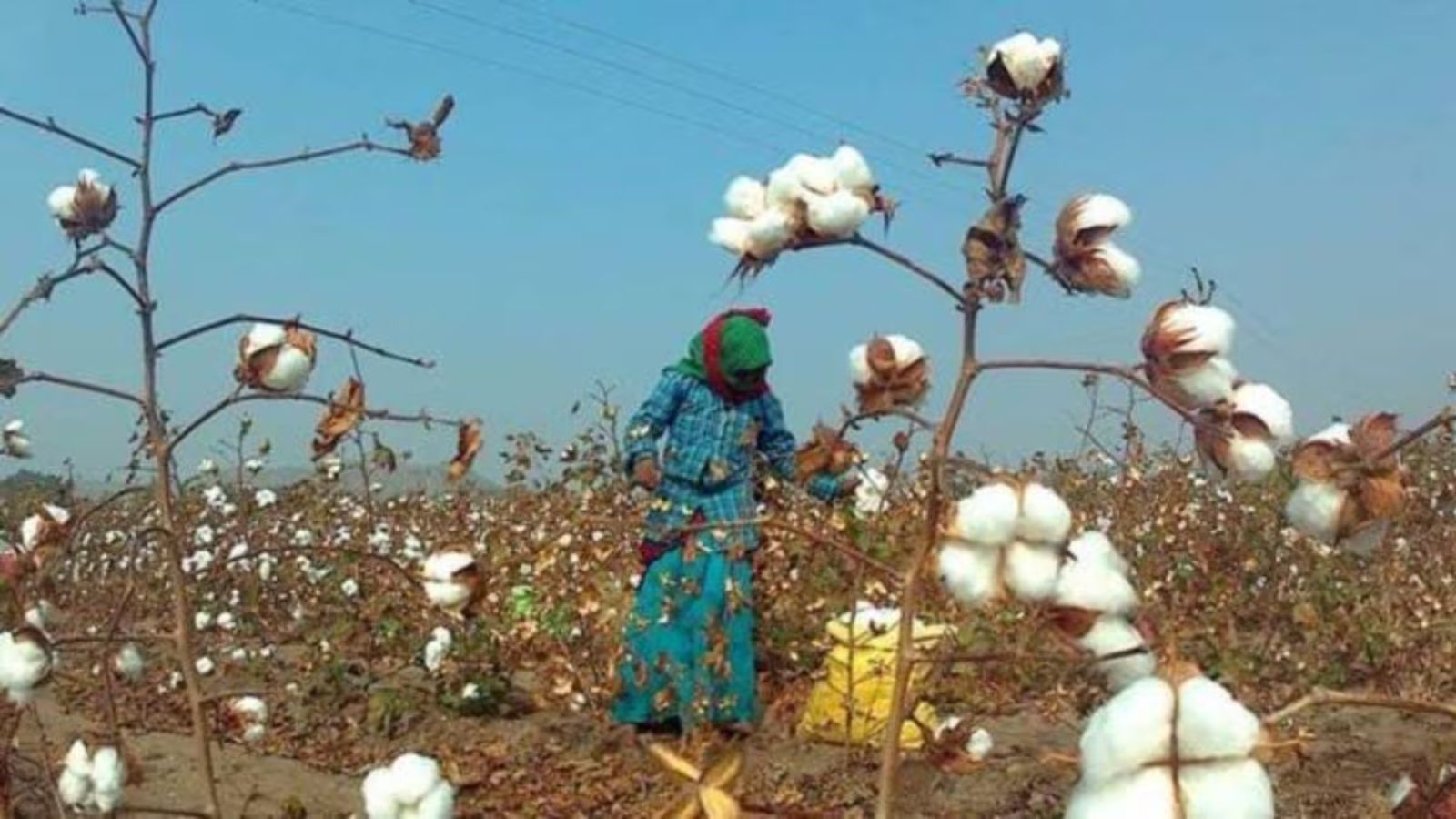
A study says many Indian cotton farmers are planting seeds with gene changes that the government has not approved.
Researchers tested samples from farms in four states.
Some samples had a gene that lets cotton survive glyphosate, a weed-killing chemical.
Others had a gene intended to help protect cotton from insect pests.
The study’s authors say farmers may choose these seeds because hiring people to remove weeds costs much more than spraying weeds.
They estimate these unapproved seeds were used on roughly one-quarter to three-tenths of the cotton-growing area in 2025–26.
India has approved cotton with two Bt genes, but not the additional genes found in the study.
The study was commissioned by two seed-industry associations.

A study commissioned by the Federation of Seed Industry of India and National Seed Association of India estimates that 24–30% of India’s 2025–26 cotton area used hybrids with unauthorised GM traits.
The study tested 227 geo-tagged seed or leaf samples from 984 farmers in 16 districts across Maharashtra, Telangana, Andhra Pradesh and Rajasthan.
The unapproved herbicide-tolerance gene cp4-epsps was detected in 72.69% of samples; the unapproved insect-resistance gene Vip3A was detected in 53.74%.
Researchers say labour shortages and high manual-weeding costs have encouraged farmers to use glyphosate with herbicide-tolerant cotton hybrids.
The study estimates the unauthorised HTBt seed market reached 82–88 lakh packets in 2025–26, worth an estimated Rs 820–880 crore.
- Who
- Cotton farmers in India; the study was commissioned by the Federation of Seed Industry of India and the National Seed Association of India.
- What
- A field-based study estimates that 24–30% of cotton area in 2025–26 was planted with hybrids containing unauthorised GM traits.
- Where
- India, with field samples collected in 16 districts in Maharashtra, Telangana, Andhra Pradesh and Rajasthan.
- When
- The 2025–26 cotton season; the report provides no publication date.
- Why
- The study links adoption of herbicide-tolerant hybrids to labour shortages and the high cost of manual weeding, and links Vip3A use to concerns about pink bollworm.
Study findings and regulatory concern
Farmers’ practical incentives
Use of unapproved GM traits
Study findings and regulatory concern
The study says the detected herbicide-tolerance and Vip3A genes are unauthorised, meaning their use bypasses the established government approval system.
Farmers’ practical incentives
The article says farmers have adopted the technology amid labour shortages and high manual-weeding costs; it does not include a direct response from farmers or regulators.
Weed control costs
Study findings and regulatory concern
The study describes glyphosate-tolerant cotton as unauthorised and reports increased use of the technology despite the lack of approval.
Farmers’ practical incentives
Study director Bhagirath Choudhary says glyphosate spraying costs Rs 750–850 per acre, compared with Rs 12,000–15,000 for manual weeding.
Key facts
- Estimated cotton area with unauthorised traits
- 26.2–29 lakh hectares, or 24–30% of the 114.8 lakh hectares sown in 2025–26
- Samples and farmers
- 227 geo-tagged seed or leaf samples from fields of 984 farmers
- Study locations
- 16 districts in Maharashtra, Telangana, Andhra Pradesh and Rajasthan
- cp4-epsps detection
- Detected in 72.69% of samples overall
- Vip3A detection
- Detected in 53.74% of samples overall
- Estimated unauthorised seed market
- 82–88 lakh packets in 2025–26, valued at Rs 820–880 crore at an average Rs 1,000 per packet
- Approved Bt genes cited
- cry1Ac and cry2Ab
Quotes
Bhagirath Choudhary
Director of the South Asia Biotechnology Centre, which conducted the study
“We found 53.74% of our 227 field samples testing positive for this next-generation insect-resistance gene. Its presence was 58.16% in Maharashtra, 54.29% in AP, 57.14% in Rajasthan and 38.64% in Telangana. The driver here seems to be effectiveness against pink bollworm, with the first-generation Bt hybrids becoming vulnerable to this insect pest”
 indianexpress.com
“We found the HT cp4-epsps gene to be present in 72.69% of the field samples, with this as high as 88.64% for Telangana, 70.92% for Maharashtra, 62.86% for AP and 57.14% for Rajasthan. It indicates widespread adoption of HT technology by farmers for weed management, despite the government not authorising this GM trait.”
indianexpress.com
Sources
Related news

Bayer CEO urges technology access and crop diversification for India

India's Seed Industry Seeks Faster Science-Based Approvals
Vylor Targets Hyderabad as Asia’s Gene-Editing Seed Hub

Seed Industry Urges India to Approve Gene Editing

India’s Integrated Pest Management System Touted to Fight Counterfeit Pesticides
Father and Son Arrested After Rs 1.5 Crore Cannabis Crop Found

Horticulture Board Freezes Subsidy Applications After Rs 99 Lakh Row

Centre Tightens Horticulture Subsidy Rules After Officials’ Kin Benefited

Minister Refunds Rs 99 Lakh Horticulture Subsidy

SC Orders Probe into Police Crackdown on Student Protesters
