2 weeks ago
Brazil Activates Reciprocity Law in Response to Trump Tariffs
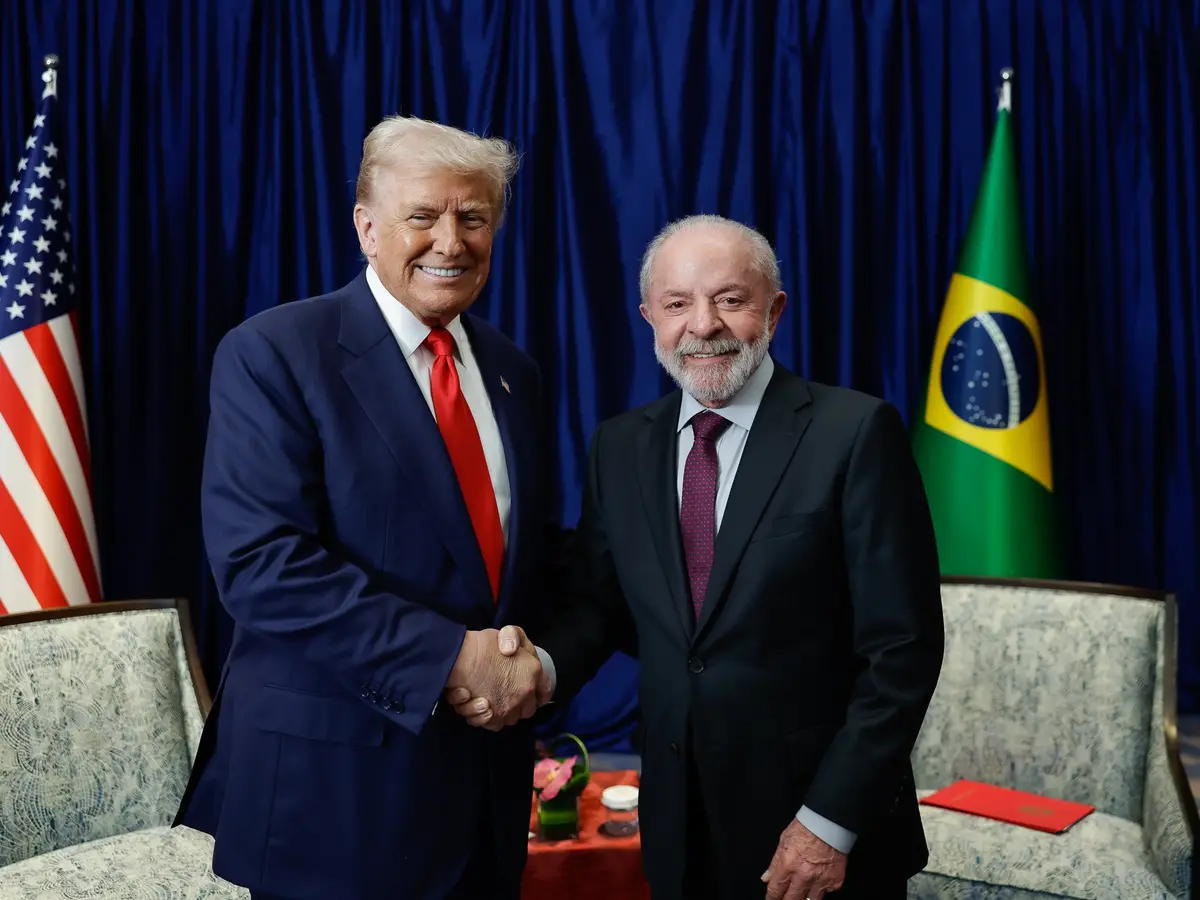
The United States put a big tax, called a tariff, on many products that Brazil sells to America.
Brazil's president, Lula, says his country will not just accept that quietly.
So Brazil turned on a special law, the Economic Reciprocity Law, that lets Brazil fight back with its own taxes and other measures if another country is unfair.
But Brazil did not start those countermeasures right away.
Instead, the country wants to talk with the United States first and try to fix the problem peacefully.
Brazil also asked the World Trade Organization to help judge whether the American taxes are fair.
Some important products, like coffee, beef and oranges, are not taxed because people in America rely on them.
There is an election coming in Brazil, and Lula warned America not to interfere in it.
The two countries have not solved the dispute yet, and the talks are still going on.

Brazil formally activated its Economic Reciprocity Law after US President Donald Trump imposed tariffs on Brazilian goods, notifying Washington and requesting diplomatic consultations.
The US imposed a 25% tariff on many Brazilian products under Section 301 of the US Trade Act in July 2026, affecting about 18% of Brazil's exports to the US, worth roughly $7.4 billion.
Brazil has not yet imposed matching counter-tariffs; authorities will assess the impact on domestic industries through CAMEX and public consultations.
Brazil plans to challenge the US measures at the World Trade Organization and offer credit lines to affected sectors, while Lula remains open to direct talks with Trump.
Coffee, beef, oranges and orange juice, some energy products, fertiliser and aerospace products were exempted, though overlapping tariffs of up to 37.5% can apply to goods such as sugar, apparel, paper and steel.
- Who
- Brazilian President Luiz Inácio Lula da Silva and US President Donald Trump
- What
- Brazil activated its Economic Reciprocity Law in response to US tariffs, opening a process for consultations and possible proportional countermeasures without immediate retaliation.
- Where
- Brazil and the United States
- When
- The dispute escalated in July 2026, with US tariffs taking effect around July 22; Brazil invoked the law in response.
- Why
- The US imposed a 25% tariff under Section 301 citing Brazilian practices in digital trade, electronic payments (PIX), intellectual-property protection, ethanol market access and other areas; Brazil calls the tariffs 'unjustified and arbitrary' and wants to defend its interests.
Brazil's perspective
Trump administration's perspective
Why the tariffs were imposed
Brazil's perspective
Brazil calls the tariffs 'unjustified and arbitrary' and notes the US runs a goods trade surplus with Brazil, with many US products already entering duty-free.
Trump administration's perspective
The US Trade Representative cited unreasonable or discriminatory Brazilian practices involving digital trade, the PIX system, preferential tariffs, intellectual-property protection, ethanol access, anti-corruption measures and illegal deforestation.
Negotiation vs. escalation
Brazil's perspective
Brazil prefers diplomatic consultations, direct talks with Trump and a WTO challenge, using the Reciprocity Law as negotiating leverage while avoiding immediate retaliation that could disrupt supply chains and add to inflation.
Trump administration's perspective
The US imposed steep tariffs and previously threatened or announced tariffs of up to 50% on some Brazilian goods, with some measures linked to US concerns over legal proceedings involving Jair Bolsonaro.
Trade fairness
Brazil's perspective
Brazil says many US products already enter Brazil duty-free and that Brazil maintains a relatively low average applied tariff on US imports.
Trump administration's perspective
The US maintains that Brazilian practices, including preferential tariffs and electronic-payment rules, harm US competitiveness and justify tariffs as a response.
Key facts
- US tariff on Brazilian goods
- 25% under Section 301 of the US Trade Act, effective around July 22, 2026
- Affected trade
- About 18% of Brazil's exports to the US, worth roughly $7.4 billion
- Maximum combined duty
- 37.5% where the 25% tariff overlaps a 12.5% forced-labour-related tariff (e.g., sugar, apparel, paper, steel)
- Exempted exports
- Coffee, beef, oranges and orange juice, some energy products, fertiliser and aerospace products
- Brazil's mechanism
- Economic Reciprocity Law (enacted 2025), allowing proportional countermeasures via CAMEX
- Next steps
- Diplomatic consultations, public consultations, WTO challenge and credit lines for affected sectors
- Political context
- Brazil's presidential election in October 2026, with Lula facing Senator Flávio Bolsonaro
Quotes
President Luiz Inácio Lula da Silva
President of Brazil
“"Brazil invoked the law to show that the country “respects itself” and will defend its interests."”
 wionews.com
Sources
Related news

Brazil opens reciprocity process against US over tariffs
Lula and Trump Revive Brazil Tariff Talks Ahead of Election
Canada Announces Dollar-for-Dollar Tariffs After US Trade Talks Collapse
Brazil Tightens AI Election Rules Before October Vote
Flavio Bolsonaro Vows to Respect Brazil’s October Election Result
Flavio Bolsonaro Pledges to Respect Brazil’s Presidential Election Results
Flavio Bolsonaro Adds Economic Advisers to Brazil Campaign