

1 day ago
Brazil Tightens AI Election Rules Before October Vote

Brazil is getting ready for an important election.
Many political groups are using artificial intelligence to make pictures, videos, songs, and other campaign material.
Some of these creations are harmless, but fake videos could show candidates doing things that never happened.
Brazil’s elections court wants to stop such material from confusing voters.
The court plans to clarify what counts as a deepfake.
New rules require labels on AI-made content and ban some kinds of campaign AI use.
Chatbots are also a concern because they may recommend or rank candidates.
Jair Bolsonaro’s political group has used AI more openly than Luiz Inácio Lula da Silva’s campaign.
Officials are trying to protect the fairness of the election while deciding how much AI use should be allowed.

Brazil’s top elections court is expected to clarify limits on AI-generated and altered electoral content.
The rules include mandatory labels, deepfake bans, restrictions on candidate recommendation systems, and a blackout around voting.
The court has received 19 AI-related cases during the first 11 days of the campaign.
A legal challenge followed the use of an AI avatar of former President Jair Bolsonaro at his son’s party convention.
Studies found that many Brazilian voters consult AI tools, while major chatbots frequently ranked or ordered candidates.
- Who
- Brazil’s Superior Electoral Court, political campaigns aligned with Jair Bolsonaro and Luiz Inácio Lula da Silva, and Brazilian voters.
- What
- Authorities are preparing tighter limits on AI-generated and altered content in the election, including clearer deepfake rules.
- Where
- Brazil, including campaign activity and court proceedings in Rio de Janeiro and Brasília.
- When
- The expected court ruling was scheduled for Tuesday, September 2, ahead of the October 4 first-round vote; the report was published September 1.
- Why
- To prevent AI-generated misinformation, fabricated events, fake testimonials, and chatbot recommendations from undermining electoral integrity.
Election regulators and AI critics
Campaigns and AI users
How AI should be used in campaigns
Election regulators and AI critics
Regulators and technology experts want labels and restrictions to prevent deepfakes and fabricated events from misleading voters or harming democracy.
Campaigns and AI users
Political campaigns are using AI for campaign songs, animations, avatars, memes, and other promotional material; some of this content is presented as harmless.
AI-generated campaign content
Election regulators and AI critics
The TSE is concerned about convincing depictions of events that never happened and has ordered at least one misleading video removed.
Campaigns and AI users
Bolsonaro’s camp has embraced AI-generated material, while Lula’s campaign has largely avoided it; the report does not describe all AI campaign content as deceptive.
Chatbot candidate recommendations
Election regulators and AI critics
The TSE’s rules prohibit generative AI systems from recommending or ranking candidates, reflecting concern that chatbots could sway voters.
Campaigns and AI users
Voters are willing to ask AI tools about candidates, and widely used chatbots have continued ranking or ordering candidates in many responses, challenging enforcement.
Key facts
- Election date
- The first-round vote is scheduled for October 4.
- Court
- Brazil’s top elections court, the TSE, is expected to set or clarify AI-related limits.
- AI-related cases
- The TSE had received 19 cases involving AI during the first 11 days of the campaign.
- Existing restrictions
- Rules include labels for AI-generated content, deepfake bans, restrictions on candidate recommendation systems, and a blackout around voting.
- AI use among Brazilians
- The Fundação Itaú Observatory survey cited in the report says AI is already part of the daily lives of 75% of Brazilians.
- Voter consultations
- A Projeto Brief survey found that nearly 63% of voters were willing to consult AI tools about candidates.
- Chatbot study
- An ITS Rio study found that seven widely used Brazilian chatbots ranked or ordered candidates in 90% of their responses.
Quotes
João Victor Archegas
Legal coordinator at the Institute of Technology and Society of Rio de Janeiro
“It is not the tool itself that is the problem. It is its potential use in certain contexts that may lead to dangerous outcomes for our democracy.”
 theprint.in
Sources
Related news

US lawmakers slam Meta's election safeguards ahead of 2026
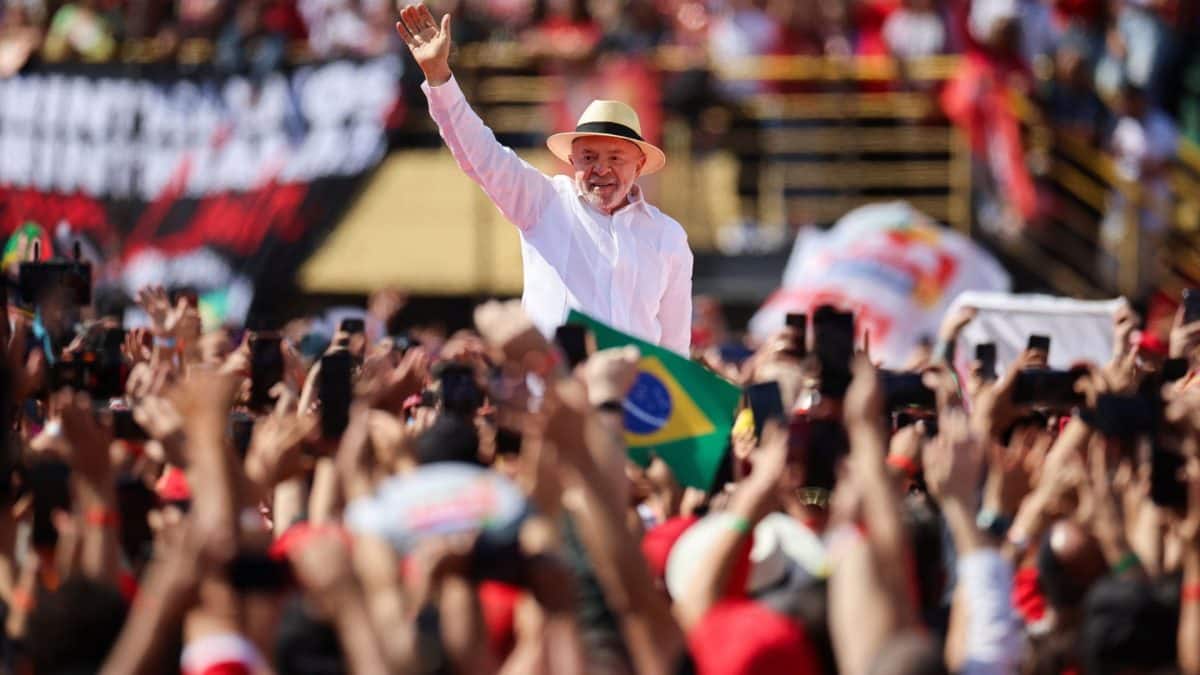
Lula and Flavio Bolsonaro launch Brazil presidential campaigns
Flavio Bolsonaro Pledges to Respect Brazil’s Presidential Election Results
Flavio Bolsonaro Vows to Respect Brazil’s October Election Result
Lula Holds Slim Poll Lead Over Flavio Bolsonaro in Brazil
Meta Ads for Lewd Deepfake App Prompt Fresh Scrutiny
Lula and Trump Revive Brazil Tariff Talks Ahead of Election