

2 weeks ago
UK Job Vacancies Hit Five-Year Low as Hiring Market Weakens

In the UK, the number of job openings has dropped to 707,000, the lowest in more than five years.
Job openings, or vacancies, are jobs that companies are trying to fill.
This means finding a new job could be harder for people looking for work.
The number of people without jobs stayed the same at 4.9 percent.
Wages for people working in private companies are growing more slowly than before.
Private sector pay grew by only 2.8 percent, the slowest in almost six years.
Small businesses say hiring has become more expensive because of higher costs.
Costs like National Insurance, minimum wage and energy are making employers cautious.
The government is also planning changes to zero-hours contracts that businesses say could cost them billions.
For now, the job market has not suddenly gotten much worse, but things are getting harder for job seekers.

UK job vacancies fell to 707,000 between May and July, the lowest level in more than five years.
The unemployment rate stayed at 4.9 per cent, with the Office for National Statistics describing the labour market as "little changed overall".
Private sector pay growth slowed to 2.8 per cent in the three months to June, the weakest in almost six years.
Small businesses cite rising labour and operating costs, including National Insurance, minimum wage and energy prices, as reasons for scaling back recruitment.
Government analysis estimates a planned crackdown on zero-hours contracts could cost businesses up to £2.9 billion a year.
- Who
- UK employers, particularly small businesses, and job seekers, alongside the Office for National Statistics and business groups.
- What
- Job vacancies fell to 707,000, a five-year low, while private sector pay growth weakened as employers became more cautious about hiring.
- Where
- United Kingdom.
- When
- Between May and July for vacancies, and the three months to June for pay data.
- Why
- Rising labour and operating costs, including National Insurance, minimum wage and energy prices, are making recruitment more expensive.
Key facts
- Job vacancies
- 707,000 (May to July)
- Unemployment rate
- 4.9 per cent
- Private sector pay growth
- 2.8 per cent, slowest in almost six years
- Public sector pay growth
- 6.1 per cent
- Regular earnings growth (excl. bonuses)
- 3.5 per cent in the three months to June
- GDP growth (April to June)
- 0.4 per cent
- Estimated cost of zero-hours crackdown to businesses
- Up to £2.9 billion a year
- Data source
- Office for National Statistics (ONS)
Quotes
Suren Thiru
Chief economist, Institute of Chartered Accountants in England and Wales
“The UK labour market is in a “low‑churn limbo”, with employers reluctant to hire, fire or offer larger pay rises while dealing with higher costs and economic uncertainty.”
 easterneye.biz
“Underlying wage pressures remain contained and we expect interest rates to stay on hold for the rest of the year.”
easterneye.biz
Sources
Related news

UK labour market cools as wage growth slows, vacancies fall

UK Graduate Vacancies Nearly Halve as AI Reshapes Hiring

US hiring stalls: 23,000 jobs lost as wage growth slows
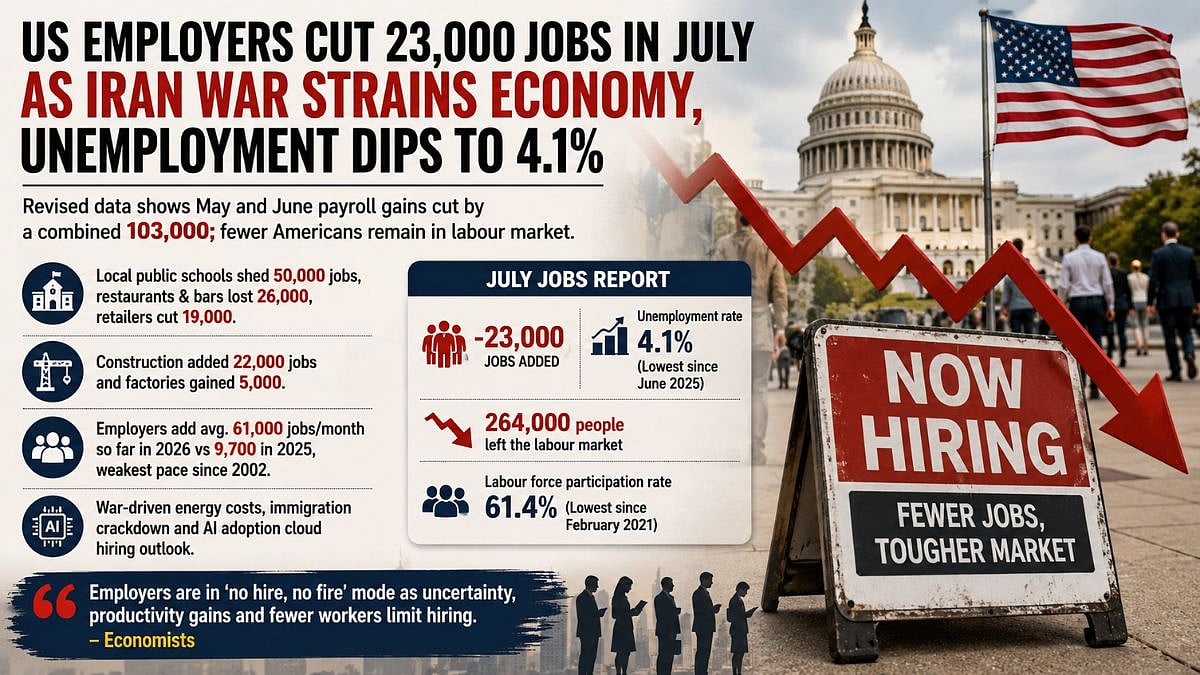
US Employers Cut 23,000 Jobs as Iran War Pressures Economy

AI boom worsens UK youth unemployment to decade high

Iran Seizes Fuel-Smuggling Vessel in Gulf, Arrests 11 Crew

Trump Floats Renaming Strait of Hormuz as “Trump Strait”

Chevron Plans $7 Billion Venezuela Expansion Amid U.S. Oil Push

Saudi Tanker Hit in Hormuz, Killing Two Filipino Sailors

Indian Stocks Extend Three-Day Losing Streak as Oil Rises
