1 hr ago
Brain Implant Helps Speech-Impaired Man Say “I Love You”

A man who has difficulty speaking used a brain implant to communicate with his partner.
The implant read signals from his brain.
Artificial intelligence helped turn those signals into spoken words.
The device produced a synthetic voice saying “I love you.”
His partner appeared excited and surprised.
Neuralink shared the video online, and it became popular.
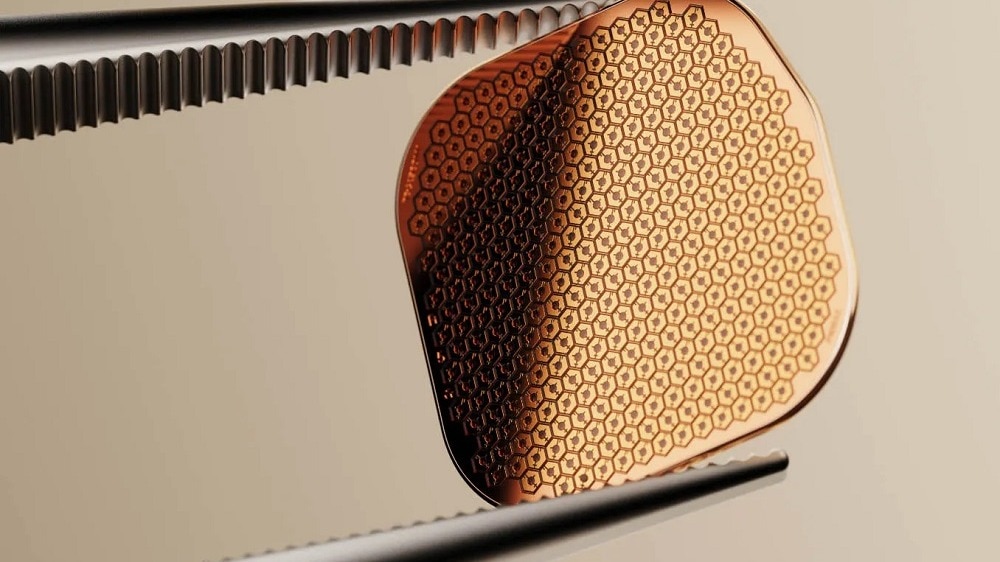
Brain-computer interfaces are designed to help people regain abilities such as movement, hearing, or sight.
The technology is still new, and only hundreds of people have received brain implants.

Neuralink shared a video of a speech-impaired clinical trial participant using a brain implant to communicate “I love you” to his partner.
The implant interpreted the man’s brain signals and used artificial intelligence to produce the words in a synthetic voice.
Elon Musk reshared the video, which drew widespread attention on social media.
The demonstration follows a similar Neuralink experiment involving a participant identified as Kenneth in March.
Neuralink says 21 participants are enrolled in trials worldwide and that it has recorded no serious device-related adverse events.
- Who
- A speech-impaired, unidentified man participating voluntarily in a Neuralink clinical trial, along with his partner.
- What
- He used a brain implant and artificial intelligence to communicate “I love you” through a synthetic voice.
- Where
- The location of the demonstration was not specified; Neuralink says its trials involve participants worldwide.
- When
- The video was shared earlier this year; the article also references a similar demonstration involving Kenneth in March.
- Why
- The technology is intended to translate brain signals into commands or speech and help people regain lost functions.
Key facts
- Company
- Neuralink
- Participant
- An unidentified voluntary clinical trial participant with speech impairment
- Message
- “I love you”
- Technology
- A brain-computer interface using artificial intelligence and a synthetic voice
- Trial enrollment
- Neuralink said 21 participants were enrolled in trials worldwide earlier this year
- Testing history
- Neuralink has been testing its technology on humans for more than two years
- Safety claim
- The company reported zero serious device-related adverse events
Quotes
Unidentified speech-impaired Neuralink participant
A voluntary clinical-trial participant who used a Neuralink brain implant to communicate with his partner
“I love you”
 NDTV
NDTV
Sources
Related news

AI Animal Communication Research Offers Hope Alongside Risks

AIIMS Bhopal Performs Double Cochlear Implant Surgery on Infant
London Surgeons Use AI in World-First Brain Tumour Operation
Hearing-Impaired Student Overcomes Setbacks to Pursue Medical Dream

World’s First Live AI-Assisted Surgery Removes Brain Tumour

Kuwait Infant Hears After Bilateral Cochlear Implant Surgery

Zuckerberg, Musk and Huang Oppose AI Regulation Plan

Hollywood Turns Silicon Valley Tech Titans Into October Film Subjects

Elon Musk Quote Urges Action Despite Likely Failure

Elon Musk Says Neuralink Could Restore Vision, Enable Superhuman Sight