2 hrs ago
India’s Data Centre Boom Faces Questions Over Local Development
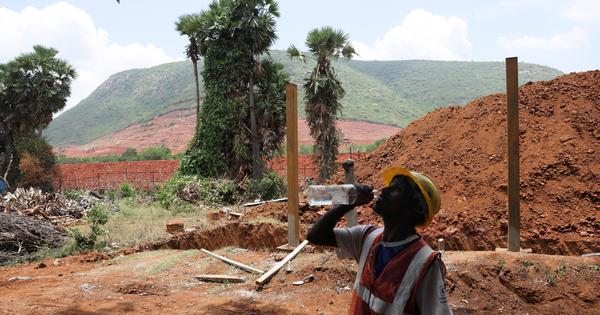
India is building more data centres to store and process digital information.
Osama Manzar says these projects may use a lot of land, water, and electricity.
He believes local people should be asked before construction begins.
He also questions whether data centres will create many jobs for nearby communities.
Factories often employ more local workers, but data centres can be highly automated.
Manzar suggests building smaller data centres closer to villages and districts.
These centres could first help local farms, governments, and businesses.
He says companies should clearly explain what communities will receive in return for their resources.

Osama Manzar questions whether India’s data centres should automatically be treated as development.
He says communities are often not consulted before land, water, and other local resources are committed.
Manzar argues data centres may create fewer local jobs than factories because they rely heavily on automation.
He cites campaigns near Google’s proposed Visakhapatnam data centre and land disputes involving Microsoft’s Telangana hub.
He proposes smaller, distributed data centres that first serve local farming, governance, and business needs.
- Who
- Osama Manzar, local communities, Indian government bodies, and private data-centre companies.
- What
- An interview examining whether data-centre construction in India constitutes development and how it affects communities.
- Where
- India, including areas near Visakhapatnam and Telangana.
- When
- Why
- Data centres require land, water, and electricity, while communities may receive limited consultation, benefits, or employment.
Community-focused concerns
Development-focused rationale
Whether data centres are development
Community-focused concerns
Manzar says the government should not assume that data centres are development, especially when communities may lose land and resources without clear benefits.
Development-focused rationale
The Indian government is described as viewing data-centre construction as a developmental activity, while companies offer promises of investment and jobs.
Local consultation
Community-focused concerns
Affected landowners, farmers, women’s groups, and other residents should be consulted before land, water, and space are committed.
Development-focused rationale
Government bodies and companies are proceeding with projects and associated incentives, including low-cost land and tax exemptions, although the article says consultation has been limited.
Technology and resource efficiency
Community-focused concerns
Using renewable energy or less groundwater does not resolve the broader questions of land use, pollution, noise, and whether the facility should exist in that location.
Development-focused rationale
Companies may seek technical solutions such as using renewable energy, reducing water use, or extracting water from moisture to improve efficiency.
Key facts
- Digital access in 2002
- About 1.2% of India’s population was online when the Digital Empowerment Foundation began.
- Digital access now
- More than 70% of India’s population is now online.
- Projected water use
- Data centres are described as being on track to consume water equivalent to the annual domestic needs of 1.3 billion people by 2030.
- Projected energy demand
- Their electricity needs are described as matching the energy demand of 650 million people by 2030.
- Visakhapatnam
- Campaigning is reportedly taking place in the area where Google is building a data centre.
- Telangana
- Microsoft is building a data-centre hub, and some acquired land there has reportedly been under dispute.
- Proposed alternative
- Manzar suggests hyperlocal, distributed data centres serving villages or districts.
Quotes
Osama Manzar
Founder of the Digital Empowerment Foundation and participant in technology policy committees
“In India, we are looking at a government that is viewing data centers as a developmental activity. We need to ask whether it is really development.”
 scroll.in
“Developing countries should not become data waste centres, serving the elite of the world. If you are coming to my neighborhood, first serve us.”
scroll.in
Sources
Related news
Global Data Centre Growth Faces Rising Community Opposition
Thane Residents Resist Amazon Hyperscale Data Centre Over Resource Concerns

India’s AI Data-Centre Boom Raises Hidden Water Concerns

Lokesh Defends Vizag Data Centres Amid Water Concerns

ESDS Flags Data Centre Protests As IPO Risks Amid Expansion
Activists Seek Independent Review of Vizag AI Data Centres

Nvidia Price Hike Puts India’s AI Data-Centre Build-Out Under Pressure

Indian-Origin Executives Leading Adobe and Global Corporate Giants

ASCII Smuggling Helps Spammers Evade AI-Powered Email Filters
Microsoft Slashes AI Transcription Price, But Discount Expires in 2026