3 days ago
Iran War Pressures US Missile Stocks as Rebuilding Lags
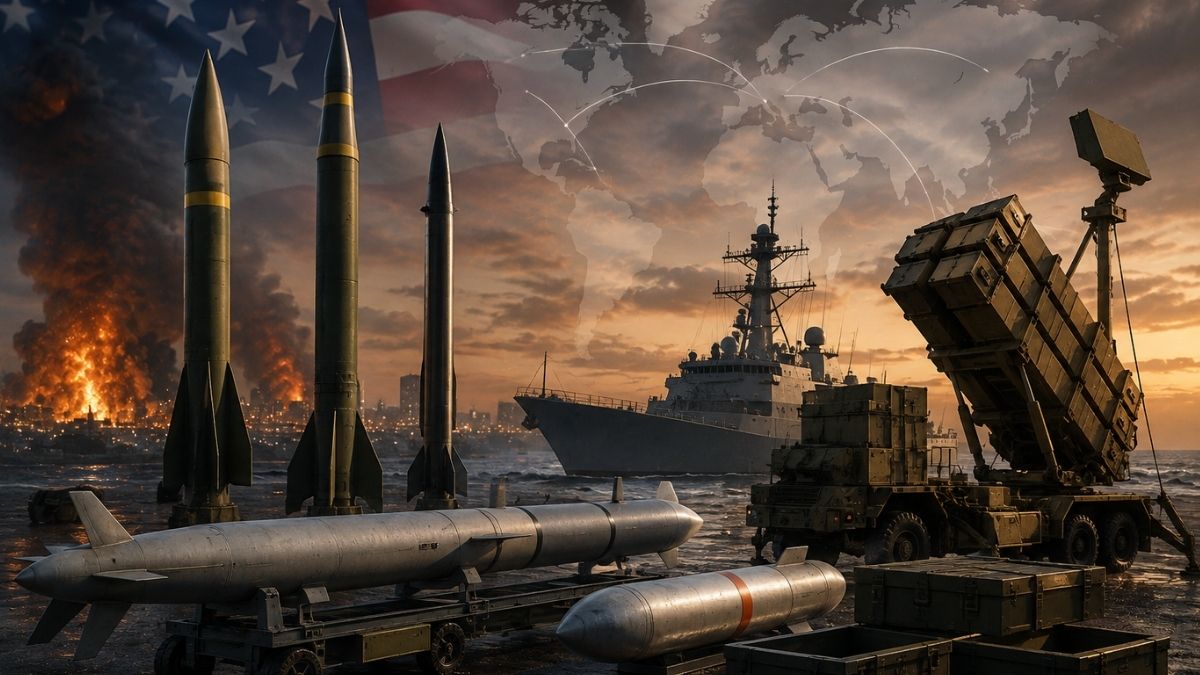
The war between the United States and Iran has used many important weapons.
Some American missile supplies are under more pressure than others.
Reports say 65% of the United States’ Patriot interceptors were used.
Patriot interceptors help stop incoming missiles and other threats from the air.
This does not mean the United States has used 65% of all its weapons.
Factories cannot quickly replace missiles because they need special parts, workers and equipment.
The Pentagon is asking defense companies to produce weapons faster.
Even after the war ends, the United States will need to rebuild its supplies.
Different weapons will take different amounts of time to replace.

The six-month US-Iran war has strained supplies of key American weapons.
The Iran war reportedly consumed 65% of the US Patriot interceptor inventory.
Pressure also affects some long-range guided missiles and other air-defence interceptors.
US factories face limits involving components, workers, suppliers, funding and production capacity.
The Pentagon says the United States retains a large arsenal, but replenishment could take years for complex systems.
- Who
- The United States military, the Pentagon, and American defense manufacturers are involved; the war is between the United States and Iran.
- What
- The conflict has consumed some critical US weapons faster than factories can replace them, especially Patriot interceptors and certain guided missiles.
- Where
- Within the US military and defense-industrial base, with implications for US partners and operations elsewhere.
- When
- During the six-month US-Iran war and in the period after combat operations decline.
- Why
- Weapons are being used during an active conflict, while production is limited by manufacturing capacity, components, workers, suppliers and funding delays.
Pentagon Assessment
Reported Concerns
Overall arsenal
Pentagon Assessment
The Pentagon says the United States retains a large and ready arsenal and rejects claims that it has run out of critical weapons.
Reported Concerns
Reuters, the Associated Press and other US media reports describe significant shortages or pressure involving particular munitions.
Military readiness
Pentagon Assessment
The Pentagon disputes broader claims that the war has undermined overall military readiness.
Reported Concerns
Senior commanders reportedly raised concerns that prolonged deployments could affect the military’s ability to respond elsewhere.
Replenishment challenge
Pentagon Assessment
The Pentagon is pushing defense companies to increase production while the war continues.
Reported Concerns
Analysts and industry executives cited limits in the defense-industrial base, including production capacity and funding delays, making rapid replacement difficult.
Key facts
- Conflict duration
- Six months
- Most cited stock pressure
- The war reportedly consumed 65% of the US Patriot interceptor inventory.
- Weapons affected
- Patriot interceptors, some long-range guided missiles and other air-defence interceptors
- Pentagon position
- The United States still has a large and ready arsenal and has not exhausted its entire weapons inventory.
- Production constraint
- Factories cannot instantly expand output because they need equipment, workers, raw materials and suppliers.
- Industry directive
- A Pentagon memo sent to defense companies on August 18 called for faster production and greater price transparency.
- Rebuilding timeline
- There is no single timeline; different weapons have different production capacities and manufacturing constraints.
Sources
Related news
Iran War Drains Patriot Stocks, Raising NATO Defense Concerns

Trump Denies Weapons Shortage as Iran War Stockpiles Face Pressure

Iran Is Producing Ballistic Missiles Again in Limited Quantities
Pentagon awards Raytheon $22.9 billion Tomahawk missile production contract
USS Abraham Lincoln Shows Iran War’s Enduring Costs
Iran Claims New Strikes Damaged U.S. Aircraft in Jordan

Canada Approves C$350 Million Air Defense Package for Ukraine

Iranian Strikes Damage US Warplanes at Jordan Air Base
Pentagon Orders Unprecedented Polygraphs in Iran War Leak Hunt