4 days ago
USS Abraham Lincoln Shows Iran War’s Enduring Costs
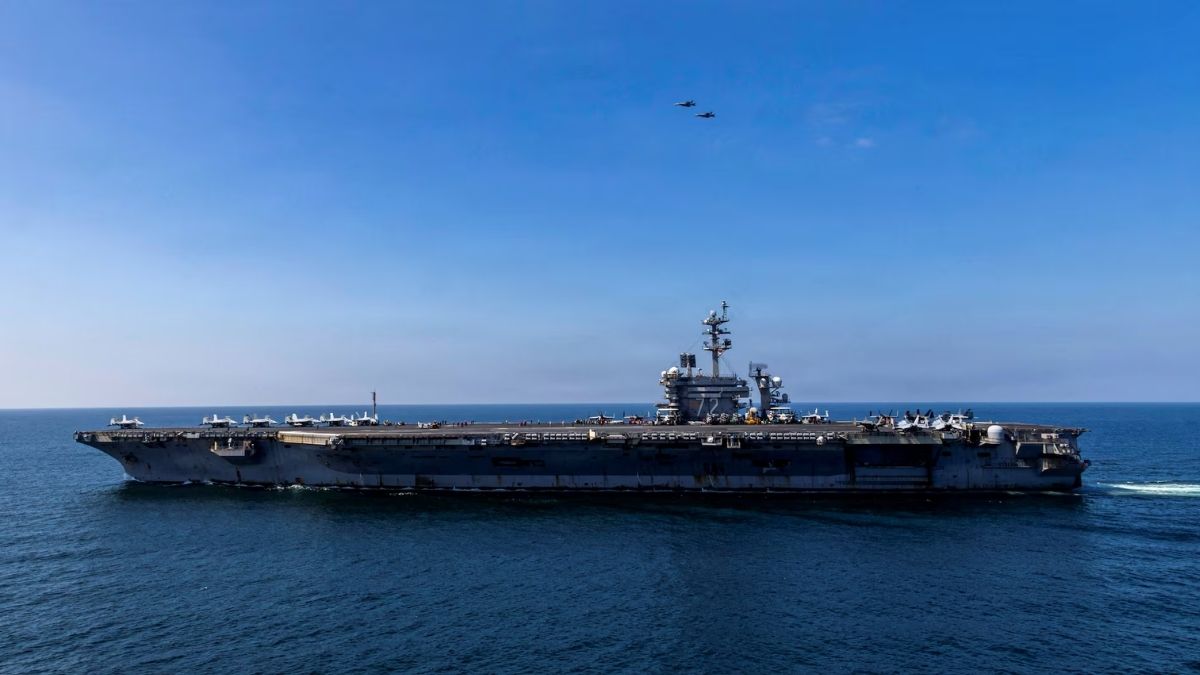
The USS Abraham Lincoln is a large American aircraft carrier that stayed at sea for 286 days during the Iran war.
That was much longer than a normal deployment.
About 5,000 sailors and Marines lived and worked on the ship during that time.
The United States also used thousands of weapons and spent tens of billions of dollars.
One study estimated the extra Defense Department cost at between $34 billion and $42 billion.
Some weapons, including missile interceptors, became much less plentiful.
This worries military planners because the United States also wants to be ready for possible problems in the Indo-Pacific.
The bill does not end when the fighting slows because weapons and damaged equipment must be replaced.
The carrier’s long deployment shows that war affects both military budgets and the people serving in the military.

The USS Abraham Lincoln spent 286 consecutive days at sea, far exceeding the six-to-nine-month typical deployment described by Reuters.
U.S. officials and analysts estimated the war’s additional cost at roughly $34 billion to $42 billion, while Pete Hegseth cited $37.5 billion on July 21.
American forces fired 13,629 strike munitions at more than 13,000 targets, including weapons used for attacks and missile defense.
The conflict depleted stocks of Tomahawk, JASSM, Precision Strike, Patriot and THAAD weapons, increasing concerns about U.S. readiness in the Indo-Pacific.
The war’s costs will continue through ammunition replacement, equipment repairs, higher maintenance demands and efforts to restore military readiness.
- Who
- The United States military, including the USS Abraham Lincoln’s roughly 5,000 sailors and Marines, took part in operations against Iran.
- What
- The Iran war imposed tens of billions of dollars in additional costs, depleted weapons stocks and produced unusually long military deployments.
- Where
- The carrier operated at sea in connection with the Iran war and made a five-day port visit to Thailand.
- When
- The USS Abraham Lincoln spent 286 consecutive days at sea before leaving Thailand on September 6; the cost estimates cited were made on different dates, including June 23 and July 21.
- Why
- The costs resulted from combat operations, force deployments, ammunition use, higher operational activity, equipment damage, fuel expenses and the need to restore military readiness.
Narrower War-Cost View
Broader Readiness-Cost View
How much the war cost
Narrower War-Cost View
The Pentagon and CSIS estimates place the additional direct cost at roughly $34 billion to $42 billion, depending on the date and methodology.
Broader Readiness-Cost View
The final bill could be higher because weapons replacement, equipment repairs, redeployment and wider economic effects continue after combat operations.
Meaning of large cost projections
Narrower War-Cost View
CSIS said trillion-dollar estimates assumed a much longer and more intense conflict, while a $113 billion tracker figure relied on projecting an early $1 billion-per-day estimate.
Broader Readiness-Cost View
Those larger figures reflect concern that the war’s consequences extend beyond immediate combat spending, although CSIS did not assign a precise value to wider economic effects.
Impact on military readiness
Narrower War-Cost View
The decline in attacks and shift toward shorter-range, cheaper weapons reduced the pace of spending during the later campaign.
Broader Readiness-Cost View
Heavy use of Tomahawks, JASSMs, Precision Strike Missiles, Patriot interceptors and THAAD interceptors depleted inventories and raised concerns about readiness for a potential Indo-Pacific conflict.
Key facts
- Carrier deployment
- The USS Abraham Lincoln spent 286 consecutive days at sea.
- Personnel aboard
- Roughly 5,000 sailors and Marines were aboard the carrier.
- U.S. cost estimate
- Pete Hegseth said the war had cost about $37.5 billion as of July 21.
- CSIS estimate
- The Center for Strategic and International Studies estimated additional Defense Department costs of $34 billion to $42 billion, with a central estimate of about $40 billion.
- Munitions used
- U.S. forces fired 13,629 strike munitions against more than 13,000 targets, according to CSIS-cited figures.
- Tomahawk use
- More than 850 Tomahawk missiles were reportedly fired in the first four weeks, with the total later estimated to exceed 1,000.
- Production response
- Lockheed Martin received a $58.6 billion contract intended to triple Patriot interceptor production by 2030.
Quotes
Captain Dan Keeler
Commanding officer of the USS Abraham Lincoln during its extended deployment
“I can’t answer the question on what it will cost, because the enemy has a vote”
 financialexpress.com
“We would like to thank the people of Thailand for their incredible hospitality”
financialexpress.com

Pete Hegseth
US defense secretary who estimated the war’s cost and sought supplemental Pentagon funding
“Without these funds, we face critical shortfalls”
financialexpress.com
Sources
Related news
US replacing USS Abraham Lincoln amid reports of suffering troops
Replacement Carrier Heads to Middle East Amid USS Lincoln Concerns

Senators raise alarm over USS Abraham Lincoln crew conditions

USS Abraham Lincoln ends record 266-day West Asia mission

Longer Middle East Deployments Strain U.S. Forces in Iran Conflict

Former F-16 Pilot Recalls 9/11 Mission to Defend Washington
US Military Officials Face Polygraphs Over Weapons Leak
Pentagon Orders Unprecedented Polygraphs in Iran War Leak Hunt

Top US general says no troops at midterm polling sites