3 hrs ago
India Enforces Stricter Rules for Late Birth, Death Registration
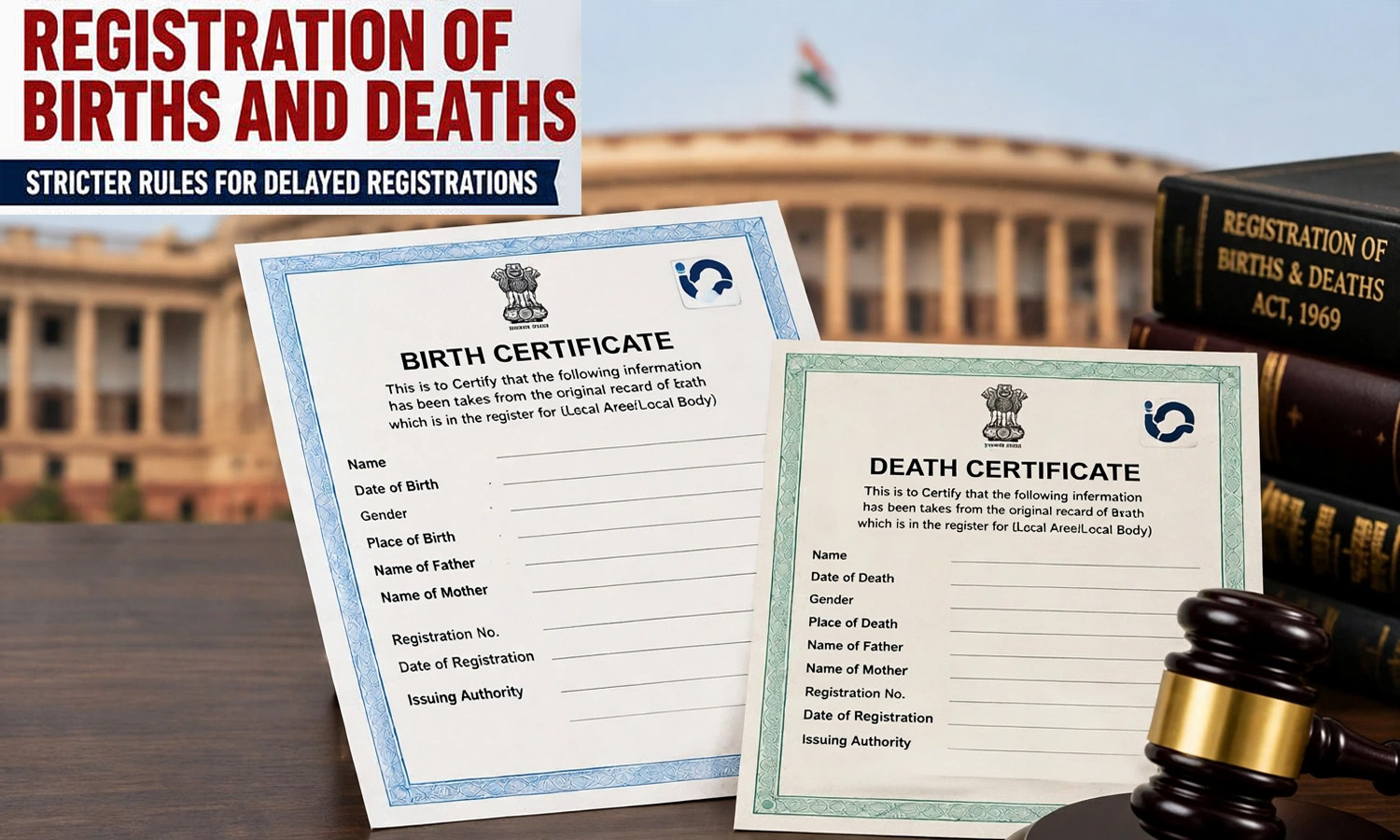
India has introduced stricter rules for registering births and deaths late.
The new law began on October 1, 2026.
If someone reports an event more than one year late but within two years, a senior local magistrate must approve it.
If the delay is more than two years, a Judicial Magistrate of the first class must approve it.
The magistrate must check whether the information is correct.
People must also pay any required fee.
The government says the rules will encourage people to report births and deaths on time.
Birth and death certificates can help prove a person’s identity or the fact of someone’s death.

The Registration of Births and Deaths (Amendment) Act, 2026, took effect on October 1, 2026.
Delays of more than one year but up to two years require an order from a District, Sub-Divisional, or authorized Executive Magistrate.
Delays of more than two years require an order from a Judicial Magistrate of the first class.
Authorities must verify the reported birth or death, and applicants must pay the prescribed fee.
The amendment is intended to encourage timely reporting and strengthen the accuracy of vital records.
- Who
- The Government of India, through the Office of the Registrar General of India and the Ministry of Home Affairs, implemented the amended law.
- What
- The Registration of Births and Deaths (Amendment) Act, 2026, introduced stricter procedures for late registration of births and deaths.
- Where
- India, with approval handled by magistrates having jurisdiction over the place where the birth or death occurred.
- When
- The Act came into force on October 1, 2026, after a gazette notification issued on September 16, 2026.
- Why
- The amendment aims to encourage timely reporting and require verification of delayed birth and death information.
Key facts
- Law
- Registration of Births and Deaths (Amendment) Act, 2026
- Effective date
- October 1, 2026
- Delay of over one year to two years
- Requires an order from a District Magistrate, Sub-Divisional Magistrate, or authorized Executive Magistrate.
- Delay of over two years
- Requires an order from a Judicial Magistrate of the first class.
- Verification
- The relevant magistrate must verify the correctness of the birth or death.
- Fee
- A prescribed fee must be paid for delayed registration.
- Legislative approval
- The Lok Sabha passed the Bill on July 31, 2026, and the Rajya Sabha passed it on August 4, 2026.
Quotes

Amit Shah
Union Home Minister who explained the amendment’s purpose and provisions
“A certificate of birth or death is admissible in evidence for the purpose of proving the birth or death of a person. The Registration of Births and Deaths Act, 1969 was amended in 2023 and the provisions of the amended Act came into force with effect from October 1, 2023.”
 deccanchronicle.com
“this will encourage timely reporting of events of birth and death.”
deccanchronicle.com
Sources
Related news

India Tightens Delayed Birth and Death Registration Rules

India Death Certificates: Registration, Documents And New Delay Rules
BMC Suspends 19,734 Mumbai Birth-Correction Entries Pending Verification

Election Commission Extends Telangana SIR, Delays Final Voter Roll

Delhi CEO Assures SIR Notices Won’t Trigger Automatic Voter Deletions