6 days ago
India-China Border Talks Test Prospects for Early Settlement
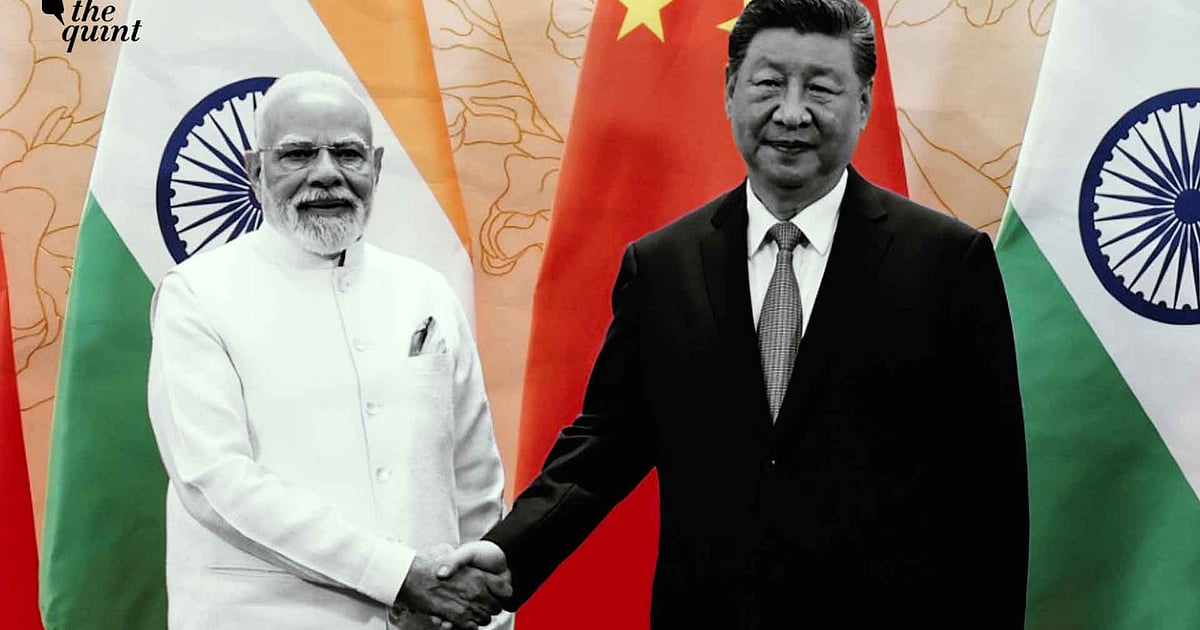
India and China share a long border that they have never fully agreed on.
Both countries say that some land controlled by the other belongs to them.
The biggest disagreements are in Aksai Chin in the west and Arunachal Pradesh in the east.
The middle part of the border has fewer disagreements.
India supports the McMahon Line in the east, but China rejects it.
China considers Aksai Chin important partly because a major highway linking Tibet and Xinjiang passes through it.
Earlier Chinese proposals suggested that each side could keep some areas it controls in exchange for recognizing the other side’s claims elsewhere.
A serious clash in Galwan Valley in 2020 made relations worse, although talks in October 2024 brought some improvement.

India and China have never reached a final settlement of their disputed border, despite diplomatic ties since 1950.
India claims approximately 38,000 square kilometres in Aksai Chin and 5,180 square kilometres in the Shaksgam Valley.
China claims about 90,000 square kilometres in Arunachal Pradesh, which it calls Zangnan, or South Tibet.
The dispute spans western, middle and eastern sectors, with major disagreements involving Aksai Chin and the McMahon Line.
The 2020 Galwan Valley clash caused a prolonged military and diplomatic standoff, while relations began improving after October 2024 talks.
- Who
- India and China, whose governments are disputing the location and status of their border.
- What
- Diplomatic and strategic discussions about whether an early agreement could help resolve the India-China border dispute.
- Where
- The disputed boundary is divided into western, middle and eastern sectors, including Aksai Chin, the India-China border areas in Himachal Pradesh and Uttarakhand, and Arunachal Pradesh.
- When
- The dispute has historical roots, while relations began improving after talks in October 2024; key developments also include the 2020 Galwan Valley clash.
- Why
- The two countries hold competing territorial claims, while China considers parts of Aksai Chin important for the Tibet-Xinjiang highway and regional connectivity.
India’s Position
China’s Position
Western-sector territory
India’s Position
India says China is illegally occupying about 38,000 square kilometres of Indian territory in Aksai Chin, and also identifies the Shaksgam Valley as Indian territory ceded to China by Pakistan in 1963.
China’s Position
China maintains control over Aksai Chin and has remained inflexible on parts of the area, which is strategically important because the Tibet-Xinjiang National Highway 219 passes through it.
Eastern-sector boundary
India’s Position
India supports the McMahon Line and claims sovereignty over Arunachal Pradesh.
China’s Position
China rejects the McMahon Line and calls Arunachal Pradesh Zangnan, or South Tibet, claiming about 90,000 square kilometres there.
Possible settlement framework
India’s Position
Past proposals described in the article would require India to recognize Chinese control in the western sector, including Aksai Chin, in exchange for Chinese recognition of Indian sovereignty over Arunachal Pradesh.
China’s Position
China’s earlier land-swap proposals reflected this exchange, but the article says China remains inflexible over parts of Aksai Chin.
Key facts
- Diplomatic relations
- India established diplomatic relations with the People’s Republic of China in April 1950.
- Indian territorial claims
- India claims about 38,000 square kilometres in Aksai Chin and 5,180 square kilometres in the Shaksgam Valley.
- Chinese territorial claims
- China claims about 90,000 square kilometres in Arunachal Pradesh, which it calls Zangnan, or South Tibet.
- Dispute sectors
- The border dispute is generally divided into western, middle and eastern sectors.
- Major recent clash
- The Galwan Valley clash in 2020 triggered a prolonged military and diplomatic standoff.
- Recent diplomatic development
- Relations began improving after talks in October 2024.
- Strategic route
- The Tibet-Xinjiang National Highway 219 passes through Aksai Chin and links Tibet with Xinjiang.
Sources
Related news

India Rejects Chinese Intrusion Claims, Citing Un-demarcated Border Disputes
India, China Agree on Eight-Point Roadmap for Border Management

India, China Explore Early Harvest Approach in Border Talks
India Warns China Border State Reflects Bilateral Ties

India-China Talks Show Signs of Border Ties Stabilizing

India-China Talks Seek Border Progress Amid Calls for Peace
Pakistan Weighs Province-Like Status for PoK and Gilgit-Baltistan
MEA Rejects China's Meeting Readout
US Embassy in Pakistan Burned; China-India War Ends
Analyst Suggests India-China Deal Amidst US Trade Tensions