1 hr ago
Arctic Power Struggle Intensifies Among Russia, China and United States

The Arctic is a very cold region at the top of the world.
Russia has the largest population, territory and military presence there.
The United States is especially interested in Greenland because it sits between North America and Europe.
China does not own Arctic land, but it wants to use new shipping routes and find economic opportunities.
Russia and China have also increased cooperation, including a joint patrol in 2024.
Climate change is melting Arctic ice and making some areas easier to reach.
This could shorten trips between Asia and Europe and make minerals easier to find.
However, melting ice can harm animals, plants and communities.
The Arctic is therefore becoming an important place for security, trade, resources and environmental concerns.

Russia remains the dominant Arctic power, controlling about half of the region’s land and maritime exclusive economic zone.
The Arctic has become more militarized as cooperation between Russia and Western countries declined after Crimea and the invasion of Ukraine.
The United States has increased attention on Greenland, which President Donald Trump says is important for national security.
China, despite having no Arctic territory, calls itself a “near-Arctic state” and is pursuing shipping, energy and strategic opportunities.
Climate change is reducing sea ice, opening potential shipping routes and mineral access while threatening ecosystems and Arctic communities.
- Who
- Russia, the United States, China, NATO and the eight Arctic states are involved in the growing competition.
- What
- Major powers are competing for military, economic and strategic influence in the Arctic.
- Where
- Across the Arctic, including Greenland, the Northern Sea Route and the Northwest Passage.
- When
- The rivalry has intensified in recent years, particularly after Russia’s annexation of Crimea in 2014 and full-scale invasion of Ukraine in 2022.
- Why
- The region offers strategic military positions, shipping routes, energy and mineral resources, while climate change is making it more accessible.
Strategic and Economic Opportunity
Security and Environmental Risk
Arctic access
Strategic and Economic Opportunity
Governments and businesses see reduced sea ice as an opportunity to use new shipping routes and reach valuable mineral deposits.
Security and Environmental Risk
Scientists and environmental groups warn that melting ice threatens ecosystems, wildlife and communities and could accelerate global warming.
Greenland’s security
Strategic and Economic Opportunity
Donald Trump argues that the United States needs Greenland for national security and that Denmark may not have enough military strength to protect it from Russia and China.
Security and Environmental Risk
Greenland is an autonomous territory of Denmark, a NATO member and a close United States ally; the article does not report that Denmark has agreed to transfer the island.
Russia’s Arctic role
Strategic and Economic Opportunity
Russia’s geography, infrastructure and military presence give it a major existing advantage in the region.
Security and Environmental Risk
Western countries are concerned by the scale and rapid expansion of Russia’s presence, even though Russia’s military capabilities do not currently match those of NATO.
Key facts
- Russia’s Arctic presence
- Russia controls about half of the land and maritime exclusive economic zone north of the Arctic Circle.
- Arctic population
- About two-thirds of people living in the Arctic are in Russia.
- Russia’s military sites
- Russia has about 30 military sites in the wider Arctic, alongside hundreds of other defense installations and outposts.
- Arctic warming
- The Arctic is warming at around four times the global average.
- Northern Sea Route
- The route along Russia’s northern coast could reduce travel between Asia and Europe to roughly two weeks.
- Northwest Passage traffic
- Transit sailings increased from a few each year in the early 2000s to as many as 41 in 2023.
- Greenland’s resources
- Greenland may contain coal, copper, gold, rare-earth elements and zinc, although extraction would be difficult and expensive.
Sources
Related news
The Arctic Emerges as a New NATO-Russia Flashpoint

Lavrov Says NATO Arctic Activity Poses Direct Threat to Russia
Denmark Sends Conscripts to Greenland as Arctic Tensions Rise
Russia Says India, China Are Most Productive Arctic Partners
Indian parliamentary panel urges New Delhi to act on Arctic
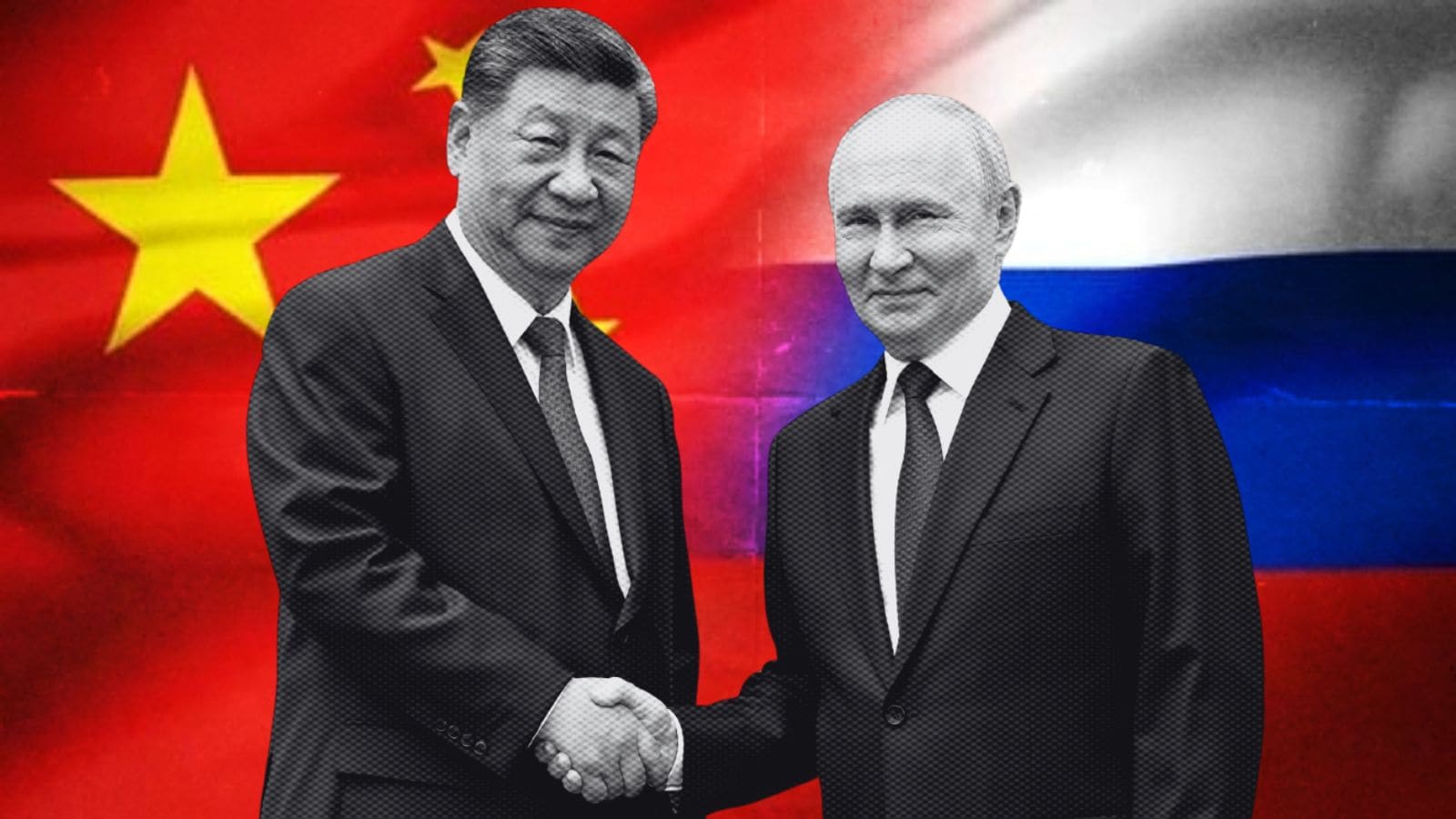
China's New Arctic Route Is A 20-Day Voyage To Europe
Putin Orders Three-Day Kyiv Strike Halt Amid US Talks
Trump Sends Kushner and Witkoff on Russia-Ukraine Peace Mission

Trump Seeks European Repayment for US Ukraine Aid
Security Concerns Cloud Planned U.S. Envoys’ Russia, Ukraine Visits