1 hr ago
Why Rice or Roti Affect Weight Differently Across People
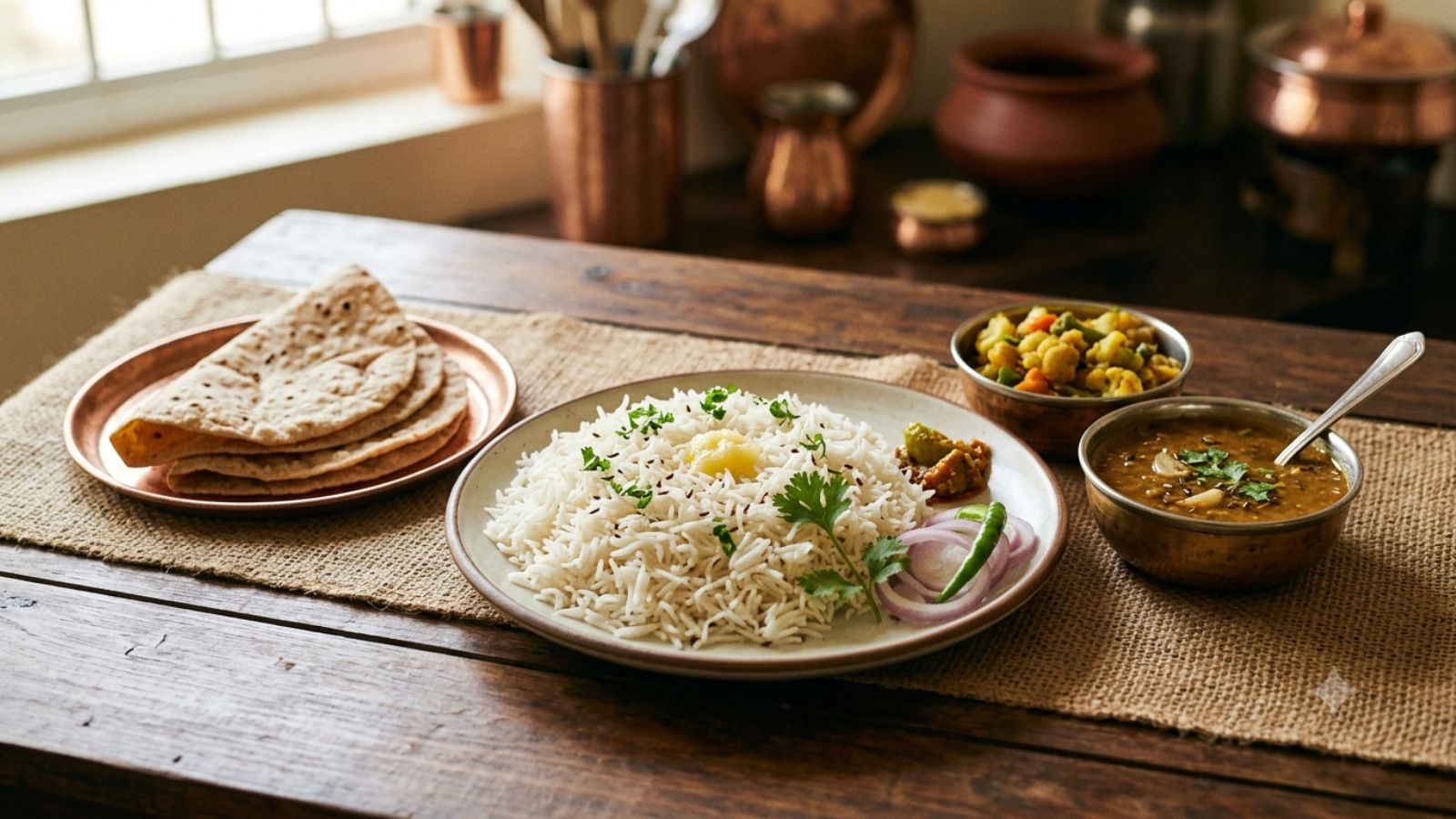
Rice and roti are not automatically good or bad for everyone.
After we eat them, our bodies turn much of their starch into sugar called glucose.
Muscles use this glucose, so people with more muscle and regular activity may handle it better.
Other people may have more internal fat or insulin resistance, so the same meal affects them differently.
The amount and type of food matter too.
A small serving of rice with dal and vegetables is different from a large plate of polished rice.
A small phulka is different from a large butter naan or paratha.
Millets can be useful, but they are not magic foods, especially when heavily processed.
A balanced plate, sensible portions and movement after meals are more important than choosing one grain as a permanent winner.

Rice, wheat and millet affect people differently because genetics, muscle mass, insulin sensitivity, portions and daily activity vary.
Traditional meals were often smaller and less refined, with more pulses, vegetables and physical activity than many modern diets.
Polished rice, finely milled wheat, large portions, calorie-dense gravies and processed snacks can increase overall calorie and carbohydrate intake.
Glycaemic index measures how quickly carbohydrates raise blood glucose, while glycaemic load also accounts for portion size.
A healthier approach is to reduce cereal portions, add vegetables and protein, limit excess oil and build muscle through regular movement.
- Who
- People who eat rice, wheat or millet, particularly those concerned about weight gain, insulin resistance or diabetes.
- What
- The article explains why the same rice or roti can contribute to weight gain or different blood-glucose responses in different people.
- Where
- The discussion focuses on Indian diets and examples from regions including Bengal, Punjab, Delhi and southern India.
- When
- The differences occur after meals and over time as eating habits, activity, genetics and energy balance affect metabolism.
- Why
- Responses vary because of differences in portions, food processing, muscle mass, body fat, insulin sensitivity, genetics, activity, sleep, stress and overall calorie intake.
Key facts
- Main metabolic factors
- Muscle mass, insulin resistance, body-fat distribution, pancreatic beta-cell capacity and physical activity.
- Rice preparation
- Polishing removes much of the outer layer and fibre; grain type, cooking and cooling can influence glucose response.
- Wheat preparation
- Whole wheat contains more fibre than refined flour, but finely milled atta can be digested more easily.
- Millets
- Bajra, jowar and ragi can provide fibre and micronutrients, but processing and portion size still matter.
- Glycaemic index
- Measures how quickly a food containing a fixed amount of available carbohydrate raises blood glucose.
- Glycaemic load
- Accounts for both the food’s carbohydrate response and the amount eaten in a real portion.
- Suggested plate
- Use smaller cereal portions with vegetables and protein, limit excess oil and include regular movement.
Quotes
A person brought up in Bengal
A person from Bengal expressing a common belief about rice and health
“Rice cannot be the problem. We have eaten it for generations.”
 indianexpress.com
Patients at the author's clinic
People raising the recurring nutrition question described by the author
“Rice or roti—which one is making me gain weight?”
indianexpress.com
Sources
Related news
Why Insulin Resistance and Insulin Loss Develop Differently

Ravi Kishan’s Weight Loss Reignites Debate Over Grain-Free Diets

Study finds South Asian guts need region-specific health advice

Medication and Blood Sugar Can Vary Between People
Rice Remains India’s Comfort Food Across Traditions and Tables

Pregnancy After 40: Fertility, IVF and Risks Behind Celebrity News
Five Medication Combinations Older Adults Should Avoid As They Age

Revised Stroke Guidelines Urge Earlier, Gentler Rehabilitation

Apollo Doctors Save New Mother After Severe Postpartum Hemorrhage