

1 hr ago
Why Indians Rely on Vitamin D Pills Despite Sunlight
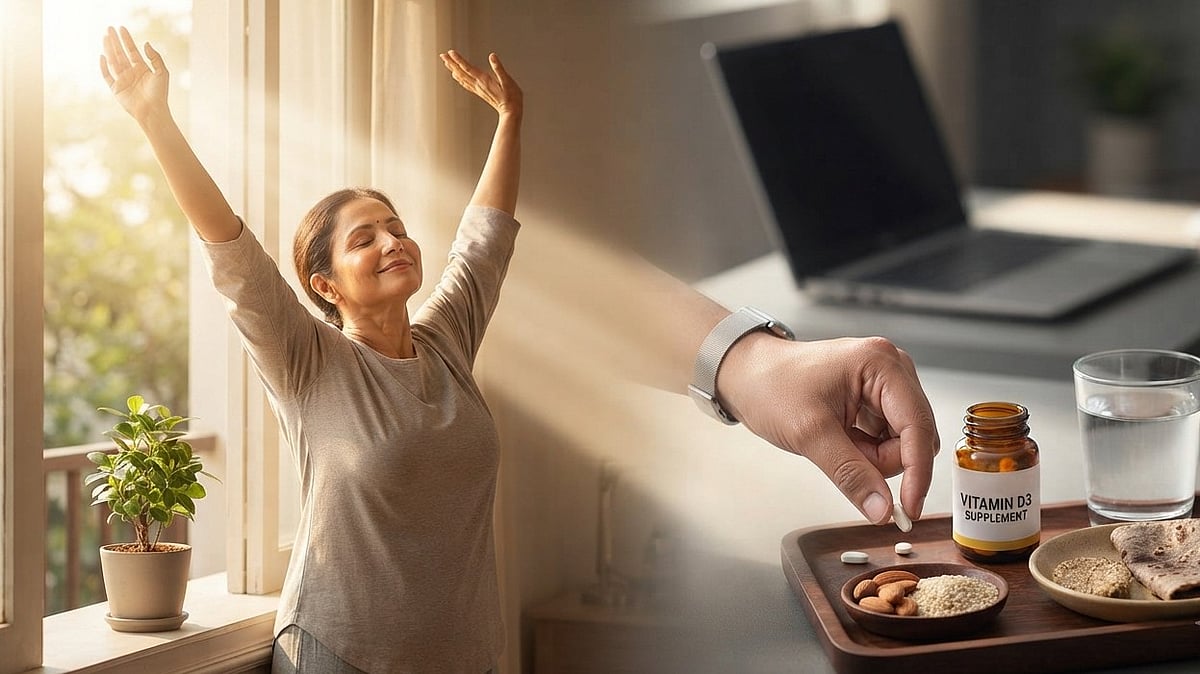
India gets plenty of sunshine, but many people spend most of their time indoors.
The body can make vitamin D when skin receives sunlight.
Things like clothing, pollution, sunscreen, skin tone, age, and timing can affect how much vitamin D is made.
One study in South India found that many adults had low vitamin D levels.
Vitamin D helps the body use calcium for healthy bones.
However, strong bones also need exercise, protein, sleep, and other nutrients.
Some people truly need vitamin D or calcium supplements.
Taking large doses without testing or medical advice can be harmful.
The article says people should combine appropriate medical treatment with healthy daily habits.

A 2024 study of 982 adults in South India found 58% were vitamin D deficient, 23% insufficient, and 19% had normal levels.
Indoor lifestyles, clothing, pollution, skin pigmentation, sunscreen, age, and limited outdoor time can reduce vitamin D production.
Vitamin D supports calcium absorption, but bone health also depends on protein, magnesium, movement, strength training, sleep, and overall nutrition.
Some people may need doctor-guided supplements, including those with severe deficiency, malabsorption, certain medical conditions, or limited sun exposure.
The article recommends testing, medical guidance, safe sunlight, outdoor activity, nutritious food, good sleep, and stress management rather than relying on pills alone.
- Who
- Indian adults and other people concerned about vitamin D and bone health; the article was written by Luke Coutinho.
- What
- The article examines why vitamin D deficiency and supplement use are common in India despite abundant sunlight, and argues for a foundations-first approach.
- Where
- India, including a study conducted in South India.
- When
- A 2024 study cited in the article assessed adults aged 45 and older; the article does not specify when the broader supplement trend began.
- Why
- Indoor lifestyles and factors affecting sun exposure or vitamin D production may contribute to deficiency, while supplements are often used out of concern about weak bones, fractures, ageing, or fatigue.
Lifestyle and Sunlight First
Medical Supplementation When Needed
How to address low vitamin D
Lifestyle and Sunlight First
The article argues that deficiency can signal too little outdoor time, movement, nutritious food, sleep, or attention to overall health, and recommends safe sunlight and lifestyle improvements.
Medical Supplementation When Needed
Supplements can be important for people with deficiency, limited sun exposure, malabsorption, certain medical conditions, pregnancy, older age, or specific medical needs.
Role of pills
Lifestyle and Sunlight First
Vitamin D and calcium pills should be treated as tools, not replacements for sunlight, exercise, strength training, protein, and balanced nutrition.
Medical Supplementation When Needed
Doctor-guided supplementation may be necessary when testing and a person’s health status show that lifestyle measures alone are insufficient.
Self-treatment
Lifestyle and Sunlight First
The article cautions against taking high-dose supplements without testing, monitoring, or understanding kidney function and medical history.
Medical Supplementation When Needed
The article does not reject supplements, but says they should be prescribed or guided by a qualified healthcare provider.
Key facts
- Study sample
- 982 adults aged 45 years and above in South India
- Vitamin D deficient
- 58% of study participants
- Vitamin D insufficient
- 23% of study participants
- Normal vitamin D levels
- 19% of study participants
- Vitamin D function
- It helps the body absorb calcium
- Recommended approach
- Test, correct, monitor, and improve lifestyle foundations
- Supplement caution
- High-dose vitamin D or calcium should not be self-prescribed
Quotes
Luke Coutinho
Foundational Medicine and Lifestyle Expert and article author
“The question is not “supplement or sunlight?””
 freepressjournal.in
Sources
Related news

How Spending All Day Indoors May Affect Your Health

Indian Doctors Urge Shift to Preventive, Early-Detection Healthcare

India's Protein Fixation: Fortified Food Trend Raises Nutrition Questions

Traya Says Internal Factors Drive Most Indian Hair Loss

Fitness Does Not Always Mean Stronger, Healthier Bones

India’s Lipid Burden Raises Questions About Medicalization and Treatment

UN report warns AI tailors terror propaganda for women, children

Foreign Filmmaker Praises Vande Bharat as India's Nicest Passenger Train
South Indian Doctor Celebrates Awadhi Language In Gonda
Why South India Is Becoming India’s Protein-Smartest Region
