1 day ago
Eight Lessons From Using ChatGPT as a Money Coach

The author used ChatGPT to examine personal money habits for two months.
It found that many small payments added up to a large yearly expense.
The author also learned that having money left after bills does not guarantee that it will be saved or invested.
ChatGPT suggested saving and investing before spending on optional things.
The author tested a retirement plan based on reaching Rs 2 crore by age 40.
That test showed that inflation and rising rent could make the amount less sufficient than expected.
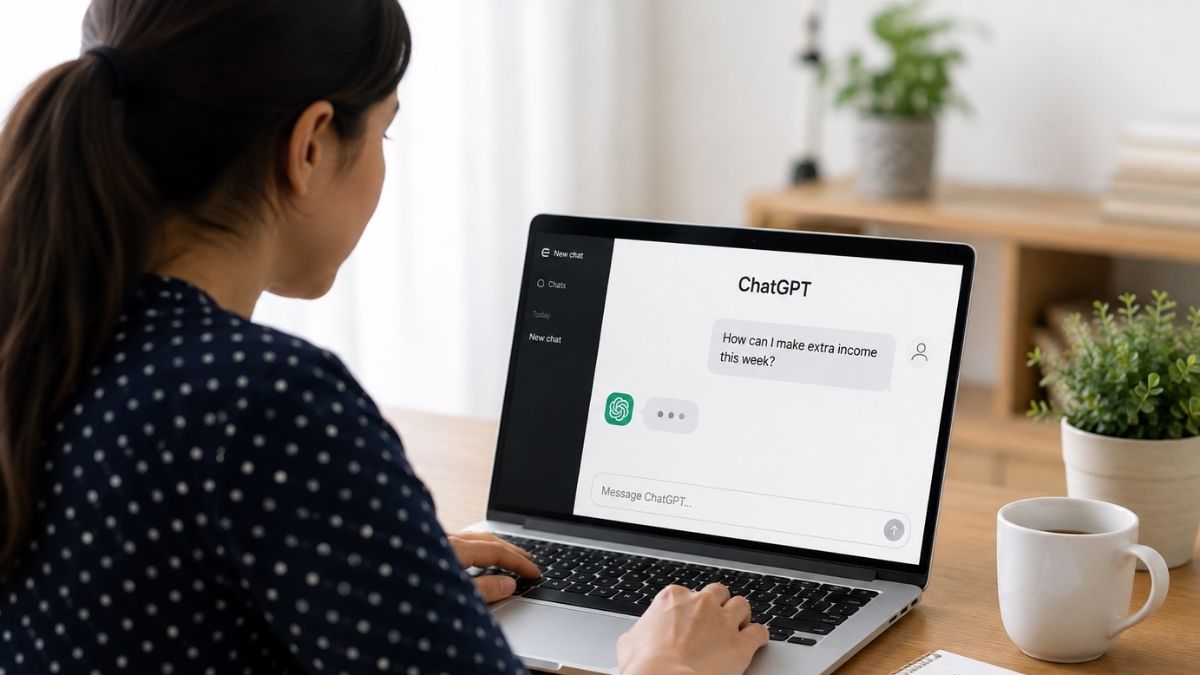
A seven-day side-business plan produced four sales but did not earn the hoped-for Rs 4,000.
The author concluded that ChatGPT is useful for asking questions and comparing plans, but it cannot guarantee investment results or replace careful financial advice.

A six-month spending review found about Rs 7,000 monthly in miscellaneous UPI payments and Rs 7,333 on food delivery and dining out.
The combined Rs 14,333 monthly spending amounted to nearly Rs 1.72 lakh annually and revealed a recurring pattern rather than one large expense.
With a Rs 70,000 salary and average monthly spending of Rs 56,716, the author had an apparent Rs 13,284 surplus but invested only about Rs 3,000 through a regular SIP.
A seven-day digital-product challenge produced four sales but failed to reach the Rs 4,000 income target.
The experiments showed that ChatGPT can structure budgets and test assumptions, but its calculations and suggestions require independent checking.
- Who
- The author and ChatGPT, used as a personal financial analysis tool.
- What
- The author conducted six personal-finance experiments covering spending, saving, investing, retirement and side-income planning.
- Where
- When
- Over a period of two months.
- Why
- To identify spending patterns, test financial assumptions and assess whether AI-generated money plans worked in real life.
ChatGPT as a Financial Co-Pilot
ChatGPT as a Limited Financial Tool
Value of personal data
ChatGPT as a Financial Co-Pilot
Providing actual income, expenses, investments, goals and assumptions made the analysis more specific and helped reveal recurring patterns.
ChatGPT as a Limited Financial Tool
Better inputs do not guarantee correct answers; calculations and assumptions still need to be checked.
Retirement planning
ChatGPT as a Financial Co-Pilot
Testing the Rs 2 crore target against rent increases, inflation and decades of expenses encouraged more realistic planning.
ChatGPT as a Limited Financial Tool
A numerical scenario cannot guarantee that the corpus will cover future costs or unexpected expenses.
Side-income planning
ChatGPT as a Financial Co-Pilot
ChatGPT provided a practical plan for creating, pricing and marketing digital products.
ChatGPT as a Limited Financial Tool
The plan could not guarantee customer demand: four sales occurred, but the Rs 4,000 target was missed.
Key facts
- Monthly salary
- Rs 70,000
- Average monthly spending
- Rs 56,716
- Apparent monthly surplus
- Rs 13,284
- Regular SIP contribution
- Nearly Rs 3,000 per month
- Recurring spending identified
- Rs 14,333 per month across miscellaneous UPI spending and food delivery or dining out
- Side-hustle target
- Rs 4,000 in seven days
- Side-hustle result
- Two digital products created and four sales made, but the Rs 4,000 target was not achieved
- Retirement scenario
- Testing whether Rs 2 crore could support retirement at age 40
Sources
Related news

ChatGPT Identifies Three Monthly Money Mistakes Costing Rs 14,333
ChatGPT Earned Rs 579 in Seven-Day Rs 4,000 Challenge

Delhi Saver Targets Rs 3 Crore Without Stocks

Book Offers Indian Households A Blueprint For Financial Planning

Cruise Money Unveils India’s Agentic Card for AI Payments

Pune Man’s Rs 4 Crore Corpus Challenges FIRE Target

Sahil Wakode’s Parents Continue Hunger Strike, Seek IIT Bombay Justice
Delhi Government Opens AI Training Centre for Officers
OpenAI Introduces Dots, Always-On Agents for Personal Tasks
OpenAI Turns ChatGPT Into Gateway for Software and Agents

17-Year-Old Builds AI Platform for Neurodivergent Job Seekers